
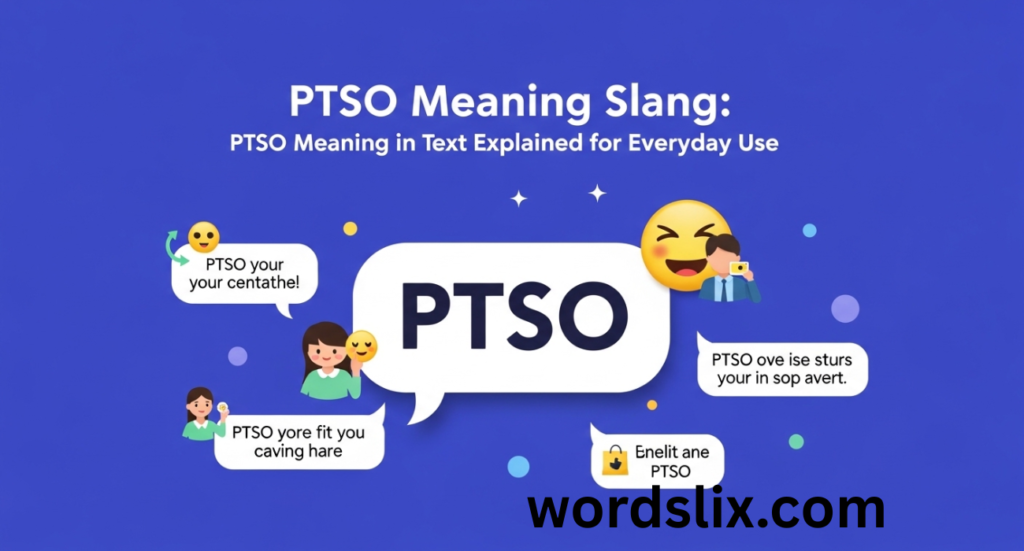
PTSO Meaning Slang: PTSO Meaning in Text Explained for Everyday Use
The ptso meaning slang refers to the phrase Put That Stuff On. People use it to encourage confidence and action. It sounds friendly and casual. The phrase appears often in online chats. It helps messages feel supportive and upbeat.
The ptso meaning slang catches attention because it feels bold and energetic. People see it in texts and comments every day. It adds excitement to short messages. Many readers want to know what it means. That curiosity pulls them in.
The ptso meaning slang comes from casual speech and online culture. People use it in texting, gaming, and social media. It shows support and hype. The phrase works best among friends. Context always matters.
Definition & Meaning

The definition of PTSO comes straight from everyday conversation. When someone types PTSO, they mean Put That Stuff On, which encourages action, confidence, or style. It’s an encouragement phrase that pushes someone to perform well or show off. People use it when they believe in you and want you to shine.
In real life, the meaning of PTSO feels upbeat and supportive. It fits naturally into casual conversation slang, especially among friends. Because it sounds informal, it works best in relaxed settings. This hype phrase doesn’t demand a response, but it often sparks excitement and self-belief.
Read Also;CFS Meaning Slang – What It Really Stands For in Texts, Gaming, and Professional Chats
Examples in Real Life
Real-world examples of PTSO help explain why the phrase feels so natural. Imagine posting a photo in a new outfit and seeing a comment that says PTSO. That short message encourages showing off style without sounding forced. It blends easily into social media expressions people already understand.
You’ll also hear it in moments of pressure. A friend nervous before a big moment might hear PTSO as motivation. These hype words in text work because they feel personal. They’re short, supportive, and confident, which makes them powerful in everyday communication.
Background & History
The roots of PTSO come from African American Vernacular English and hip hop culture, where expressive phrases often carry strong emotion. Over time, spoken language shaped online trends. What once lived in music and street talk slowly moved into digital spaces and chats.
As the internet grew, online slang meanings traveled faster than ever. Platforms like Twitter and TikTok helped spread the phrase nationwide. Today, PTSO fits naturally alongside modern texting abbreviations, blending cultural history with modern communication.
Usage in Different Contexts
Understanding the usage of PTSO means paying attention to context. The same phrase can feel playful, competitive, or supportive depending on where you use it. Tone matters more than the words themselves. That’s why people adapt PTSO across platforms.
Below is a quick comparison table showing how PTSO appears in different spaces and why it works.
| Context | How PTSO Is Used | Purpose |
| Texting | Quick hype message | Motivation |
| Gaming | Team encouragement | Confidence |
| Dating | Playful challenge | Flirting |
1. Texting & Social Media
In PTSO in texting, the phrase feels light and friendly. Friends send it during everyday chats to boost morale. It fits perfectly with emojis and short replies, which makes it ideal for fast-paced messaging.
You’ll also see PTSO in social media comments. On Instagram or TikTok, it often appears under photos or videos. Among TikTok slang terms and Twitter slang, PTSO blends in as a quick sign of support and excitement.
2. Gaming
Within PTSO in gaming, the phrase carries energy and teamwork. Gamers use it to push teammates to perform their best. It’s common in gaming slang and gaming community language, especially during competitive moments.
On platforms like Discord and Twitch, Discord chat slang and Twitch gaming slang thrive on quick motivation. PTSO works well here because it’s short and powerful. It encourages focus, confidence, and action during intense gameplay.
3. Flirty/Dating Apps
In PTSO in dating apps, the phrase turns playful and bold. It can challenge someone to prove a skill or talent. As one of many flirty slang terms, it adds charm without sounding serious.
When used carefully, PTSO feels fun rather than pushy. In these spaces, it blends into casual conversation slang and helps break the ice. Tone matters most here, since flirtation depends on mutual comfort.
Common Misconceptions
Many people misunderstand PTSO at first. One common belief is that it’s always flirty, but that’s not true. The phrase adapts to tone and situation. These slang misconceptions often come from reading messages without context.
Another confusion comes from mixing PTSO with work terms. That’s where slang vs professional language becomes important. PTSO belongs in casual settings, not formal ones, and knowing that difference prevents awkward moments.
Similar Terms & Alternatives
There are many alternatives to PTSO that share a similar vibe. Words like flex or glow up show encouragement and pride. Understanding flex slang meaning helps you know when someone encourages confidence or skill.
Likewise, glow up slang meaning focuses on growth and improvement. These phrases all fall under encouragement slang phrases, but each carries a slightly different tone. Choosing the right one depends on the moment and relationship.
How to Respond to PTSO
When someone sends you PTSO, your response sets the mood. A confident reply keeps the energy going. Humor works too, especially among close friends. This back-and-forth builds connection through shared language.
Responding naturally shows you understand the vibe. In relaxed settings, playful replies fit best. In calmer moments, a simple thank-you works. Matching tone helps conversations flow smoothly and keeps communication comfortable.
Regional & Cultural Differences

In the United States, PTSO feels familiar, especially in urban and online spaces. Cultural background shapes how people understand slang. That’s why some regions recognize it faster than others.
Outside the US, people may pause or misread it. Exposure to American media influences understanding. As slang spreads globally, cultural awareness becomes important for clear communication.
Is PTSO Offensive?
PTSO isn’t offensive by nature. It usually feels supportive and positive. Problems arise only when sarcasm enters the picture. Tone can turn encouragement into mockery if used carelessly.
Pay attention to context and relationship. When used sincerely, PTSO builds confidence. When misused, it may confuse. Awareness keeps communication respectful and effective.
Professional Use?
In professional settings, PTSO doesn’t fit. Work emails and meetings require clarity and respect. This highlights the importance of separating casual slang from professional language.
Instead of slang, clear praise works better at work. Simple encouragement sounds polished and respectful. Knowing when to switch styles shows strong communication skills and social awareness.
Why PTSO Became Popular So Quickly
PTSO spread fast because people love short, expressive language that feels natural. In online spaces, long explanations slow conversations down. A quick phrase like PTSO delivers energy instantly. It fits perfectly into fast-moving chats, comments, and streams where attention spans stay short and impact matters more than detail.
Another reason for its rise is relatability. People enjoy phrases that feel spoken, not scripted. PTSO sounds like something you’d actually say out loud. That realism helps it travel across platforms, friend groups, and age ranges without feeling forced or outdated.
How Tone Changes the Meaning of PTSO
Tone plays a huge role in how PTSO lands. Said with excitement, it motivates and uplifts. Said with sarcasm, it can feel dismissive or mocking. Since text removes voice cues, readers rely on context, emojis, and timing to understand intent, which makes tone awareness essential.
This is why PTSO works best among people who already share rapport. Friends, teammates, and followers usually read it positively. Strangers may misread it. Knowing when tone translates clearly helps you avoid confusion and keeps conversations smooth.
PTSO and Confidence Building in Digital Spaces
Digital conversations often lack emotional depth, which is why phrases like PTSO matter. They inject encouragement into flat text. When someone receives PTSO before a challenge or performance, it acts like verbal applause, reinforcing belief and readiness in a moment that might otherwise feel silent.
Confidence grows through repetition. Seeing supportive slang repeatedly conditions positive responses. Over time, PTSO becomes more than a phrase. It turns into a social signal that says, “You belong here, and people believe in you.”
How PTSO Fits Modern Online Communication
Modern online talk favors speed, emotion, and brevity. PTSO checks all three boxes. It delivers encouragement without explanation. That efficiency makes it ideal for comment sections, live chats, and short messages where every word needs to work hard.
Unlike formal language, PTSO doesn’t slow momentum. It fuels it. In spaces built around reactions and engagement, this kind of slang thrives because it keeps conversations moving while still adding personality.
Generational Use of PTSO
Younger users adopt PTSO more naturally because they grow up immersed in evolving slang. For them, it feels intuitive. Older users may pause at first, then adopt it once they see repeated use in familiar spaces like social platforms or gaming chats.
This generational bridge matters. Slang like PTSO helps different age groups communicate casually. Once understood, it reduces distance and creates shared language, which strengthens online connection.
PTSO Compared to Traditional Encouragement
Traditional encouragement often sounds formal or long-winded. PTSO strips motivation down to its core. It doesn’t explain why you’ll succeed. It simply assumes you will. That confidence-forward approach feels empowering rather than instructional.
This difference matters in casual settings. People don’t always want advice. Sometimes they want hype. PTSO fills that role perfectly by energizing without overstepping.
Mistakes People Make When Using PTSO
A common mistake is using PTSO in serious or sensitive situations. Not every moment needs hype or excitement. When someone needs empathy, slang encouragement can feel shallow or dismissive, even when the intention is good.
Another mistake is using PTSO in professional settings. Work communication values clarity and respect. Using slang can confuse the tone and reduce credibility. Knowing when not to use casual language is just as important as knowing when to use it.
The Future of PTSO in Slang Culture

Slang constantly evolves, but phrases tied to emotion tend to last longer. PTSO connects to confidence and performance, which keeps it relevant. Even if wording shifts, the idea behind it will likely remain part of digital language.
As platforms change, PTSO may adapt or inspire new variations. What stays constant is the human need for encouragement. Slang fills that need quickly, creatively, and memorably.
FAQs
What does PTSO mean in slang?
PTSO means Put That Stuff On. People use it as a hype phrase to encourage confidence, effort, or showing off skills or style in a casual way.
How is PTSO used in text messages?
In texts, PTSO works as quick encouragement. Friends send it to hype someone up before a task, post, or moment that needs confidence.
Is PTSO slang appropriate for everyone?
PTSO fits casual chats, social media, and gaming. It doesn’t work well in formal or professional settings where clear, polished language matters.
Is PTSO the same as other hype slang terms?
PTSO shares energy with terms like flex or glow up, but it focuses more on action and confidence rather than appearance or results.
Conclusion
The topic of ptso meaning slang explains how modern language changes through everyday communication. People use PTSO to show support, confidence, and encouragement in a simple way. The phrase comes from casual speech and fits well in texting, gaming, and social media. It helps people express excitement without long messages. Understanding this slang helps readers follow conversations and respond correctly in relaxed settings.
Learning the ptso meaning slang also teaches the value of context. People should use it only in informal spaces and friendly conversations. In serious or professional places, clear and formal words work better. When used correctly, PTSO builds confidence and positive energy. Knowing when and how to use slang improves communication skills and helps messages sound natural and respectful.