
JP Meaning in Text: What Does JP Mean in Texting, Social Media, and Gaming?
JP Meaning in Text means Just Playing in most online conversations. It is a short form people use in texting and chat. It tells the reader that the message is a joke and not serious.
You might see JP at the end of a message and feel unsure about it. A simple sentence can sound rude without clear tone. Knowing this meaning helps you understand the real intent behind the words.
JP is common on social media, in gaming chats, and in daily texting. People in the United States use it to show humor and light sarcasm. It makes online communication friendly and easy to understand.
Background & History
The story behind JP begins in early internet slang culture. During the rise of online chat rooms and SMS messaging, people faced strict character limits. To save time and space, users shortened phrases into quick codes. As chat platforms like AOL Messenger grew, shorthand expressions became normal in digital communication. Over time, JP short form became popular among younger users who wanted fast and playful exchanges.
As social media expanded through Twitter, Instagram, and later TikTok, the usage of quick abbreviations exploded. In American culture, speed matters in messages. People text quickly during busy days. Because facial expressions disappear in text, users rely on markers like JP for tone clarification. What started in niche spaces spread into mainstream casual conversation across the United States.
Read Also;PTSO Meaning Slang: PTSO Meaning in Text Explained for Everyday Use
Usage in Various Contexts
You will see JP meaning in text shift slightly depending on where it appears. In everyday texting slang, it softens teasing comments. On social media slang posts, it prevents followers from taking bold statements too seriously. During gaming sessions, it reduces tension in heated matches. The key factor remains the same. The context tells you how to interpret the word.
Understanding how JP abbreviation works across platforms improves your online communication skills. Without voice tone or body language, written words can feel harsh. That is why Americans rely on simple markers to show humor or sarcasm. When used correctly, JP keeps interactions smooth and avoids awkward confusion.
Texting
In American texting, clarity matters. Imagine someone writes, “You are terrible at cooking.” That line alone sounds harsh. Add JP, and the message changes instantly. It now signals playful teasing. Because texting slang lacks facial cues, users add this informal phrase to prevent emotional tension. The meaning becomes friendly instead of critical.
Here is a simple case study. Two college friends argue over who drives better. One texts, “You almost hit the curb again, JP.” The other laughs instead of feeling attacked. The casual response works because both understand the shared intent. In close friendships, JP builds a lighthearted tone that keeps bonds strong.
Social Media
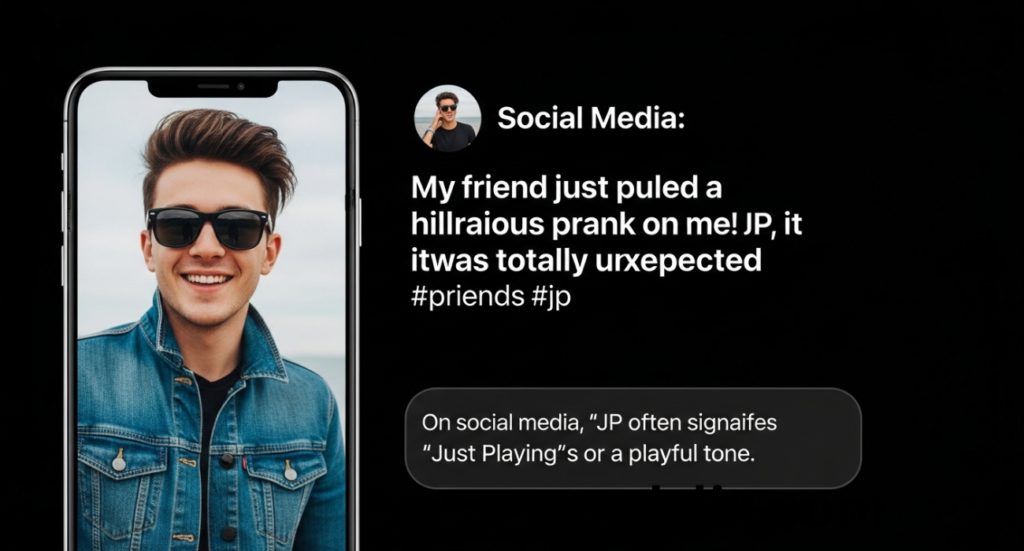
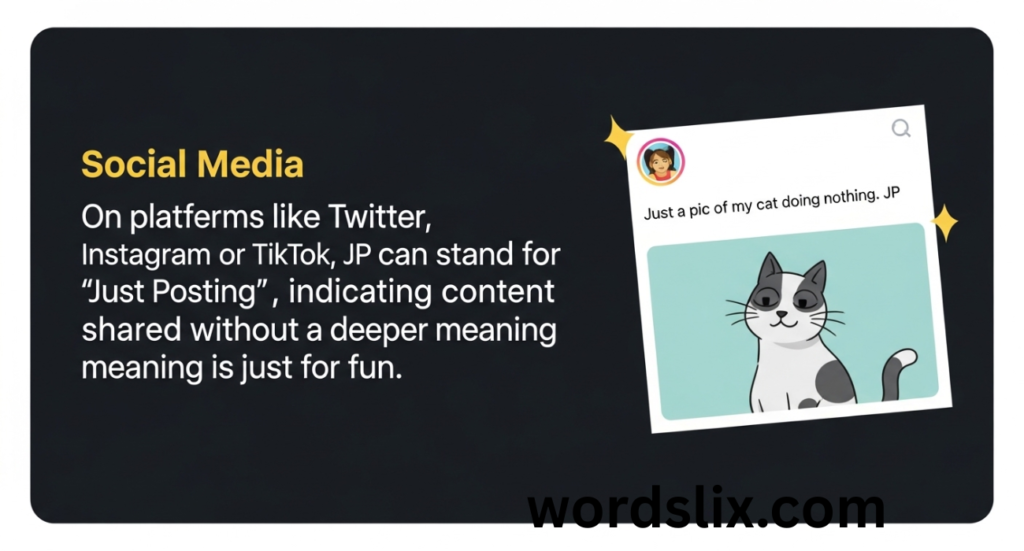
On platforms like Twitter, Instagram, and TikTok, bold humor spreads fast. Influencers often post dramatic statements for attention. They then add JP to signal exaggeration. For example, someone writes in a profile bio, “I only drink green juice and run five miles daily. JP.” That short addition prevents followers from taking the claim seriously.
Because viral content travels quickly, misunderstandings spread quickly too. A single sarcastic post without clarification may spark backlash. Adding JP reduces risk. In American social media culture, tone indicators protect reputation. They act as digital safety nets in fast-moving comment sections and online communities.
Gaming
Inside gaming spaces, emotions run high. During competitive play, players tease each other to stay energized. One gamer might say, “You cannot aim today, JP.” The phrase shifts the mood from insult to friendly banter. In multiplayer matches, quick tone markers maintain harmony among teammates.
Confusion sometimes appears when players discuss Japan servers. In that case, JP refers to a region, not Just Playing. For example, “Switch to JP server” clearly points to location. This difference shows why context remains critical in digital communication. The same letters carry different meanings depending on topic.
Common Misconceptions & Clarifications
One common myth suggests that JP meaning in text always refers to Japan. That assumption leads to frequent misunderstanding in American chats. In everyday casual conversation, it almost always means Just Playing. Only travel, server discussions, or geography topics shift the definition toward country reference.
Another confusion involves tone. Some believe using JP feels dismissive or immature. In reality, its impact depends on delivery. Overusing it after every statement weakens credibility. Used wisely, it strengthens clarification and keeps informal settings relaxed. Balance matters in any form of online communication.
Similar Terms & Alternatives
Many Americans use similar terms that function like JP. The most common include JK, /s, LOL, and TBH. Each has a slightly different effect in texting and social media exchanges. While JP signals playful teasing, JK means “Just Kidding” and carries a softer tone.
The following table shows how these expressions compare in real conversations.
| Term | Full Meaning | Tone | Best Context | Formal Use |
| JP | Just Playing | Playful sarcasm | Texting, gaming | Rare |
| JK | Just Kidding | Friendly humor | Texting | Rare |
| /s | Sarcasm | Clear irony | Forums | No |
| LOL | Laughing Out Loud | Reaction | Casual chat | No |
| TBH | To Be Honest | Direct opinion | Social media | Limited |
Understanding these alternatives helps you choose the right phrase for your message.
How to Respond to This Term
When someone uses JP, your reply depends on relationship and setting. In close friendships, you might return playful teasing. In workplace chats, you respond calmly without escalating the joke. Recognizing intent keeps communication smooth and prevents awkward pauses.
Casual Response
In friendly exchanges, a quick laugh works well. If someone says, “You are the worst driver, JP,” you might reply, “Keep dreaming.” This casual response keeps energy positive. It shows you understood the joke and accepted the playful sarcasm.
Funny Response
Sometimes you can amplify the humor. For example, if a friend says, “You sing like a cat, JP,” you could answer, “Correction, I sing like a superstar.” This funny response adds creativity and strengthens connection. Humor works best when both sides share comfort and trust.
Professional Response
In professional communication, tone shifts. If a coworker jokes in Slack and adds JP, stay composed. You might reply, “Understood. Let us focus on the deadline.” Workplace environments value clarity over comedy. Even though JP appears harmless, formal spaces demand careful wording.
Regional or Cultural Differences
Across the United States, JP meaning in text typically signals Just Playing. However, in global settings, interpretation may differ. In Asia or travel discussions, JP strongly connects to Japan. In job forums, it may reference a Job Posting. This shows how region and culture influence interpretation.
Because English spreads worldwide, abbreviations adapt to local norms. In American youth culture, quick shorthand feels natural. In other countries, users may rely more on emojis or full phrases. The global usage of internet slang reflects evolving communication habits.
Comparison with Similar Terms
To fully understand JP, compare it directly with other expressions in online communication. While JK sounds softer, JP often carries playful edge. Meanwhile, /s explicitly marks sarcasm in serious debates. These subtle differences affect how readers perceive tone and emotional weight.
Here is a deeper comparison table.
| Expression | Primary Purpose | Emotional Tone | Risk of Misreading |
| JP | Playful teasing | Light sarcasm | Medium |
| JK | Gentle correction | Friendly | Low |
| /s | Clear sarcasm marker | Sharp irony | Low |
| LOL | Show laughter | Positive | Very Low |
Choosing wisely improves clarity and reduces accidental offense.
Usage in Online Communities & Dating Apps
In online communities, tone spreads quickly across threads. Adding JP after bold opinions prevents conflict. On dating apps, users include it in a profile bio to soften strong claims. For example, “I expect five-star dates every weekend, JP.” The phrase transforms arrogance into charm.
Because first impressions matter online, small tone indicators shape perception. In romantic chats, humor builds attraction. In gaming groups, it maintains unity. In forums, it avoids heated debates. Strategic usage of JP protects reputation while preserving authenticity.
Hidden or Offensive Meanings
Although JP rarely carries hidden meanings, misuse can create problems. If someone uses it after an insulting comment, the joke may feel forced. Repeated sarcastic remarks followed by JP can seem passive aggressive. In that case, the phrase loses its friendly power.
No strong offensive meanings attach to JP in American slang. Still, tone determines impact. Words alone do not offend. Delivery and relationship matter more. Understanding audience expectations keeps humor safe and respectful.
Suitability for Professional Communication
When it comes to professional communication, caution helps. Most workplaces prefer clear language over shorthand. Instead of typing JP, writing “Just kidding” feels safer and more polished. Formal emails rarely welcome casual abbreviations.
However, some relaxed teams allow mild humor in internal chats. In those cases, brief slang may appear acceptable. Always read company culture before using informal language. Clear writing builds trust. Strong clarity reduces costly misunderstanding.
Why JP Meaning in Text Is Popular in the United States
The rise of JP meaning in text reflects how Americans value speed and clarity in digital communication. People send quick messages during work breaks, while commuting, or between classes. Because texting removes facial expression and voice tone, short markers like JP help prevent confusion. It keeps conversations smooth and avoids unnecessary tension in fast exchanges.
American culture also embraces playful teasing in casual conversation. Friends often joke with light sarcasm, and JP acts as instant clarification. Instead of writing a full sentence like “I am only joking,” users prefer a compact abbreviation. This pattern shows how internet slang adapts to modern habits and busy lifestyles.
Psychology Behind Using JP in Online Communication
When you type something sarcastic, you risk being misunderstood. The brain reads written words without emotional cues. That is why people rely on tone indicators like JP. It signals positive intent and reduces the chance of emotional reaction. In online communication, small signals can change how readers interpret entire messages.
Psychologists note that humor strengthens social bonds. Adding Just Playing after teasing helps maintain trust. In friendships and online communities, this reassurance matters. Without it, jokes may appear rude. Therefore, the usage of JP reflects emotional intelligence in informal settings, especially where tone cannot be heard.
How JP Meaning in Text Prevents Misunderstanding
A simple sentence can trigger conflict if tone feels unclear. For example, “Nice job breaking it” sounds harsh alone. Add JP, and the tone becomes playful. This small addition avoids misunderstanding and keeps the exchange positive. In texting slang, clarity protects relationships.
Misinterpretation often spreads quickly on social media platforms like Twitter and Instagram. One sarcastic comment may spark arguments. Using the JP short form provides immediate context. It acts like a digital wink. In American online chat spaces, these signals reduce unnecessary drama.
JP Meaning in Text vs Emoji Tone Indicators
Emojis also help express humor and soften sarcasm. However, emojis rely on visual interpretation, which may vary by region or age group. In contrast, the JP acronym clearly states the message. Words often provide stronger clarification than symbols in professional or semi-formal chats.
For example, a laughing emoji may appear mocking in serious discussions. Writing Just Playing communicates friendly intent more directly. In digital communication, choosing between emojis and text markers depends on audience and platform. Both tools support clarity, yet JP offers explicit meaning.
Impact of JP on Modern Slang Culture
The growth of JP meaning in text shows how slang evolves rapidly. New phrases appear on TikTok and spread across online communities within days. Young users especially adopt shorthand expressions. The JP full form blends seamlessly with other popular terms like JK, LOL, and TBH.
Language shifts reflect social habits. In the United States, conversational style dominates even written exchanges. Short phrases replace longer explanations. This shift influences social media slang and everyday speech. As technology shapes communication, expressions like JP become cultural markers of modern interaction.
When Not to Use JP in Text Messages
Although JP works well in friendly chats, certain moments require caution. Sensitive topics demand seriousness. Adding playful sarcasm during emotional discussions may appear dismissive. In serious conversations, clarity without humor protects trust and understanding.
In professional communication, overusing slang weakens credibility. A workplace email discussing a deadline should avoid informal tone markers. Instead of writing JP, full sentences communicate maturity. Understanding audience expectations helps determine appropriate usage and prevents awkward impressions.
Examples of JP Meaning in Real-Life Scenarios
Consider a college roommate joking about unpaid rent. One says, “Guess I will start charging interest, JP.” The phrase signals playful exaggeration. Both laugh and move on. Without that marker, the comment might feel confrontational. Real-life exchanges often rely on quick tone adjustments.
Another example appears in gaming during intense competitive play. A teammate misses a shot. Someone types, “Carrying the team today, JP.” The message lightens frustration. In high-energy environments, tone indicators maintain team morale and strengthen group dynamics.
Future of JP Meaning in Text and Digital Trends
As chat platforms evolve, short expressions will continue shaping language. Voice notes and video messaging reduce tone confusion, yet texting remains dominant. Therefore, abbreviations like JP will likely persist in online communication and youth culture.
Trends suggest growing reliance on direct tone markers. Platforms increasingly support fast, reactive exchanges. In that environment, compact phrases thrive. The global usage of shorthand shows no signs of slowing. While meanings may adapt, the need for clear digital tone will remain constant.
FAQs
What does JP mean in text messages?
JP usually means Just Playing, a casual abbreviation used in texting to show humor or light sarcasm and prevent misunderstanding.
Is JP slang commonly used in the United States?
Yes, JP meaning in text is popular in American social media, gaming, and casual conversation, especially in informal settings.
Can JP mean something other than Just Playing?
Yes, depending on the context, JP can also refer to Japan or a Job Posting, but in everyday texting it typically means Just Playing.
Is it professional to use JP in workplace communication?
No, JP is considered informal slang, so it’s better to avoid it in professional communication and use clear full phrases instead.
Conclusion
Understanding JP Meaning in Text helps you communicate clearly in modern digital life. People use JP as a short way to say Just Playing. This small abbreviation changes the tone of a message. It shows humor and removes harsh feelings from playful words. In texting and social media, tone matters a lot. Without voice or facial expression, messages can sound rude. JP solves this problem in a simple way. It keeps conversations friendly and relaxed. Many people in the United States use it every day in casual chats.
You should always look at the context before deciding the meaning. In most cases, JP means Just Playing. Sometimes it can stand for Japan or Job Posting. The situation decides the correct meaning. When you understand JP Meaning in Text, you avoid confusion and respond correctly. Clear communication builds strong relationships. Simple knowledge like this makes online communication easier and safer.