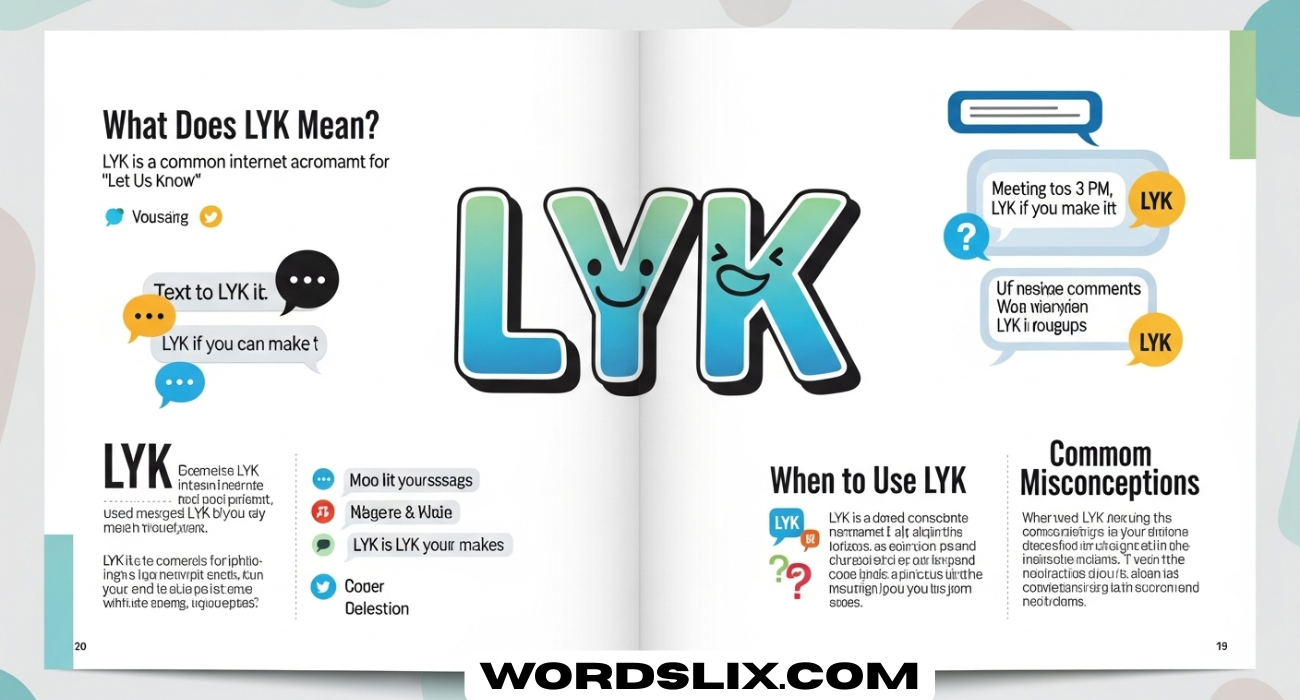
LYK Meaning in Text: A Complete Guide for Understanding and Using It
LYK Meaning in Text stands for let you know. People use it in texting and online chats. It is a short way to give someone an update.
You might see LYK in messages from friends or on social media. It keeps conversation quick and easy. Many people use it every day.
LYK Meaning in Text works in casual chats, gaming, and even work chat with friends. It saves time and makes messages clear. Everyone can understand it fast.
Definition & Meaning
The abbreviation LYK stands for let you know, and it has become a popular shortcut in texting and online chats. People use it to give quick updates without typing long messages. It’s a form of shorthand that saves time in casual conversation, especially on social media or in fast digital communication. Using LYK keeps messages short and clear, making it ideal for informal chat.
In modern messaging culture, LYK functions as more than just an abbreviation. It helps maintain a smooth flow in casual texting while signaling that the sender will follow up. The term fits perfectly in SMS, work chat, or even gaming environments where a short message can convey everything needed. Many Gen Z and millennials prefer LYK because it feels natural and friendly, reflecting trends in informal digital communication.
Read Also;SYD Meaning in Text: Your Complete Guide for USA Readers
Examples in Real Life:
Imagine you are planning a movie night with friends. You might text, “I’ll LYK about the time later,” using it to promise an update without committing immediately. In gaming, teammates often send messages like, “Enemy spotted—LYK if you need backup,” showing how it keeps online messaging fast and effective. Even in work chat, colleagues use it informally to confirm they will share details later.
Real-life examples show how LYK works in various contexts. In casual chats, a friend might text, “I’ll LYK when I’m free,” while in social media trends, it appears in comment threads or DMs. Unlike formal professional emails, LYK fits texting shortcuts perfectly for quick, friendly communication. Its versatility highlights how modern communication adapts slang, shorthand, and chat abbreviations to everyday conversations.
Background & History
The term LYK emerged from early SMS and chatroom culture in the 2000s. People wanted to send quick messages under character limits, which encouraged shorthand and creative texting abbreviations. Over time, it spread to social media, gaming, and informal digital communication, becoming a common slang term among Gen Z and millennials.
Compared to other internet slang like LMK or TTYL, LYK emphasizes the sender providing an update rather than requesting one. It evolved with messaging culture, reflecting the shift toward casual texting and online messaging habits. In the U.S., it remains widely recognized and widely used, highlighting trends in communication where speed and convenience outweigh formal language.
Usage in Different Contexts
1. Texting & Social Media
On social media or in casual texting, LYK works perfectly to give short updates. For example, you might post, “I’ll LYK if I can make it to the party.” The shorthand keeps conversation casual while signaling that you will follow up later. Text messages like this reflect trends in informal chat and digital communication, making it easy for friends to understand your intent.
The term also fits messaging culture in DMs or group chats. Unlike long explanations, LYK ensures quick messages maintain flow and clarity. Millennials and Gen Z often prefer it because it avoids unnecessary words while still being polite. Its integration in online chats shows how texting shortcuts shape modern communication trends across platforms like Twitter, Snapchat, and WhatsApp.
2. Gaming
In gaming, LYK is invaluable for sending quick messages under pressure. A player might type, “LYK if you need backup,” giving teammates a fast update. The abbreviation works perfectly in fast-paced online messaging, where every second counts. Gamers often combine it with other chat abbreviations to maintain smooth conversation during digital communication.
The speed and brevity of LYK make it ideal for informal chat in multiplayer games. It conveys shorthand instructions without breaking the flow. Using LYK in gaming demonstrates how messaging culture adapts slang to different environments. Both Gen Z and millennials rely on such shortcuts for casual texting, online updates, and effective teamwork.
3. Work (Informal Only!)
In work chat, LYK should only appear in informal conversations with colleagues you know well. A message like, “I’m reviewing the report—LYK when it’s done,” signals updates without being formal. Unlike professional emails, LYK suits informal digital communication and quick messages.
If you want to remain professional, alternatives like FYI or full phrases such as “I’ll let you know shortly” work better. Using LYK in formal professional emails can feel too casual. Still, in texting, online chats, or internal work chat, it conveys friendliness and efficiency, highlighting communication trends that favor short forms and shorthand updates over long explanations.
Common Misconceptions
Some people mistakenly think LYK means “like,” especially because of similar spellings in social media trends. Others assume it is rude or inappropriate for professional emails, which is false. Its casual nature simply suits texting, online messaging, and informal chat better than formal digital communication.
Another misconception is that LYK is outdated. In reality, it continues to thrive in messaging culture, especially among Gen Z and millennials. Using LYK correctly ensures your conversation stays natural. It complements other texting shortcuts and chat abbreviations, allowing smooth online updates and efficient quick messages in any casual digital communication setting.
Similar Terms & Alternatives
LYK is part of a family of slang alternatives in online messaging. Acronyms like LMK, TTYL, and FYI serve different purposes, yet they all reflect messaging culture. LMK asks someone to let you know, while LYK promises an update. TTYL ends conversations politely, and FYI shares information efficiently.
| Acronym | Meaning | Best Use Case |
| LYK | Let you know | Casual chats, texting, online messaging |
| LMK | Let me know | Slightly formal, professional or casual updates |
| TTYL | Talk to you later | Ending conversations, social media |
| FYI | For your information | Work emails, professional updates |
This table highlights the subtle differences and helps readers choose the right shorthand for each conversation, blending casual texting with informal digital communication.
How to Respond to “Lyk”
Responding to LYK depends on context. In casual texting, a simple “Cool, thanks!” or “Got it!” works perfectly. For humorous or friendly conversation, something like “Don’t leave me hanging!” keeps the tone light. In informal chat, such responses maintain engagement without being too formal.
In work chat, you can reply professionally while keeping it brief. Phrases like “Thanks, I’ll wait for your update” or “Got it, keep me posted” balance friendliness and efficiency. The response choice reflects communication trends in messaging culture, where quick messages, shorthand, and texting shortcuts keep conversations smooth.
Regional & Cultural Differences
In the U.S., LYK is widely recognized and commonly used by Gen Z and millennials. Its usage may vary in other countries, where native slang or local short forms replace it. Texting, social media, and online chats in English-speaking regions favor LYK due to its simplicity and casual tone.
Different platforms also affect usage. For example, on Twitter or Snapchat, LYK appears more frequently than in professional work chat. Understanding these nuances helps maintain clear conversation in digital communication, reflecting how messaging culture, informal chat, and texting shortcuts adapt across regions.
Hidden or Offensive Meanings?
LYK has no hidden or offensive meanings. It’s a safe shorthand for casual texting and online chats. Confusion may occur with words like “lyke,” an old variant of “like,” but context usually clears this up. In modern messaging culture, using LYK communicates a friendly update without misunderstanding.
Being aware of context ensures proper use in informal digital communication. It fits quick messages, social media trends, and chat abbreviations without risk. Unlike some slang alternatives, LYK is universally harmless and acceptable for Gen Z, millennials, and anyone familiar with modern communication shortcuts.
Professional Use?
LYK is not recommended in formal professional emails or official communications. Instead, phrases like “I’ll let you know shortly” or FYI maintain a polite, professional tone. Using LYK casually in work chat with close colleagues is fine, but it should never replace formal updates.
Understanding when to use LYK balances efficiency and professionalism. It reflects trends in messaging culture, where quick messages and shorthand thrive in informal digital communication but not formal writing. Adapting your conversation for context ensures clarity while keeping social media, texting, and online chats friendly and effective.
Why People Prefer LYK in Texting
Many people choose LYK in texting because it’s short, casual, and conveys messages quickly. Unlike longer phrases, it fits neatly into SMS, social media, and online chats. Its brevity is ideal for quick messages, informal chat, and digital communication, allowing Gen Z and millennials to keep conversation flowing without typing unnecessary words.
The preference also comes from messaging culture trends. In casual texting, LYK signals that the sender will provide an update later, keeping the tone friendly. It’s part of texting shortcuts that blend slang, shorthand, and chat abbreviations, showing how modern online messaging prioritizes speed and clarity while still feeling natural and human.
Differences Between LYK and LMK
LYK and LMK look similar but serve different purposes. LYK communicates that you will give an update, while LMK requests information from someone else. Both are texting abbreviations used in casual texting, online messaging, and social media, but using them incorrectly can confuse your audience in digital communication.
Understanding the difference also helps in professional and informal chat. LYK works in friendly quick messages, while LMK is slightly more formal but still casual. This distinction reflects trends in messaging culture, where Gen Z, millennials, and even older users adopt slang alternatives to maintain clarity and brevity in everyday text messages.
How LYK Enhances Online Conversation Flow
Using LYK in online chats improves conversation flow by reducing pauses and unnecessary explanations. It allows quick messages to convey intent clearly without interrupting the rhythm of casual texting. In messaging culture, LYK functions as a shorthand that keeps informal digital communication smooth and efficient.
It also helps manage multiple text messages at once. By using LYK, users signal that they will follow up later, keeping conversation organized. This simple abbreviation aligns with communication trends, letting Gen Z, millennials, and social media users maintain engagement without slowing down chatroom or social media interactions.
Top Platforms Where LYK Is Popular
LYK appears frequently on social media platforms like Instagram, Snapchat, Twitter, and even TikTok. It thrives in online messaging and informal chat because it fits character limits and encourages quick messages. The abbreviation is particularly popular among Gen Z and millennials, who value shorthand and texting shortcuts.
It’s also common in work chat among close colleagues in casual environments. Unlike formal professional emails, LYK maintains a friendly tone while keeping digital communication short and precise. Its popularity across platforms reflects broader messaging culture trends that prioritize speed, clarity, and slang alternatives in modern communication.
LYK in Group Chats and Messaging Threads
In group chats, LYK helps keep conversations organized. Instead of sending long explanations, a user can type, “I’ll LYK later,” signaling they will provide an update when available. This saves time and prevents confusion, enhancing casual texting and online chats. It’s particularly effective for quick messages in busy threads.
The abbreviation also maintains friendly conversation without interrupting others. Its role in messaging culture demonstrates how slang, shorthand, and texting shortcuts make digital communication efficient. Gen Z, millennials, and social media users rely on LYK in SMS, social media, and chatroom interactions to manage multiple conversations simultaneously.
LYK’s Role in Modern Digital Etiquette
In modern communication, LYK plays a subtle but important role in etiquette. It signals that the sender acknowledges the recipient and will provide information later. Unlike vague phrases, it creates clear expectations in online messaging, casual texting, and informal chat, reducing misunderstandings and enhancing messaging culture.
This etiquette applies to both personal and professional settings when used informally. Even in work chat, using LYK appropriately reflects awareness of texting shortcuts and slang alternatives. Its widespread adoption among Gen Z and millennials highlights its importance in digital communication trends, making it a reliable tool for polite, efficient exchanges.
Common Mistakes When Using LYK
Many users confuse LYK with “like” or misuse it in professional emails. These mistakes can disrupt casual texting or make digital communication seem careless. LYK should remain part of informal chat and quick messages, avoiding formal work chat or official online messaging.
Other errors include overusing it in social media threads or chatrooms, which may dilute its meaning. Proper use respects messaging culture and maintains smooth conversation flow. By understanding context and audience, users can integrate LYK with other slang alternatives, shorthand, and texting shortcuts without confusing friends, colleagues, or followers.
LYK in Social Media Trends
LYK is widely used in social media posts, DMs, and comment threads. Its popularity stems from character limits, quick messages, and the casual nature of online messaging. By using this abbreviation, users can maintain a friendly, fast-paced tone in casual texting while keeping conversation short and readable.
Social media trends also highlight generational adoption. Gen Z and millennials prefer LYK because it fits messaging culture norms, emphasizing brevity, efficiency, and friendliness. It complements other texting shortcuts and chat abbreviations, allowing seamless digital communication and keeping threads uncluttered, organized, and engaging for all participants.
How LYK Supports Efficient Online Updates
One of the main benefits of LYK is efficiency in online updates. Instead of typing long explanations, users signal they will provide information later. This improves messaging culture by maintaining smooth conversation in informal chat, SMS, or social media without overwhelming recipients with unnecessary details.
It’s also ideal for work chat when sending quick messages among teammates. By using LYK, employees respect character limits and keep digital communication concise. Integrating this abbreviation with other shorthand, slang alternatives, and texting shortcuts reflects trends in modern communication, making updates faster and clearer for everyone involved.
Future of LYK and Texting Abbreviations
As messaging culture evolves, LYK and similar texting shortcuts will likely remain popular. The need for quick messages, shorthand, and casual texting continues to grow with social media and online messaging trends. Gen Z, millennials, and future generations will adopt slang alternatives to maintain friendly, fast-paced digital communication.
The future also points toward integration with emerging platforms, AI chatbots, and work chat tools. As texting abbreviations evolve, LYK will adapt to new contexts while keeping its core function: providing efficient, friendly updates in informal chat, SMS, and online chats. Its role in modern communication will remain strong for years to come.
FAQs
Is LYK rude to use?
No, LYK is informal but friendly and not considered rude in casual texting or online chats.
Can I use LYK in work emails?
It’s best to avoid LYK in professional emails; use “I’ll let you know” instead for clear and polite communication.
What’s the difference between LYK and LMK?
LYK means you will let someone know, while LMK asks the other person to let you know.
Is LYK popular among older generations?
Mostly Gen Z and millennials use LYK; older generations rarely use it in texting or social media.
Conclusion
Understanding LYK Meaning in Text helps people communicate faster and clearer in texting, social media, and online chats. It stands for let you know and works as a short, friendly way to give updates. Using LYK keeps conversation simple and avoids long messages. Many Gen Z and millennials use it because it saves time and fits in casual texting or digital communication. The abbreviation also appears in gaming, work chat, and chatrooms, showing its usefulness in different situations.
Knowing LYK Meaning in Text helps avoid misunderstandings and makes messages polite and clear. People can combine it with other texting shortcuts like LMK, TTYL, or FYI to keep messaging culture smooth. It makes informal chat easy for friends, family, and coworkers. Using LYK shows awareness of modern communication trends while keeping messages short, friendly, and effective.