MYB Meaning in Text: How to Understand and Use This Popular Acronym
MYB Meaning in Text stands for “My Bad.” It is a short way to say sorry for a small mistake. Sometimes, it can also mean “Mind Your Business” or “Maybe.” People use it in texting, chats, and online messages.
You might see MYB in social media posts, messages, or gaming chats. It appears a lot in casual conversations. Knowing what it means helps you understand messages faster. It makes texting easier and more fun.
MYB Meaning in Text shows up in different situations. Most of the time, it is a simple apology. It helps keep conversations friendly. Using it correctly shows good texting manners.
Definition & Meaning
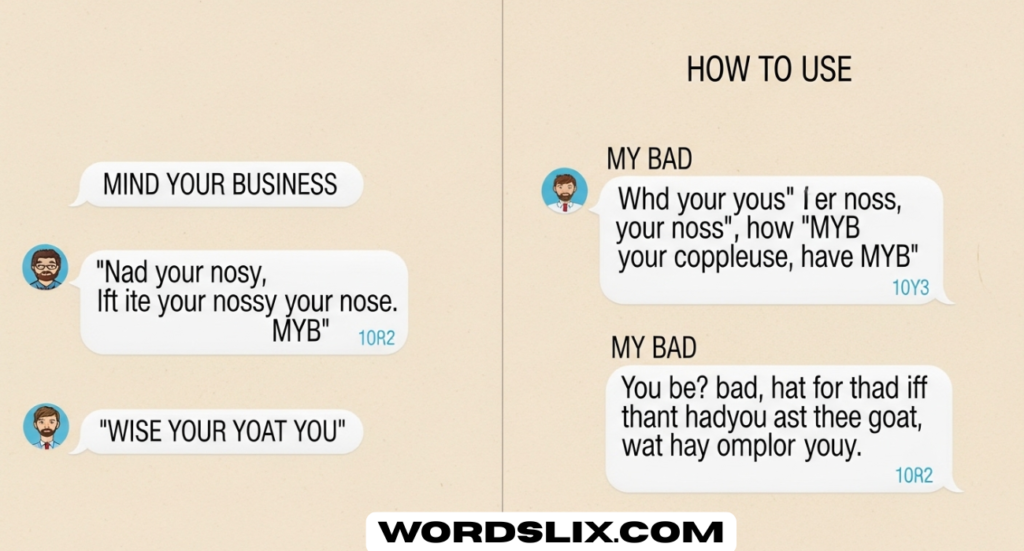
MYB in texting typically stands for My Bad, used when someone wants to admit a small mistake or misunderstanding. In casual chats, it works like a quick way to say “sorry” without making the conversation too formal. Depending on the context, it can also mean Mind Your Business, signaling someone to respect personal boundaries, or rarely, Maybe, showing indecision.
Examples help clarify MYB meaning. If a friend says, “MYB, I forgot to call you back,” it’s a friendly casual apology. In playful arguments, someone might text, “MYB, I’m not telling you!” which leans toward boundary-setting. Recognizing the tone, context, and relationship with the sender is crucial for accurate tone interpretation in informal communication.
Read Also;WYGG Meaning in Text: Your Ultimate Guide to This Trendy Acronym
Background & History
The term My Bad originated in American slang in the 1980s, often used in sports to acknowledge a mistake publicly. Its popularity grew as instant messaging and social media platforms became more common in the early 2000s, blending with online culture. Pop culture references in movies, TV shows, and sports broadcasts reinforced its casual use in daily life.
Mind Your Business has roots in African American Vernacular English (AAVE), becoming shorthand in texting during the 2010s. This phrase reflects informal language and boundary-setting in casual chats. Meanwhile, Maybe emerged from casual language evolution, representing indecision in fast-paced texting. Over time, these variations of MYB spread widely through online trends, emoji usage, and playful banter.
Usage in Various Contexts
In texting, MYB usually means My Bad, used for quick acknowledgments of mistakes. Friends often type, “MYB, here’s the correct link,” showing conversation clarity without long explanations. On social media, it can appear as Mind Your Business, especially in posts or comments where someone wants to set limits politely while keeping the tone light and playful.
Gaming conversations also feature MYB, mainly as My Bad, when players admit errors. In casual online communities, the acronym is part of friendly communication and humorous replies. Its interpretation relies on context awareness, tone, and the surrounding message. Using MYB correctly prevents misunderstandings and strengthens connection in both casual chats and larger digital networks.
Common Misconceptions & Clarifications
Many people assume MYB always means My Bad, but it can signal Mind Your Business or even Maybe. Believing it’s universally understood is another mistake; some recipients, especially in professional or non-English settings, might misinterpret it. Clarifying the meaning is crucial to avoid misunderstandings and awkward moments in informal communication.
Another misconception is that MYB is always friendly. While My Bad is typically safe, Mind Your Business may sound sharp or dismissive depending on tone. Tone interpretation matters, and texting etiquette requires paying attention to context, sender relationship, and cultural norms. Understanding these nuances enhances conversation clarity and ensures proper use in everyday messaging.
Similar Terms & Alternatives
For My Bad, alternatives include “Oops,” “Sorry,” or “My mistake,” offering slightly more formal or explanatory options. For Mind Your Business, phrases like “Stay out of it,” “None of your concern,” or “Keep to yourself” provide boundary-setting without losing clarity. For Maybe, use “Perhaps,” “Might be,” or “Not sure” when expressing uncertainty.
| Term | Meaning | Best Used In |
| MYB (My Bad) | Casual apology | Texting, gaming, casual chats |
| Sorry | Formal apology | Workplace or formal messages |
| MYB (Mind Your Business) | Setting boundaries | Social media, playful banter |
| Stay Out of It | Firm boundary | Serious or direct conversations |
This table highlights conversation clarity and helps readers pick the right phrase depending on tone, context, and audience.
How to Respond to This Term
When someone texts MYB, your response should match the context. For casual situations, you might say, “No worries!” or “All good!” to acknowledge the casual apology. In humorous chats, playful replies like “We forgive you… this time!” maintain a friendly tone and promote friendly communication.
Professional or formal settings require caution. Responding to MYB with “Please share the correct file” or “Let’s focus on the tasks” maintains clarity and prevents misunderstandings. Recognizing whether the acronym signals My Bad, Mind Your Business, or Maybe is critical for texting etiquette and smooth digital conversations.
Regional or Cultural Differences
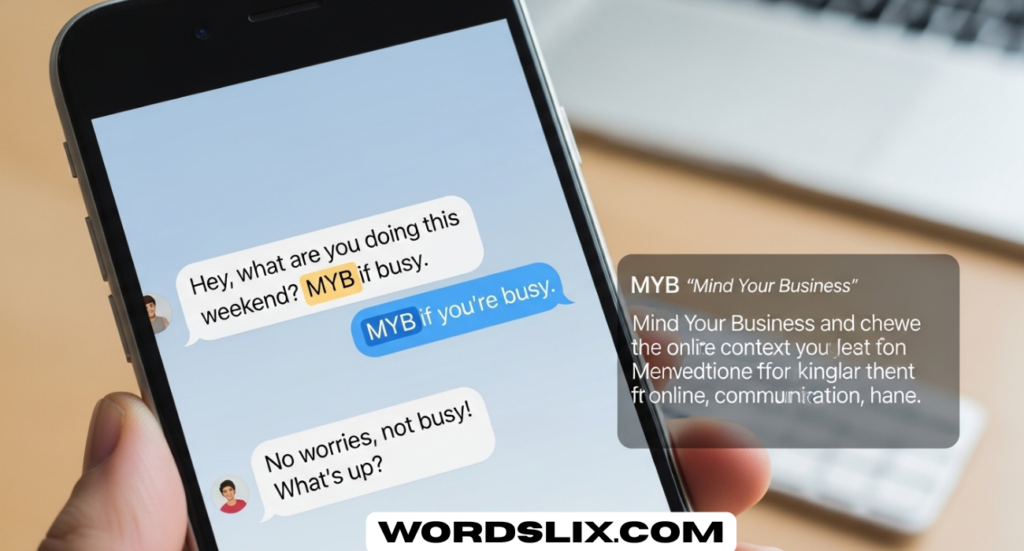
In the U.S., MYB is most commonly My Bad, widely understood in texting, social media posts, and gaming conversations. Other regions, like parts of Asia, may recognize the term in online communities, but Mind Your Business can seem too direct, making context awareness essential for cross-cultural communication.
Regional variations also influence tone interpretation. In casual chats with English speakers globally, My Bad is generally safe, while Mind Your Business requires caution to avoid sounding confrontational. Awareness of cultural norms, message intent, and the relationship with the recipient ensures proper informal communication.
Comparison with Similar Terms
Comparing MYB with alternatives like “Sorry” or “None of Your Concern” highlights subtle differences. My Bad is informal, fast, and casual, ideal for texting or gaming. Sorry is more formal, suitable for professional communication. Mind Your Business sets boundaries and can range from playful to firm depending on context, tone, and audience.
| Term | Tone | Use Case |
| MYB (My Bad) | Casual, friendly | Quick apologies in texting and gaming |
| Sorry | Formal, versatile | Workplace emails, polite apologies |
| MYB (Mind Your Business) | Direct, sometimes playful | Social media, playful banter |
| None of Your Concern | Serious, firm | Boundary-setting in sensitive situations |
This comparison allows readers to choose terms that align with conversation clarity and tone.
Usage in Online Communities & Dating Apps
MYB appears in online forums, gaming platforms, and dating apps, often meaning My Bad. In Discord or Twitter/X, users type it after errors or to lighten a conversation. On dating apps, sending “MYB, I mistyped!” shows attentiveness while maintaining friendly communication and humorous replies.
The acronym also integrates into social media platforms through posts, comments, and hashtags. Understanding its meaning in these spaces is essential for clarifying misinterpretations and maintaining smooth informal communication. Recognizing when MYB signals apology, boundary, or uncertainty helps avoid confusion in digital interactions.
Hidden or Offensive Meanings
While My Bad is safe in most contexts, Mind Your Business can sound rude if used harshly. The acronym itself is not offensive, but tone and context determine how it’s received. Overusing MYB in sensitive conversations may make the sender appear dismissive or uninterested, leading to misunderstandings.
Being mindful of texting etiquette, cultural nuances, and audience ensures friendly communication. Emojis often soften the tone, turning boundary-setting into playful banter instead of confrontation. Correctly reading emoji usage, message intent, and context awareness keeps conversations positive and prevents miscommunication.
Suitability for Professional Communication
MYB is generally too casual for emails, reports, or workplace chats. Using it in professional contexts can appear unpolished. Alternatives like “I apologize” or “Please focus on this task” maintain clarity and professionalism while addressing mistakes. Proper phrasing ensures conversation clarity and avoids misunderstandings.
For professionals, avoiding informal communication in sensitive settings is key. Recognizing that My Bad and Maybe are not suitable in emails helps maintain tone and respect. Similarly, Mind Your Business should never appear in workplace correspondence. Choosing the right words ensures effective professional communication across all platforms.
How MYB Shapes Casual Online Conversations
MYB has become a key part of casual chats across social media and gaming conversations. Its use helps people acknowledge mistakes quickly, signal boundaries, or show uncertainty without lengthy explanations. In fast-paced online communities, using My Bad or Mind Your Business keeps conversations smooth while preserving friendliness and clarity. Tone and context matter more than ever.
The acronym also reflects broader casual language evolution in texting culture. Its popularity shows how informal communication adapts to new online trends, combining humor, emojis, and shorthand. Understanding how MYB meaning affects friendly communication allows users to engage confidently in playful banter, improving interaction quality while avoiding potential misunderstandings in digital conversations.
The Role of Emojis in MYB Interpretation
Emojis often change how MYB meaning is received in texts. Adding a smiling face after My Bad signals a lighthearted casual apology, while a serious emoji can make Mind Your Business feel sharper or more direct. Emoji usage enhances conversation clarity and helps readers detect tone, a vital part of texting etiquette in online culture.
In gaming chats and social media posts, emojis accompany MYB to express humor or soften boundaries. Combining informal language with symbols improves tone interpretation and minimizes misunderstandings. This subtle mix allows participants to maintain friendly communication while clearly showing intent, whether admitting a mistake, setting a boundary, or leaving room for uncertainty.
MYB in Texts vs Social Media Posts
The meaning of MYB can shift depending on the platform. In texting, My Bad dominates as a quick reply to mistakes, reflecting everyday texting etiquette. On social media platforms, it may lean toward Mind Your Business when commenting or posting, serving as playful or firm boundary-setting in casual chats.
Social media amplifies online trends in language, allowing acronyms like MYB to spread rapidly. Users combine informal communication, emojis, and hashtags to convey context efficiently. Recognizing platform differences helps readers avoid misunderstandings and enhances conversation clarity, ensuring that whether on Discord, Twitter/X, or messaging apps, the acronym fits the tone and intent.
The Psychology Behind Using MYB
People use MYB to manage social interactions efficiently. My Bad serves as a casual apology, reducing friction in conversations. Mind Your Business helps establish personal space, creating boundaries without conflict. In fast-moving online communities, context awareness is crucial to interpret intention and respond appropriately, minimizing misunderstandings and promoting friendly communication.
This acronym also shows how informal communication reflects personality and mood. Using Maybe communicates indecision or uncertainty in a concise way. By analyzing tone, emoji use, and surrounding context, users can better understand intent, apply proper texting etiquette, and maintain smooth interactions in social media posts and gaming conversations.
MYB and Texting Etiquette Rules
Using MYB correctly is part of modern texting etiquette. My Bad conveys accountability for mistakes, while Mind Your Business sets boundaries without conflict. Casual apology and boundary-setting are both important for maintaining clarity. Misusing the term can lead to misunderstandings, especially with new contacts or in cross-cultural digital spaces where tone interpretation varies.
Good texting etiquette includes context awareness, emoji cues, and timing. Quick replies with MYB show attentiveness and respect, keeping informal communication smooth. By mastering how to apply MYB meaning in casual chats, social media, and gaming conversations, users strengthen friendly communication and avoid appearing dismissive or unclear.
How MYB Reflects Pop Culture Influence
The rise of MYB mirrors the influence of American slang and pop culture references. From 1980s sports terminology to movies and TV shows, “My Bad” became embedded in casual speech and texting. Online communities and social media further amplified the acronym, making it part of casual language evolution and everyday informal communication.
Mind Your Business gained traction through AAVE and cultural shorthand, appearing in social media posts and comments. Its popularity highlights how online trends shape texting abbreviations and friendly communication. Recognizing these origins provides context awareness, helping users interpret tone, avoid misunderstandings, and engage naturally across gaming conversations and casual chats.
MYB in Professional vs Personal Settings
In personal chats, MYB is safe and playful, usually representing My Bad or Maybe. It adds informality to texting abbreviations while maintaining conversation clarity. In professional contexts, however, the term can seem unpolished or disrespectful. Using alternatives like “I apologize” or “Please correct this” preserves professional communication and avoids misinterpretation.
Understanding context awareness is key. Professionals must distinguish between casual messages among friends and workplace interactions. Applying texting etiquette in formal emails ensures clarity, while avoiding informal language prevents offense. Balancing friendly communication and professionalism ensures the acronym’s versatility without risking negative impressions.
MYB in Dating Apps and Flirty Texts
On dating apps, MYB meaning often signals a casual apology for typos, delayed replies, or small mix-ups. Users combine emojis and playful language to maintain friendly communication. Quick replies with My Bad can show attentiveness and lighten conversations, while Mind Your Business is rarely used in flirty contexts to avoid sounding harsh.
Understanding tone interpretation in dating apps is crucial. Users who misread Maybe or My Bad risk sending awkward signals. Recognizing emoji usage, context, and intent helps maintain smooth interactions. Informal communication here encourages humor, playful banter, and clarity, ensuring interactions remain friendly while navigating online romance.
Common Mistakes with MYB and How to Avoid Them
A major mistake is assuming MYB always means My Bad. Misinterpreting Mind Your Business can lead to awkward conversations or offense. Another error is ignoring tone and context, which are essential for conversation clarity and friendly communication. Misusing Maybe also causes confusion in casual chats or online messages.
To avoid mistakes, observe emoji cues, relationship context, and platform norms. Applying texting etiquette, understanding informal communication, and acknowledging online trends ensures accurate tone interpretation. Learning proper MYB meaning prevents misunderstandings and enhances clarity in social media, gaming conversations, and cross-cultural texting situations.
Future of MYB in Online Communication
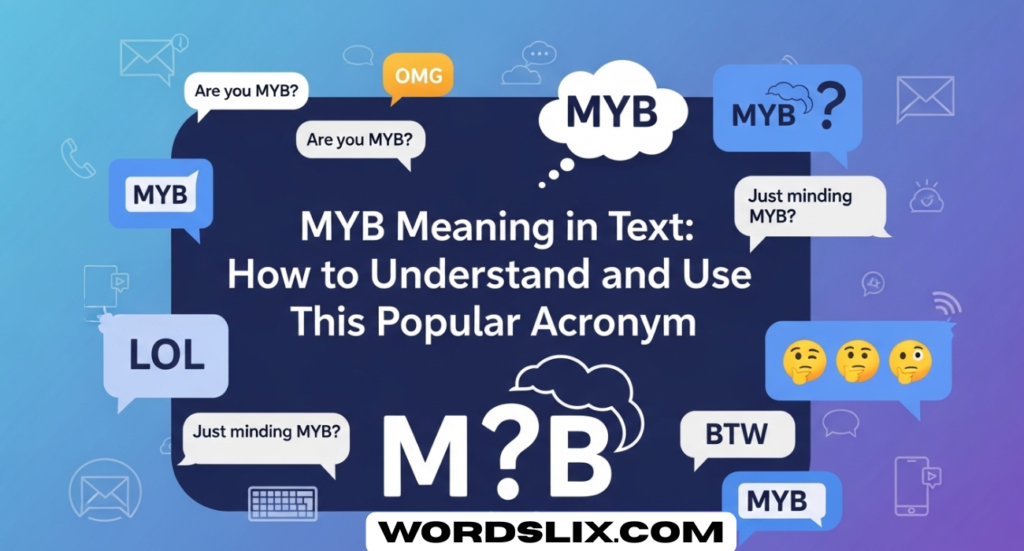
As online culture evolves, MYB meaning continues to shift. The acronym adapts to new social media platforms, gaming conversations, and texting habits. Its use reflects trends in informal communication, casual chats, and emoji usage, remaining a versatile shorthand for apology, boundaries, or uncertainty.
Emerging trends suggest that abbreviations like MYB will increasingly blend humor, clarity, and speed. Understanding slang origins, platform-specific meanings, and tone interpretation is crucial for readers. Keeping up with online communities ensures effective friendly communication, preserving conversation clarity and preventing misunderstandings in the ever-changing digital landscape.
FAQs
What Does MYB Mean in Text?
MYB meaning usually stands for My Bad, a casual apology, but it can also mean Mind Your Business to set boundaries, or rarely Maybe for uncertainty.
How Do I Know Which MYB Is Meant?
Context, tone, and emoji usage help determine whether it’s a casual apology, boundary, or indecision in informal communication.
Is MYB Appropriate for Work Emails?
No, MYB is too casual for professional settings. Use “I apologize” or “Please correct this” for clear and polite professional communication.
Can MYB Be Misunderstood?
Yes, ignoring tone interpretation or cultural norms can cause misunderstandings, especially with new contacts or in cross-cultural online communities.
Conclusion
MYB Meaning in Text is an important acronym to know for chatting and texting. It usually means My Bad, which is a simple way to say sorry for small mistakes. Sometimes, it can mean Mind Your Business, which tells someone to give space, or Maybe, which shows you are unsure. People use it in texting, social media posts, gaming conversations, and casual chats. Knowing the right meaning helps avoid confusion and keeps conversations clear and friendly.
Using MYB Meaning in Text correctly shows good texting habits and helps you communicate better with friends, family, and online communities. Understanding the tone, context, and emojis makes your messages polite and easy to understand. This knowledge improves conversation clarity and keeps interactions smooth.