TMP Meaning in Text: Your Complete Guide to Understanding This Popular Acronym
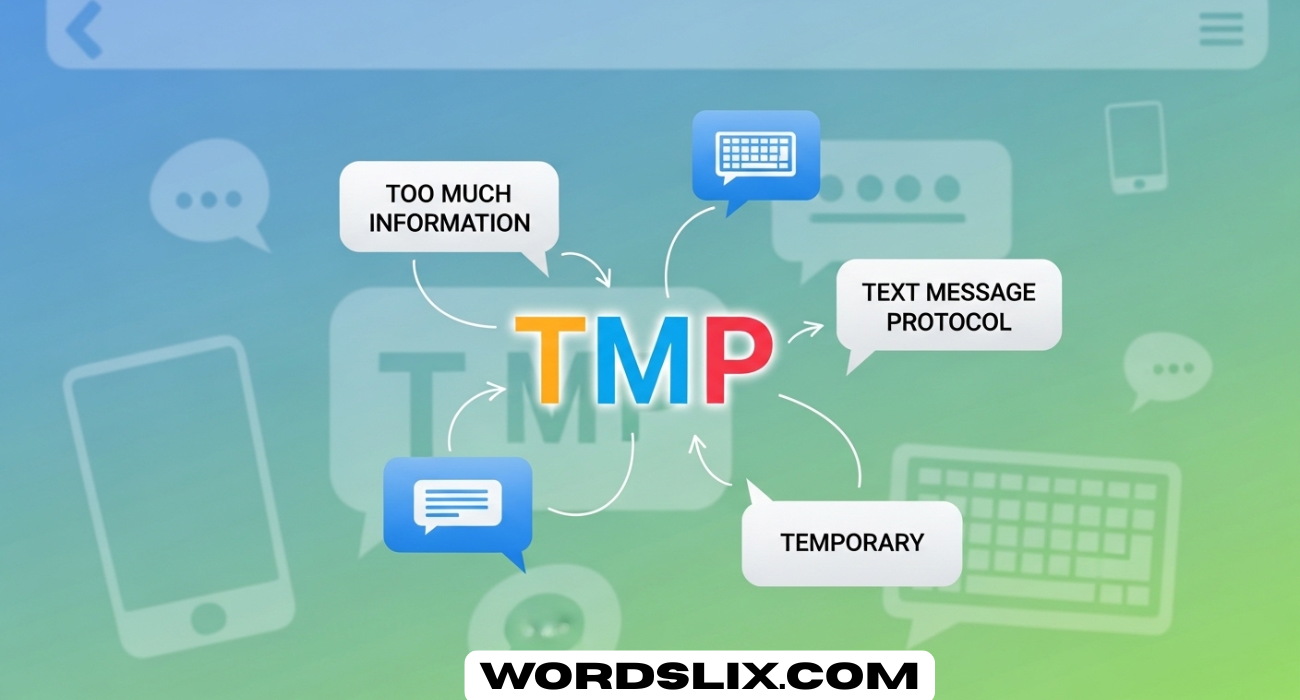
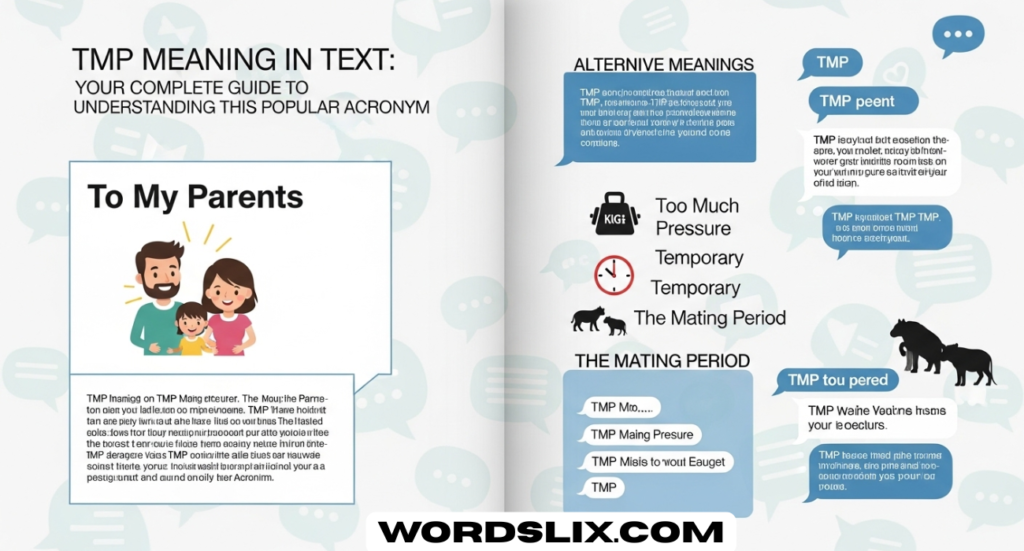
TMP Meaning in Text is a short form used in texting and digital communication. It usually stands for Text Me Please, but it can also mean Temporary, Trust Me Please, or Too Much Pressure. People use it in chats, DMs, and social media posts.
You might see TMP in messages from friends, family, or even gamers. It can be confusing at first. Knowing what it means makes reading messages easier and faster.
TMP Meaning in Text helps people send short, clear, and friendly messages. It is popular on TikTok, Instagram, Snapchat, and online chat. Understanding it keeps your conversations smooth and polite.
What Does TMP Mean in Text?
When you receive a message with TMP, it can feel confusing if you don’t know the meaning. In modern texting and digital communication, TMP usually stands for Text Me Please, a friendly way to ask someone to reply. This abbreviation is used in social media, online chat, DMs, and even captions, making messaging faster and more casual.
Understanding TMP depends heavily on context. The tone, platform, and surrounding words all guide its interpretation. While teens often use it in informal communication, adults may see it in work chat or professional messaging in a lighter sense. Recognizing these clues helps you respond correctly in any conversation.
Read Also;BMF Meaning in Text: Real Meaning, Uses, and Hidden Context
Why “TMP” Has Multiple Meanings Today
Modern texting culture evolves rapidly, and slang like TMP reflects these changes. Platforms like TikTok, Instagram, and Snapchat encourage short forms of communication. Over time, TMP developed multiple interpretations, such as Temporary, Trust Me Please, or Too Much Pressure, depending on tone, topic, or emotional context.
The meaning of TMP also changes based on social trends and young users shaping informal communication. In digital communication, messages travel fast, and abbreviations save time, allowing users to send friendly messages or convey emotion in a quick and relatable way. The same phrase can be playful, urgent, or casual depending on the platform and surrounding words.
All Possible Meanings of TMP in Text (Explained With Examples)
TMP is more than a single acronym; it has multiple recognized meanings across texting platforms. Depending on the context, it can reflect casual conversation, technical usage, emotional chats, or even gaming slang. Knowing each interpretation ensures clarity and prevents miscommunication.
Some meanings are universal, while others vary by region, platform, and sender. Understanding topic clues and tone helps you identify the right interpretation. Below, we explore each common meaning and show how it works in real messaging, online chats, and social media posts.
1. TMP = Text Me Please (Most Common Meaning)
The most frequent usage of TMP in texting is Text Me Please, a friendly way to request a reply. Teens and adults alike use it in DMs, online chat, and casual conversation. A message like, “TMP when you arrive,” shows politeness while saving time, making it ideal for fast messaging.
This meaning fits any informal communication where a friendly message is needed. Social media users include it in captions or posts to encourage interaction. By reading the tone and surrounding words, you can tell it’s a polite nudge rather than an urgent demand, which helps maintain smooth digital communication.
2. TMP = Temporary
In professional messaging, TMP can stand for Temporary, often referring to files, plans, or solutions. For example, in a work chat, someone might write, “Use the TMP file until approval,” signaling something short-term. This meaning is common in technical discussions and project updates.
The context defines its interpretation. Unlike Text Me Please, Temporary is more neutral and practical. By observing topic clues and sender clues, recipients can quickly understand it refers to short-lived projects or tasks rather than casual requests or emotional chats.
3. TMP = Trust Me Please
In emotional chats, TMP can mean Trust Me Please, often used to reassure or persuade someone. A friend might text, “Everything’s fine, TMP,” showing empathy or seeking confidence. This usage reflects emotional tone, subtle persuasion, and personal connection in casual digital communication.
Unlike professional work chat meanings, this abbreviation appears in private conversations, sometimes with young users or in social media DMs. The surrounding words and tone help clarify it, showing how informal communication conveys feelings efficiently.
4. TMP = Too Much Pressure
Students, gamers, or stressed friends often use TMP to indicate Too Much Pressure. For example, “Exams tomorrow… TMP” expresses stress, urgency, or frustration. In gaming slang, it can highlight a difficult level or a high-pressure scenario.
This meaning relies heavily on tone and context. The abbreviation is short and expressive, perfect for fast messaging. Observing platform clues, like Discord or Snapchat, helps readers understand it is casual rather than literal, showing how digital communication can reflect emotion quickly.
5. TMP = The Most Popular
On social media, TMP sometimes means The Most Popular, referring to trends, posts, or songs. For instance, “This track is TMP right now” indicates cultural relevance. This slang is common in TikTok, Instagram captions, and posts, connecting users to social trends.
Its interpretation relies on observing topic clues in messaging. Younger audiences or trend-focused communities use it as a quick shorthand to signal relevance, demonstrating how informal communication blends brevity, popularity, and clarity in digital communication.
6. TMP in Gaming Slang
Gamers often use TMP differently, like Team Meeting Point, to coordinate actions. A message such as, “Regroup at the TMP,” shows strategic communication in multiplayer games. Gaming communities worldwide adopt this meaning for clarity and speed in high-pressure situations.
TMP in gaming also overlaps with Too Much Pressure or Temporary depending on the context. Recognizing the platform, topic clues, and surrounding words ensures correct understanding, especially for players involved in online team-based games.
7. TMP as a Personal/Inside Joke
Sometimes, TMP acts as a private abbreviation between friends or small groups. These custom interpretations may not appear in guides or dictionaries. For example, two friends might use it as an inside joke in a DM or chat without anyone else understanding.
Such usage highlights the flexibility of informal communication. Topic clues, tone, and shared knowledge determine meaning. These private uses show how digital communication can evolve beyond standard definitions, reflecting personal culture and social bonds.
Table: All TMP Meanings at a Glance
| Meaning | Context | Example |
| Text Me Please | Casual conversation | “TMP when you arrive.” |
| Temporary | Work chat / tech | “Use the TMP file for now.” |
| Trust Me Please | Emotional chats | “Everything’s fine, TMP.” |
| Too Much Pressure | Stress / gaming | “Exams tomorrow… TMP.” |
| The Most Popular | Social trends | “This song is TMP rn.” |
| Team Meeting Point | Gaming / team chat | “Regroup at the TMP.” |
How to Know What TMP Means in a Message (Context Guide)
Understanding TMP requires paying attention to topic clues, tone, sender clues, and surrounding words. If a text is about feelings, it likely means Trust Me Please. Messages about files or temporary solutions usually indicate Temporary. Recognizing emotional, casual, or technical cues ensures the right interpretation.
Tone is key. Calm and casual messages often signal Text Me Please, while stressed or urgent messages suggest Too Much Pressure. The sender also matters; teens might prefer Text Me Please or Too Much Pressure, adults might use Temporary, and gamers may opt for Team Meeting Point. Observing surrounding words helps clarify meaning in every conversation.
Why TMP Became Popular in Modern Texting
TMP became popular because modern users crave fast messaging. Social media platforms encourage short forms to save time, convey emotion, and maintain casual communication. Young users influence slang adoption, while digital culture favors brevity and clarity in messaging.
Its growth reflects how abbreviations like TMP merge convenience with expressiveness. Whether signaling a friendly message, stress, or trend, the phrase adapts to context, making it a staple in informal communication, emotional chats, and social media posts.
Is TMP Considered Formal or Informal?
TMP is entirely informal. It works well in DMs, Snapchat, Instagram captions, and casual texting, but it should be avoided in business emails, academic writing, or official reports. Its tone and casual nature make it ideal for everyday messaging and digital communication.
Even in professional settings, TMP can appear in work chat among colleagues in informal conversations, especially for short updates or instructions. Recognizing the platform and audience ensures proper use, maintaining clarity while keeping communication efficient.
Examples of TMP in Real-Life Conversations
Example 1: Friendly Chat
A teen texting a friend might say, “Leaving home, TMP when you arrive,” showing Text Me Please in casual conversation. It signals politeness and urgency without being pushy.
Example 2: Emotional Talk
In private chats, someone might reassure a friend, “I didn’t hide anything from you, TMP,” using Trust Me Please. The tone and emotional context make the meaning clear.
Example 3: Work Chat
A colleague might send, “Use the TMP file for now,” reflecting Temporary usage in professional messaging, where brevity and clarity are key.
Example 4: Gaming
During an online match, a player could type, “Regroup at the TMP,” signaling Team Meeting Point in gaming slang. Timing, platform, and context define the meaning.
Example 5: Trend Conversation
On social media, someone may comment, “This song is TMP right now,” highlighting The Most Popular track and connecting to social trends and cultural popularity.
Is TMP Used the Same Way Worldwide?
TMP varies by region. In the USA and Canada, Text Me Please is most common. In the UK and Australia, professional Temporary usage appears more. Asia often favors Trust Me Please in emotional chats, while Team Meeting Point or Too Much Pressure is common in global gaming slang. Context and culture shape the interpretation.
How to Reply When Someone Sends “TMP”
If they mean “Text Me Please”
Responses can be casual, like “Sure, texting you now 😊” or “I’ll message you in a bit,” reflecting polite and friendly conversation.
If they mean “Trust Me Please”
You might reply with reassurance: “I trust you” or “Okay… I believe you,” matching the emotional tone.
If they mean “Temporary”
Professional replies like “Got it, noted” or “We’ll update it later” work well in work chat.
If they mean “Too Much Pressure”
Supportive replies such as “Take a break, it’s okay” or “Relax, you got this” suit casual messaging.
Common Misunderstandings About TMP
Some people mistakenly interpret TMP as Time Management Problem, Take My Picture, or Tell Me Please. These meanings are rare, but knowing them helps avoid confusion. Paying attention to topic clues, sender clues, and tone ensures correct interpretation in all messaging situations.
Cultural or Linguistic Insight
Language evolves where speed meets emotion, and TMP is a perfect example. Digital culture encourages short abbreviations, allowing users to communicate emotion, urgency, or trends quickly. Its flexibility in texting, social media, and gaming slang highlights how informal communication adapts to modern digital communication habits.
Custom Example Sentences Using TMP
Fresh examples include: “TMP when you’re online; I need to talk,” “This solution is just TMP until the final version arrives,” “I swear I’m telling the truth, TMP,” “There’s TMP on me right now with all these tasks,” and “This trend is TMP on TikTok.” Each demonstrates informal communication, fast messaging, and contextual clarity.
How TMP Impacts Modern Digital Communication
In today’s world, TMP shapes how people interact in texting, social media, and online chat. By using short forms like TMP, users save time while keeping conversations casual and expressive. Whether in DMs or group chats, it allows friendly messages to convey emotion and urgency without lengthy explanations.
The effect of TMP extends beyond simple messaging. It reflects the evolution of digital communication, highlighting trends in informal communication, social media captions, and fast-paced online culture. Understanding its usage improves clarity, avoids misinterpretation, and helps users adapt to modern texting habits while engaging meaningfully in emotional chats and casual exchanges.
TMP Usage Across Different Social Media Platforms
TMP appears frequently on TikTok, Instagram, and Snapchat, where brevity is valued. Users include it in captions, posts, and DMs to encourage interaction, express emotion, or show urgency. Its meaning often depends on context, tone, and the platform, making it a versatile tool in digital communication for young users and social trend followers.
Each platform shapes the interpretation differently. On TikTok, it might reference trends or The Most Popular, while Snapchat DMs might use it as Text Me Please. Understanding these nuances ensures proper response in online chat. Observing topic clues, sender clues, and surrounding words guarantees that TMP conveys the intended message.
TMP in Teen and Youth Communication
Teens and young adults heavily rely on TMP for fast, expressive messaging. In social media, texting, and online chat, it acts as a shorthand to convey emotion, urgency, or friendliness. Whether using Text Me Please, Too Much Pressure, or Trust Me Please, the abbreviation speeds communication while maintaining tone in casual conversation.
Younger users also shape the slang’s evolution. Their use of TMP in captions, posts, and DMs influences modern texting trends, creating a culture of brevity and clarity. Observing topic clues and tone allows outsiders to interpret it accurately, making TMP a key part of contemporary digital communication.
TMP in Professional Messaging
Even though TMP is mostly informal, it occasionally appears in work chat or technical messaging as Temporary. Professionals use it to refer to short-term files, tasks, or solutions, ensuring clarity while saving time. The context is critical, as misunderstanding could lead to errors or confusion in digital communication.
Recognizing sender clues and surrounding phrases helps distinguish casual Text Me Please messages from work-related Temporary instructions. Understanding this distinction improves both informal communication skills and professional efficiency. Observing tone, topic clues, and platform conventions ensures accurate interpretation of TMP in mixed-use environments.
The Role of TMP in Gaming Communities
Gamers often use TMP for Team Meeting Point, Too Much Pressure, or Temporary strategies. In multiplayer games, clear and fast communication is essential, and TMP allows players to convey instructions quickly. Its use reflects unique gaming slang and demonstrates how digital communication adapts to specialized platforms.
Context is key. Reading the surrounding words and understanding tone ensures players interpret TMP correctly. Whether coordinating team strategy or expressing stress, the abbreviation saves time and enhances gameplay communication. Recognizing topic clues prevents mistakes and keeps informal communication both effective and clear.
How TMP Reflects Social Media Culture
The rise of TMP mirrors the fast-paced nature of social media. Its frequent use in DMs, captions, and posts shows how short forms allow users to share emotion, humor, and urgency. From TikTok trends to Instagram interactions, TMP has become a staple in modern digital communication among young users.
Social media culture also encourages playful or personalized interpretations. Variants like The Most Popular in trends or Trust Me Please in private chats highlight its flexibility. Observing tone, topic clues, and surrounding words is crucial to decoding meaning, making TMP both a tool for efficiency and cultural expression in informal communication.
TMP in Emotional Chats and Personal Conversations
In private conversation, TMP often conveys emotion. Meanings like Trust Me Please or Too Much Pressure allow users to express reassurance, stress, or urgency. Its brevity makes it ideal for texting and online chat, especially when emotions are high. Context, tone, and sender clues guide accurate interpretation.
Emotional messaging also relies on friendly messages and trust. Teens, adults, and social media users employ TMP in DMs and posts to strengthen bonds, avoid miscommunication, or make a statement quickly. Recognizing the platform and reading surrounding words ensures that the abbreviation communicates the intended sentiment effectively.
TMP and Trend-Driven Messaging
As trends spread across TikTok, Instagram, and other platforms, TMP often represents The Most Popular. Its presence in captions, posts, and online chat shows how users participate in social trends while keeping messaging short and expressive. The abbreviation captures attention quickly and highlights cultural relevance.
Trend-driven usage also adapts to young users’ fast communication style. TMP signals connection with peers and current culture without extra explanation. Observing topic clues, tone, and platform context allows readers to interpret it accurately, blending digital communication, popularity, and informal conversation.
Mistakes to Avoid When Using TMP
Using TMP incorrectly can cause confusion. Misinterpreting Temporary, Text Me Please, or Trust Me Please in messaging leads to misunderstandings. Paying attention to context, topic clues, and surrounding words ensures clarity, especially in online chat, social media, or work chat.
Another common mistake is applying it in formal communication. While it works in DMs, posts, or casual texting, using TMP in emails or official documents can appear unprofessional. Understanding platform, tone, and sender clues helps maintain correct digital communication practices and avoids awkward situations.
The Future of TMP in Digital Communication
As digital communication continues evolving, TMP is likely to remain relevant. With social media, gaming slang, and fast texting becoming more integral to daily life, abbreviations like TMP offer clarity, speed, and emotional expression. Their flexibility adapts to trends, personal interpretation, and informal conversation.
The evolution of TMP also reflects broader cultural shifts. Young users shape messaging slang, while platforms like TikTok, Snapchat, and Instagram encourage friendly messages, expressive emotional chats, and fast messaging. Understanding its multiple meanings ensures effective interpretation and smooth communication in all digital contexts.
FAQs
What does TMP mean in text?
TMP usually stands for Text Me Please, a casual way to ask someone to reply in texting, DMs, or online chat. It can also mean Temporary, Trust Me Please, or Too Much Pressure depending on context.
Is TMP considered formal or informal?
TMP is entirely informal and best used in social media, texting, or casual conversation. Avoid it in emails, reports, or academic writing.
How do I know which meaning of TMP is correct?
Look at the topic, tone, sender, and surrounding words. For example, emotional messages may mean Trust Me Please, while work files usually indicate Temporary.
Can TMP have different meanings worldwide?
Yes, regional differences matter. In the USA, it’s mostly Text Me Please, while the UK often uses Temporary, and gamers worldwide may use Team Meeting Point or Too Much Pressure.
Conclusion
TMP Meaning in Text helps you read messages correctly. People use TMP in many ways, like Text Me Please, Temporary, or Trust Me Please. The meaning depends on the context, tone, and the words around it. Teenagers, adults, and gamers use TMP in chats, social media, and even work messages. Knowing its different uses makes reading messages faster and clearer.
Learning TMP Meaning in Text also shows how modern digital communication works. It saves time and expresses feelings quickly. Using TMP correctly keeps your messages polite and easy to understand. By paying attention to the topic, sender, and tone, you can always know what someone means in any chat or online conversation.