The True Meaning of the Phrase to Establish Justice in Modern America
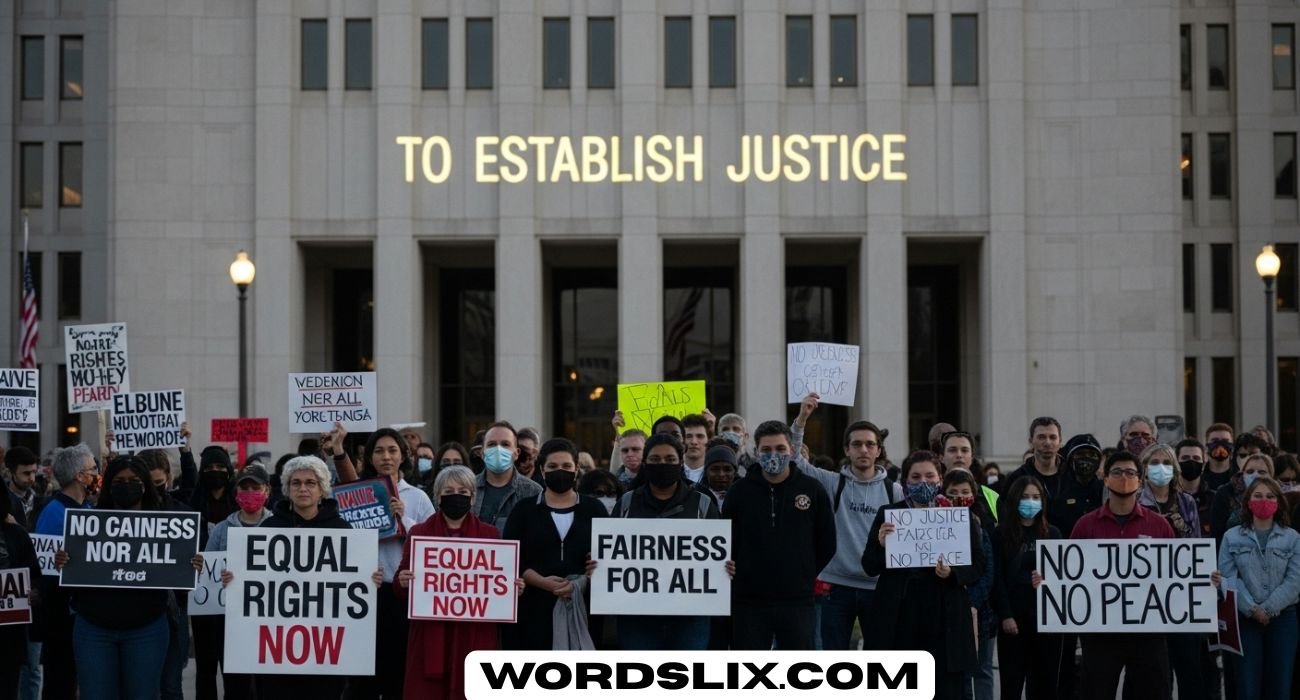
The establish justice meaning refers to the act of making a fair system for all people. It involves using laws and rules to ensure everyone receives equitable treatment in their daily lives. This goal focuses on fairness and moral rightness to protect the rights of every single citizen.
Imagine a world where the rules only work for a small group of powerful people. You would likely feel very upset if a system treated you poorly because of your background. To establish justice is the only way to stop this and build a peaceful society.
This phrase from the U.S. Constitution serves as a vital promise to keep our communities safe. It guides our judicial system to act with impartiality and forces leaders to show accountability to the public. Understanding this societal goal helps you see why transparency and human rights matter so much today.
Defining “Establish Justice”

To establish justice simply means creating a system where fairness is the default setting for every interaction between the state and the individual. This involves more than just passing a few rules; it requires a deep-rooted societal goal to uphold moral rightness in every court and classroom across the country. When a community works to establish justice, they are building a foundation of institutional trust that allows people to live without the fear of being treated unfairly.
You can see this definition come to life through equitable treatment where your background or bank account does not change how the law sees you. It is about aligning our modern actions with ethical principles to ensure that impartiality remains the heartbeat of our civilization. Whether through law enforcement or social programs, the ultimate aim is to create a culture where ethical behavior is expected and everyone is held to the same high standard.
Historical Context of Establishing Justice
The roots of this idea stretch back way before 1787 to ancient systems like Hammurabi’s Code and the structured nature of Roman Law. These early attempts at social order sought to move humanity away from chaotic revenge and toward a predictable moral imperative. By looking at the historical context, we see that humans have always craved a way to establish justice to prevent the strong from simply crushing the weak through raw power.
In the American story, the founding documents used this phrase specifically to fix the broken parts of the early government where states fought constantly. The U.S. Constitution was designed to provide a unified judicial system that could offer a peaceful way to handle dispute resolution for a growing nation. This history proves that the drive to establish justice is a timeless human need that connects our past struggles to our modern hopes for societal harmony.
Legal Perspective on Establishing Justice
From a strictly legal perspective, this term serves as the North Star for the Supreme Court and every lower bench in the land. It ensures that the judicial system remains a place of impartiality where facts are more important than political power dynamics. To establish justice legally, we must have transparency in how laws are written and consistent accountability for those who choose to break them.
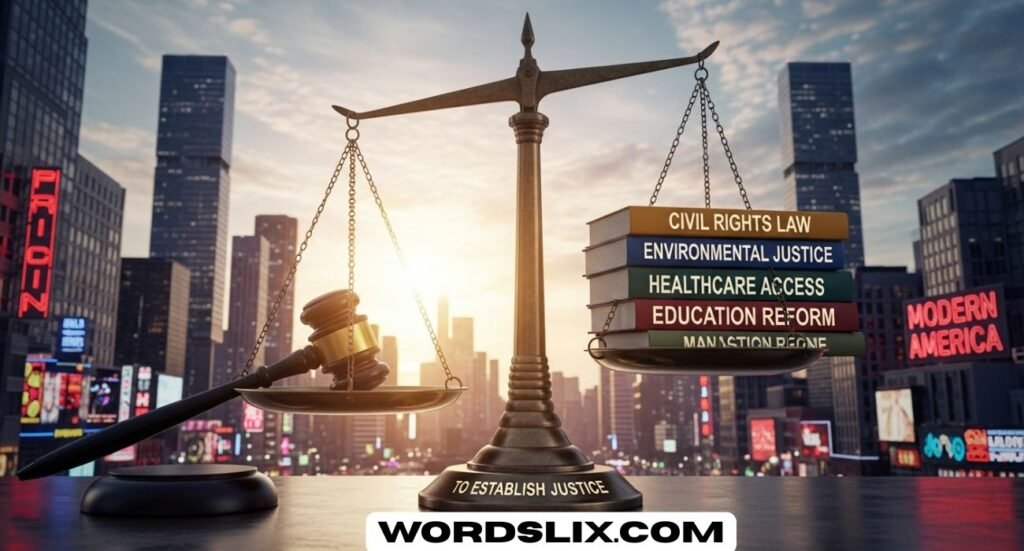
This perspective also involves a robust legislative framework that evolves as we learn more about the world around us. For example, civil rights laws were created to bridge the gap between the words on a page and the lived experience of millions. By focusing on due process, the government works to establish justice by ensuring that no person is deprived of life, liberty, or property without a fair and honest shake.
| Legal Concept | Role in Justice | Impact on Society |
| Due Process | Ensures fair trials | Builds institutional trust |
| Precedent | Uses past cases for current ones | Creates predictable social order |
| Public Defenders | Provides lawyers for everyone | Promotes equality in court |
Social and Moral Dimensions of Justice
Beyond the courtroom, we find the social dimensions of justice which focus on how we treat each other in the streets and stores. This is where moral rightness meets our daily habits and how we decide to stand up against discrimination or hidden systemic bias. When we seek to establish justice socially, we are looking at the community well-being and making sure that everyone has a seat at the table of opportunity.
This moral side of the coin often involves the concept of restorative justice, which looks at healing the victim rather than just punishing the offender. It asks us to look at the dignity of the human person and to consider how our choices impact societal harmony. By valuing ethical behavior in our social circles, we help establish justice in a way that no written law could ever fully capture on its own.
Establish Justice in Daily Life
You actually have the power to establish justice every single day by making sure you treat your peers with fairness. This might mean standing up for a coworker who is facing workplace discrimination or simply being honest in your business dealings. Your civic responsibility starts with small acts of ethical decision-making that ripple out to make your entire neighborhood feel safer and more inclusive for everyone.
When you practice mediation during a family argument or choose transparency in your local community board, you are living the preamble. These moments of personal accountability are what keep the spirit of the law alive in between election cycles. By choosing to establish justice in your own life, you help build a culture where moral rightness is valued over winning at all costs.
Why Establishing Justice Matters
Without a constant effort to establish justice, a nation can quickly slide into a state of unrest where corruption becomes the norm. People need to feel that the systems around them are fair to maintain the institutional trust required for a healthy economy and a peaceful life. When impartiality fails, the resulting discrimination creates deep scars that can take many generations to heal and repair.
Furthermore, when we establish justice, we are actually protecting our own future freedoms and those of our children. It provides a stable environment where community well-being can thrive because people aren’t worried about being treated unfairly by public officials. Essentially, justice is the fuel that keeps the engine of democracy running smoothly without overheating from the friction of unfairness.
Justice in Governance and Leadership
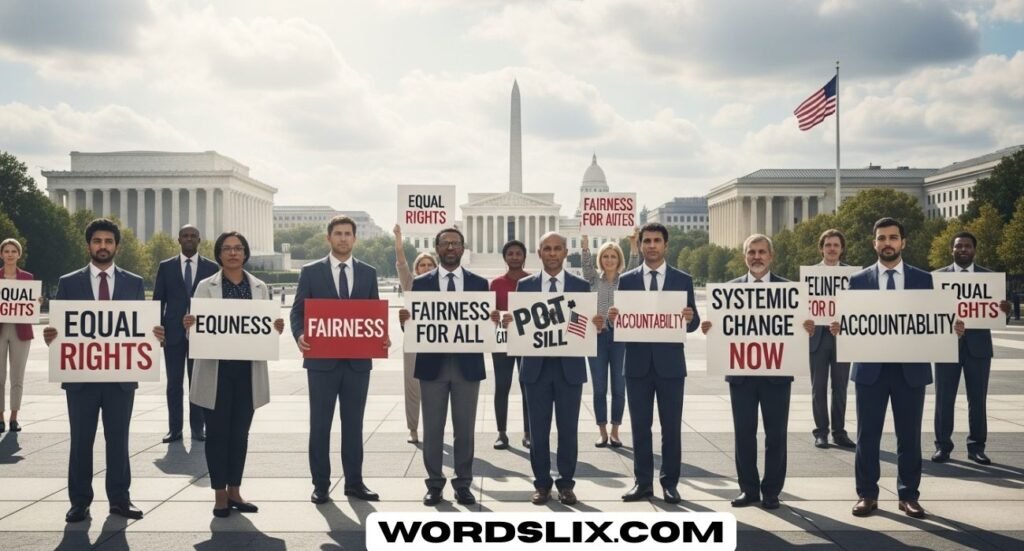
True governance is measured by how well those in power work to establish justice for the most vulnerable citizens. Public officials have a moral imperative to use their influence to create transparency and to root out any signs of corruption within the system. When leadership is focused on fairness, they build a legacy of accountability that inspires the public to engage more deeply with their own civic responsibility.
A leader’s role is to ensure that the legislative framework serves the people rather than just the interests of those with the most money. By focusing on equitable treatment, they can help bridge the divide between different political groups and foster a sense of societal harmony. In the end, the best way to establish justice from the top down is to lead with ethical behavior that others want to follow.
Establish Justice in Business and Organizations
In the professional world, a company can establish justice by implementing a clear grievance policy and practicing affirmative action where it is needed. This creates an environment where workplace discrimination is not tolerated and where every employee feels their dignity is respected by the bosses. When a business chooses transparency in its hiring and pay, it builds a massive amount of institutional trust with its workforce.
Organizations that prioritize ethical decision-making often find that they are more successful because their team members feel a sense of fairness. By using mediation to solve internal conflicts, they can establish justice without the need for expensive and stressful lawsuits. This focus on moral rightness within the office walls helps contribute to the broader societal goal of a just and equitable nation.
Philosophical Perspectives on Justice
The famous thinker Aristotle believed that we establish justice by giving every person exactly what they are due based on their actions. Later on, John Rawls introduced the idea of the “veil of ignorance,” suggesting that fairness is what we would choose if we didn’t know our own status. These different pieces of political philosophy remind us that justice is a complex puzzle that requires both logic and deep empathy to solve.
Other philosophers have argued that to establish justice, we must focus on community well-being and the common good rather than just individual rights. This debate between the needs of the one and the needs of the many is what keeps our civic education so vibrant and interesting. By studying these views, we can refine our own ethical principles and work harder to establish justice in a way that honors all human life.
Challenges in Establishing Justice
One of the biggest hurdles we face is systemic bias, which can make even the best-intentioned laws produce unfair results for some. Corruption and a lack of transparency can also act like a poison that slows down our progress toward our societal goal. When public officials put their own interests first, it becomes incredibly difficult to establish justice for the average citizen who relies on the system.
We also have to deal with the “justice gap” where global justice is hindered by a lack of legal literacy among the general public. Many people do not know their rights, which makes them easier targets for discrimination and unfair treatment. Overcoming these power dynamics requires a constant effort to educate the public and to hold every institution accountable for its actions.
Steps to Promote Justice Effectively
- Promote Legal Literacy: You can help establish justice by teaching others about their rights under the U.S. Constitution and local laws.
- Encourage Transparency: Always ask for clear reasons behind decisions made by your local government or workplace leaders.
- Support Mediation: Use peaceful dispute resolution methods to solve problems before they turn into major conflicts.
- Vote for Accountability: Choose leaders who have a proven track record of ethical behavior and who stand against corruption.
- Foster Civic Responsibility: Get involved in your local community to ensure that everyone’s voice is heard in the search for fairness.
Justice Across Cultures
While we often think of justice in terms of the U.S. Constitution, many indigenous traditions have their own ways to establish justice through healing. These cultures might prioritize community well-being and the restoration of relationships over simple punishment or fines. By looking at global justice, we can learn new ways to bring societal harmony to our own diverse and growing population.
In some places, the focus is on a moral imperative to share resources fairly, while others look at Roman Law for their structure. Understanding these different paths to fairness helps us become better global citizens who can establish justice in a way that respects different backgrounds. This cultural awareness is a key part of our modern civic education and our growth as a human family.
Establish Justice Through Education
Our schools are the most important places where we can establish justice by teaching the next generation about civic responsibility. When students learn about the historical context of our laws, they become better equipped to spot discrimination in the future. Civic education provides the tools for legal literacy, which is the best defense against those who would try to cheat the system.
By encouraging ethical decision-making in the classroom, teachers help create a future full of leaders who value moral rightness. This focus on equality and fairness ensures that the dream of a just society does not die out with the older generation. Education is the long-term solution to systemic bias because it opens minds and promotes the dignity of every individual student.
Justice and Technology
The rise of legal tech has changed how we establish justice by making it easier to track cases and ensure transparency in the courts. However, we must be careful of the power dynamics that can be hidden inside computer code and algorithms. If we aren’t careful, technology can accidentally repeat the same systemic bias that we are trying to get rid of in our society.
Digital tools can help increase accountability by making it easier for citizens to report corruption or unfair treatment instantly. When used correctly, these tools can promote global justice by connecting people who are fighting for their human rights across different countries. It is up to us to ensure that these new inventions are used to establish justice rather than to create new forms of unfairness.
Custom Example Sentences Using “Establish Justice”
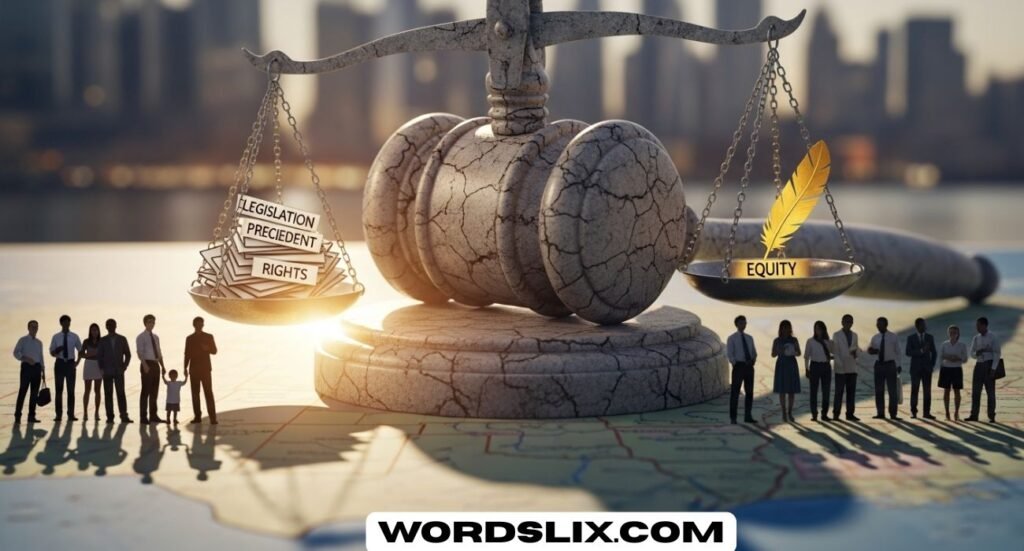
“The city council voted for a new oversight board to establish justice and increase transparency within the local police force.”
“Every time you treat a stranger with fairness, you are doing your part to establish justice in your own small way.”
“The supreme court’s job is to establish justice by making sure the U.S. Constitution is followed exactly as it was written.”
“We cannot establish justice if we continue to ignore the systemic bias that affects so many people in our community.”
Key Takeaways Table
| Core Area | Main Objective | Key Tool |
| National Level | To establish justice for all | U.S. Constitution |
| Personal Level | Practice ethical behavior | Civic responsibility |
| Workplace | End workplace discrimination | Grievance policy |
| Global | Promote human rights | International Law |
Expert Insight
According to leading scholars, to establish justice is not a static goal but a “perpetual motion” of a healthy democracy. It requires every citizen to maintain high ethical principles and to demand impartiality from every judge and politician they encounter. Only through a shared commitment to moral rightness can we ensure that the founding documents remain a reality for every person.
The Role of Restorative Justice in Modern Society
Restorative justice represents a transformative shift in how we handle wrongdoing by focusing on healing the harm caused to victims and the community. Rather than simply punishing an offender to establish justice, this approach brings all parties together to discuss the impact of the crime and how to make things right. It prioritizes the dignity of every person involved and seeks to repair the social fabric that was torn by the incident. By fostering a space for true accountability, this method helps reduce the cycle of crime and builds a more compassionate social order.
Many indigenous traditions have used these methods for centuries to maintain societal harmony and resolve deep-seated conflicts without relying on harsh cages. In the United States, schools and local courts are increasingly adopting these practices to address systemic bias and promote long-term community well-being. This move toward a more human-centered judicial system ensures that fairness is felt by the victim, not just written in a cold legal file.
Global Justice and International Human Rights
On a larger scale, the effort to establish justice transcends national borders to protect the fundamental human rights of every person on Earth. This involves international treaties and a shared moral imperative to prevent atrocities and ensure that no leader is above the law. When nations cooperate through a unified legislative framework, they create a safer world where transparency and accountability are global standards. This collective work helps protect vulnerable populations from discrimination and ensures that global justice is not just a dream but a reachable goal for everyone.
However, achieving this level of fairness is difficult because different countries have vastly different power dynamics and political interests. To truly establish justice globally, we must support international courts that act with total impartiality when investigating war crimes or environmental destruction. By upholding ethical principles on the world stage, we send a clear message that moral rightness is the only way to achieve lasting peace.
The Impact of Systemic Bias on Fairness
Even with the best laws, systemic bias can act as a hidden barrier that prevents us from truly being able to establish justice for everyone. These are the deep-seated patterns in our institutions that favor certain groups while making it harder for others to find equitable treatment. To fix this, we must have the courage to look at how power dynamics influence everything from hiring practices to how law enforcement interacts with the public. Recognizing these flaws is the first step toward building a more honest judicial system that actually lives up to its promises.
When we ignore these biases, we erode institutional trust and make it impossible to achieve true societal harmony. Addressing these issues requires a commitment to transparency and a willingness to change old policies that no longer serve a fair societal goal. By actively working to dismantle these barriers, we can establish justice that is felt in every neighborhood, regardless of a person’s race or background.
Legal Literacy and Empowering Citizens
A huge part of the mission to establish justice involves making sure every citizen has a high level of legal literacy. Most people don’t know their rights under the U.S. Constitution, which makes it much easier for their dignity to be overlooked during a legal dispute. When you understand the legislative framework, you have the power to demand accountability and to stand up against any form of corruption. Education is the best tool we have to ensure that the law is a shield for the weak rather than a sword for the powerful.
Providing free resources and civic education helps bridge the gap between the average person and the complex judicial system. When a community is legally literate, they can participate more effectively in governance and push for changes that promote fairness. To truly establish justice, we must ensure that the “rule of law” is understandable to everyone, not just those who can afford expensive lawyers.
Restoring Institutional Trust through Transparency
For any government to function well, it must work tirelessly to build and maintain institutional trust with the people it serves. This is achieved by ensuring total transparency in how decisions are made and how public officials spend taxpayer money. When the public sees that ethical behavior is the standard, they are much more likely to follow the rules and contribute to social order. Without this trust, the effort to establish justice becomes an uphill battle against cynicism and local unrest.
Transparency acts as a powerful light that makes it very difficult for corruption or discrimination to survive in the shadows of bureaucracy. By creating open channels for feedback and a clear grievance policy, organizations can prove they are committed to moral rightness. When people believe the system is fair, they are more willing to engage in civic responsibility and work toward a common societal goal.
The Role of Civil Rights in Modern Equality
The history of civil rights in America is essentially the story of a long struggle to establish justice for those who were left out of the original plan. These movements pushed for equitable treatment and forced the Supreme Court to rethink how the law applies to everyone. Today, these protections are vital for preventing workplace discrimination and ensuring that human rights are respected in every state. By focusing on equality, we move closer to the ideal version of the constitutional preamble that the Founders envisioned.
Modern struggles for rights often center on finding a balance between individual liberty and the community well-being. Each new law passed to protect a specific group is another step toward a more perfect legislative framework. As long as we continue to value moral rightness, we can keep expanding these rights to ensure that no one is left behind in our quest to establish justice.
Ethical Decision-Making in Public Policy
When lawmakers sit down to draft new rules, their primary focus should be on ethical decision-making that benefits the whole country. They must weigh the social dimensions of their choices to ensure they are promoting fairness and not just helping their own political allies. To establish justice through policy, one must have the moral imperative to put the needs of the many over the greed of the few. This requires a strong sense of accountability to the voters and a deep respect for the founding documents.
Policy that is built on ethical principles leads to more stable governance and a much higher level of societal harmony. It prevents the rise of systemic bias and ensures that the law is applied with total impartiality across all demographics. When our leaders prioritize moral rightness, they create a roadmap that helps the entire nation establish justice in every facet of public life.
Overcoming Workplace Discrimination
In the modern office, it is essential to establish justice by creating a culture where affirmative action and fair play are actually practiced. This means having a transparent grievance policy where employees can report unfairness without the fear of losing their jobs. When a company values ethical behavior, it attracts better talent and builds a team that is dedicated to the organization’s societal goal. Ending workplace discrimination is not just a legal requirement but a moral imperative for any successful business.
By using mediation to solve internal conflicts, managers can ensure that power dynamics don’t get in the way of a fair result. This focus on equitable treatment helps maintain a healthy environment where every worker’s dignity is held in high regard. Ultimately, when businesses do their part to establish justice, they help build a stronger and more fair economy for the entire country.
FAQs
Can individuals help to establish justice in their own communities?
Yes, you fulfill your civic responsibility by practicing ethical behavior and standing against discrimination or workplace discrimination. Using mediation and promoting legal literacy are simple ways you can help reach the societal goal of fairness.
What are the biggest hurdles when trying to establish justice?
Key challenges include systemic bias, corruption, and uneven power dynamics that can prevent equitable treatment. Overcoming these requires a commitment to transparency, ethical decision-making, and a strong judicial system that values moral rightness.
Why is the constitutional preamble still relevant for justice?
The preamble sets a permanent societal goal that reminds every generation to keep refining our legislative framework and judicial system. It serves as a moral imperative for public officials to prioritize human rights and the dignity of all citizens over personal gain.
What role does education play in the quest to establish justice?
Education builds a foundation for community well-being by teaching young people about civic responsibility and the historical context of our laws. By fostering legal literacy and ethical decision-making, schools empower students to identify and dismantle systemic bias in the future.
Conclusion
A clear understanding of the established justice meaning helps you become a better citizen and a more helpful friend. You now know that justice is a daily choice to act with fairness and equality toward everyone around you. By choosing ethical behavior in your schoolwork and games, you help build a world that respects the dignity of every person. This simple promise in the U.S. Constitution guides us to create a peaceful society where people trust each other and follow the same rules. Your small actions to support moral rightness contribute to a massive societal goal that has lasted for many centuries.
Leaders and students alike share the heavy duty to protect human rights and stop discrimination whenever it appears. You can establish justice by being honest, listening to others, and always standing up for what is right. Keeping the judicial system strong and fair requires us to value transparency and accountability in everything we do. When you treat your classmates with impartiality, you keep the spirit of our founding documents alive for the next generation. True societal harmony starts when we decide to treat every single person with the equitable treatment they deserve.