Glazing Meaning Slang: A Complete and Easy Guide to What It Really Means Online
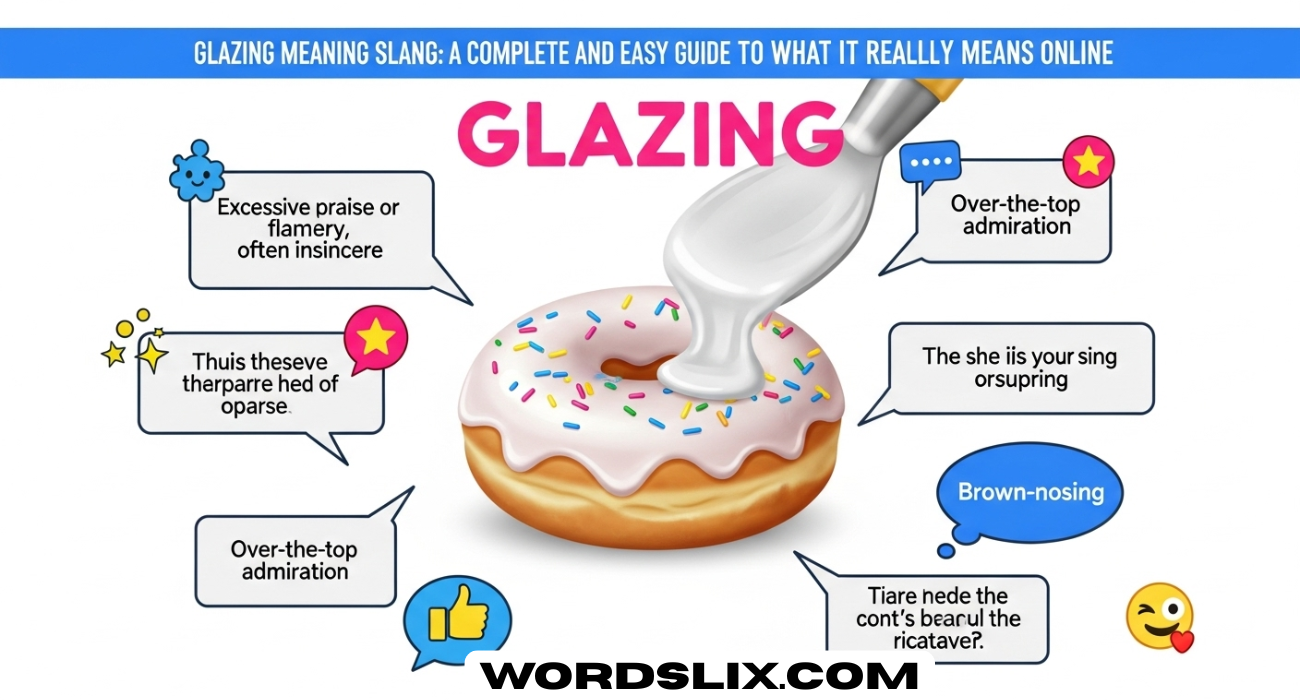
Glazing meaning slang means giving someone too much praise. It describes when people act like they admire someone too much. Online, it shows excessive compliments online or fake admiration behavior.
You might see the word everywhere on TikTok, Twitter, or gaming chats. People use it to tease friends or call out fans. It is fun, short, and easy to say. Glazing slang explained spreads fast because it sounds funny and real.
The word started in internet culture and grew with memes. It shows how young people, especially Gen Z, talk online. Glazing meaning slang helps describe behavior in fandoms, social media, and influencer praise culture. It is playful, useful, and clear.
What Does “Glazing” Mean in Slang?
In everyday internet talk, glazing slang meaning refers to overly praising someone in a way that feels forced, exaggerated, or unnecessary. When people say someone is glazing, they usually mean that person is giving excessive compliments online or acting like a personal hype machine. This is the most common glazing definition slang used in American online spaces today.
At its core, glazing meaning slang points to fake admiration behavior or attention-seeking praise. For example, when someone says “stop glazing,” the stop glazing meaning is simple. Calm down. Stop the desperate flattery slang. The word often appears in glazing social media comments, especially when fans defend influencers, athletes, or streamers too hard.
The Origins of “Glazing” in Slang
The rise of glazing internet slang happened quietly at first. It grew inside gaming community slang, sports debates, and livestream chats where fans constantly hyped their favorites. Over time, people needed a sharper word to call out fandom overhype. That is where glazing stepped in and stuck.
By the time viral slang terms exploded across TikTok and Twitter, glazing online culture had already formed. Americans picked it up fast because it felt funny, direct, and visual. The idea of “coating” someone in praise made sense. Soon, glazing gen z slang became part of everyday social media slang trends.
Read Also;PMO Meaning Slang: What “PMO” Really Means in Text, TikTok, and Online Chats (2025 Guide)
The Deeper Meaning Behind “Glazing”
Beyond jokes, glazing slang explained reveals how people perform online. Social platforms reward visibility, likes, and approval. That pushes users toward excessive admiration slang without even noticing it. Glazing becomes a way to chase attention while pretending to support someone else.
Calling out glazing meaning slang acts like a social brake. It reminds people to stay real. In glazing online culture, authenticity matters. Too much praise feels hollow. That tension explains why the word carries humor, judgment, and self-awareness all at once.
Common Examples of “Glazing” in Sentences
Americans use glazing slang examples in casual, fast conversations. Someone might say a fan is glazing when they defend a celebrity in every comment thread. Others use it jokingly among friends to tease someone who is hyping a teammate too much.
In real glazing slang usage, tone matters more than words. The same sentence can feel playful or harsh. That flexibility helps glazing meme meaning spread fast, especially in reaction videos and sports debates.
| Situation | Example Sentence | Meaning |
| Influencer praise | “You’re glazing him like he paid you.” | Overdoing admiration |
| Sports debate | “Stop glazing, he missed the shot.” | Ignoring flaws |
| Friendly joke | “You’re glazing your friend again.” | Light teasing |
Is “Glazing” the Same as “Simping”?
Many people ask about simping vs glazing, and the difference matters. Simping usually carries romantic or emotional intent. Glazing does not. You can glaze a coach, a rapper, a streamer, or even a brand. That makes glazing slang meaning broader.
In American internet slang 2025, glazing fits fandom spaces better. It describes loyalty turned loud. Simping feels personal. Glazing feels public. Knowing this difference helps avoid misuse and awkward moments online.
When Did “Glazing” Become Popular?
Although the word existed before, glazing internet slang surged between 2023 and 2024. Sports TikTok, reaction channels, and gaming streams pushed it forward. By 2025, it became standard gen z humor slang across platforms.
This timing connects to the rise of influencer culture. As praise became louder, people needed faster ways to call it out. Glazing social media filled that gap perfectly and stuck.
Why People Use the Word “Glazing”
People love words that save time. Glazing slang meaning compresses a long idea into one sharp term. Instead of explaining why praise feels fake, you just say glazing. Everyone gets it instantly.
The word also builds group identity. Using glazing online culture language signals that you understand memes, trends, and modern slang evolution. It is shorthand for belonging.
Cultural and Social Layers of “Glazing”
In American online spaces, glazing meaning slang works like social regulation. It keeps praise from going too far. That balance matters in influencer praise culture, where attention feels transactional.
Calling out glazing protects group norms. It says admiration is fine, but obsession is not. That makes digital communication slang more about behavior than vocabulary.
Glazing in Different Contexts
Outside slang, glazing has real meanings in food, art, and construction. That contrast makes the slang funnier. When someone says “stop glazing,” the mental image of coating someone in praise adds humor.
Context keeps confusion away. In glazing slang usage, the surrounding words always signal meaning. Online tone does the rest.
How to Use “Glazing” Without Sounding Cringe
Using glazing slang meaning well depends on timing. It works best in casual spaces with people who understand meme culture language. Dropping it into serious or professional conversations feels off.
Good usage sounds natural. Bad usage sounds forced. If you would not say it out loud, do not type it. That rule saves embarrassment.
Psychological Insight: Why We Glaze Others
Social Approval and Online Identity
Humans seek approval. Online spaces amplify that need. Excessive admiration slang often grows from insecurity or desire for connection. Glazing feels safer than criticism.
Calling out glazing helps restore balance. It gently reminds people to value honesty over attention. That psychological push explains why the term resonates so deeply.
The Role of Humor in “Glazing”
Humor keeps glazing slang explained from feeling cruel. Most uses involve jokes, not attacks. Laughter softens criticism and keeps conversations light.
That humor drives glazing meme meaning across platforms. Reaction faces, clips, and sarcastic captions carry the word further than definitions ever could.
Related Slang Terms You Should Know
Understanding glazing meaning slang becomes easier alongside related terms. Words like rizz, delulu, and no cap shape the same social media slang trends.
These terms evolve together. They reflect how Americans joke, tease, and communicate online using fast, flexible language.
The Evolution of Modern Slang
Every era has its version of glazing. The 1990s had brown-nosing. The 2010s had simping. Today’s modern slang evolution favors sharper humor and faster delivery.
That pattern shows how viral slang terms mirror culture. The behavior stays. The word changes.
Is “Glazing” Offensive?
Most of the time, no. Glazing slang meaning feels playful, not hateful. Still, tone matters. Used aggressively, it can embarrass or insult someone.
Respect context. Friends laugh it off. Strangers might not. Awareness keeps the word harmless.
The Future of “Glazing” in Slang
Slang fades, but ideas last. Glazing internet slang may evolve or disappear, replaced by something new. The behavior it names will remain.
As long as fandom overhype and online praise exist, people will invent words to describe them. Glazing is simply this era’s version of that truth.
How “Glazing” Spreads Through Social Media Platforms
Social media plays a huge role in spreading glazing meaning slang across the internet. Platforms like TikTok, Instagram, and Twitter push fast reactions, short comments, and viral clips. When users see someone overly praising someone, others quickly reply with “glazing,” and the word sticks through repetition and humor.
Once influencers and streamers adopt the term, it spreads even faster. This is how glazing social media language becomes normalized. People repeat what they see, especially when it sounds funny or sharp. Over time, the word moves from niche spaces into everyday online conversations across the United States.
Why “Glazing” Feels More Modern Than Older Slang
Older slang terms often sound outdated because culture changes quickly. Glazing slang meaning feels modern because it matches how people interact today. Online praise is louder, public, and constant. The word glazing captures that exaggerated energy better than older phrases ever could.
This modern feel explains why glazing internet slang resonates with Gen Z. It fits meme culture, reaction videos, and livestream chats. The word feels visual and expressive, which matches how people communicate online using clips, emojis, and quick jokes instead of long explanations.
How Sports Culture Helped Popularize “Glazing”
Sports debates online helped push glazing meaning slang into the mainstream. Fans often defend athletes aggressively, even after bad performances. When someone refuses to admit flaws, others call it glazing. That usage spread fast through comment sections and highlight videos.
American sports culture thrives on opinions and arguments. Excessive admiration slang became necessary to describe blind loyalty. Glazing offered a quick way to call out biased praise without writing long replies. That efficiency helped the term spread beyond sports into general internet talk.
Glazing as a Call-Out, Not a Personal Attack
Many people misunderstand glazing slang explained as an insult. In reality, it works more like a social nudge. It signals that praise has crossed into exaggeration. Most of the time, it is not meant to hurt feelings or start conflict.
In glazing online culture, call-outs often come with humor. Friends tease each other. Viewers joke with streamers. The word works because it sounds light, not aggressive. Tone matters, but intent usually stays playful rather than hostile or offensive.
How “Glazing” Reflects Online Power Dynamics
Online spaces reward visibility and loyalty. People praise influencers hoping to get noticed. That behavior leads to fake admiration behavior, which others label as glazing. The word highlights power gaps between creators and audiences.
By calling out glazing, users push back against performative loyalty. Glazing meaning slang exposes how praise can feel transactional online. It reminds people that genuine support looks different from nonstop hype designed to gain attention or approval from popular figures.
Why “Glazing” Works So Well in Meme Culture
Memes thrive on exaggeration, and glazing fits perfectly. The idea of “coating” someone in praise creates strong mental images. That makes glazing meme meaning easy to turn into jokes, reaction images, and short videos.
Because memes spread emotion faster than explanations, glazing slang usage grows through humor. People laugh first, then understand the meaning later. That pattern explains why the term spreads faster than more serious or literal slang words.
How Age Groups Perceive “Glazing” Differently
Younger users instantly understand glazing gen z slang because they live inside online culture. Older audiences may think of donuts, windows, or cooking instead. That gap shows how slang depends on shared digital experiences.
In American online spaces, this difference shapes communication. Younger users throw the word around casually. Older users may ask for clarification. Understanding what does glazing mean helps bridge that generational language gap.
Why “Glazing” Will Influence Future Slang
Even if the word fades, its structure will inspire new slang. Modern slang evolution often builds on past patterns. Glazing shows how short, visual words win online attention.
Future slang will likely describe the same behavior using different terms. Digital communication slang constantly refreshes itself. Still, glazing will remain a reference point for how internet culture talks about praise, fandom, and exaggerated support.
FAQs
What does glazing meaning slang refer to in online conversations?
Glazing meaning slang refers to overly praising someone in a way that feels exaggerated, fake, or unnecessary, especially on social media or in online fandom spaces.
Is glazing slang used mostly by Gen Z?
Yes, glazing gen z slang is most common among Gen Z users, particularly on TikTok, gaming platforms, and meme-driven social media communities in the United States.
Can glazing be used in a positive way?
Sometimes, yes. When used jokingly among friends, glazing slang usage can show playful admiration rather than criticism or mockery.
Why do people say “stop glazing” online?
People say “stop glazing” when someone is giving excessive compliments online or showing fake admiration behavior that feels forced or overly dramatic.
Conclusion
glazing meaning slang shows how people talk online when they give too much praise. It describes situations where someone gives excessive compliments online or acts like they admire someone too much. The word comes from social media, gaming chats, and meme culture. People use it to point out fake admiration behavior and remind others to stay real. Using the term helps friends, fans, and viewers understand when praise becomes too much.
Glazing meaning slang is now part of American internet culture. It reflects how young people, especially Gen Z, communicate, joke, and react online. The word is playful and shows social awareness. Learning it helps everyone understand digital communication slang, fandom overhype, and influencer praise culture clearly. It is simple, useful, and easy to use.