
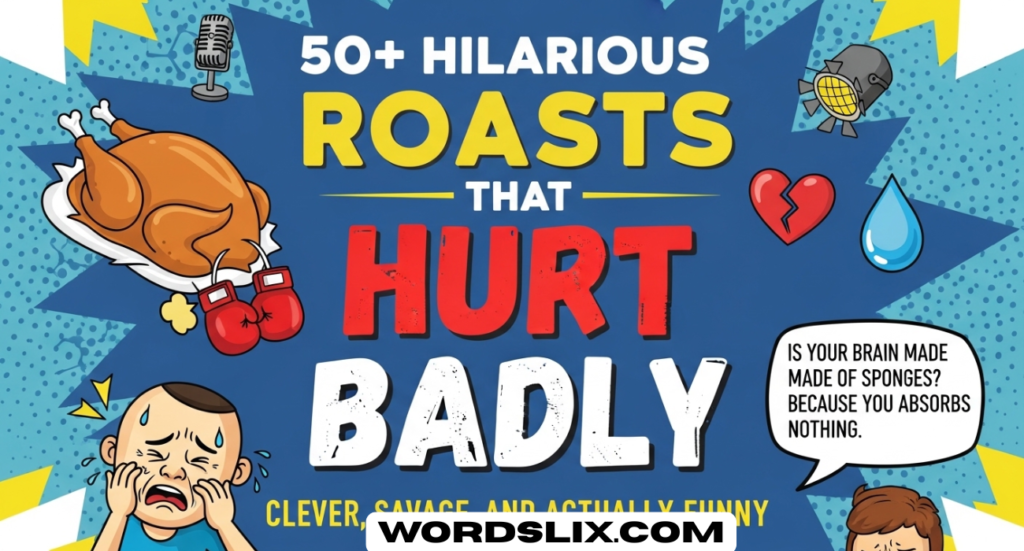
50+ Hilarious Roasts That Hurt Badly: Clever, Savage, and Actually Funny
Hilarious roasts that hurt badly are jokes that make people laugh but also sting a little. They mix truth and humor in a clever way. These roasts are sharp, smart, and memorable.
People love hilarious roasts that hurt badly because they are surprising and fun. A good roast makes everyone laugh together. It grabs attention and creates smiles quickly.
These roasts can be about habits, personality, or small mistakes. They use friendly teasing quotes and clever words. When done right, they are safe, funny, and bring friends closer.
What Makes a Roast “Good” (and Why Some Really Hurt)
A good roast doesn’t just insult; it entertains. The best 45 good roasts that hurt work because they mix truth with exaggeration. A roast that is clever, precise, and relatable hits harder than a random insult. Timing, tone, and delivery are crucial. Social cues in comedy and modern communication humor ensure the joke lands perfectly without offending unnecessarily. In essence, a classy roast balances humor and truth, creating laughter and admiration rather than resentment.
The science behind why these roasts work lies in psychology of humor. When people hear funny insults that hurt, their brains recognize the small truth behind the joke. This triggers surprise, laughter, and even stress relief. Roasts use smart banter and self-expression through humor to highlight quirks and flaws in a fun, non-threatening way. Whether it’s a friendly teasing quote or a clever roast aimed at building connection, the right delivery can make a joke unforgettable.
Read Also;60 Funny Ways to Say “Hi Over Text” 2026 – Creative, Cute & Trendy Greetings That Get Replies
45 Clever Roasts That Hurt (But Also Entertain)
The ultimate collection of hilarious roasts that hurt badly includes examples that are sharp, memorable, and entertaining. From personality-based humor to intelligence-targeting burns, these clever roasts use wordplay humor, humorous wordplay examples, and creative one-liners that are shareable and viral. They are the perfect blend of truth, exaggeration, and timing, allowing you to deliver harmless teasing jokes that sting in the best way. Each roast demonstrates confidence building and relationship strengthening jokes.
In the table below, you can see the difference between weak insults and clever insult lines that work:
| Weak Insult | Clever Roast That Hurts Badly |
| You’re lazy | You put the ‘pro’ in procrastination |
| You’re dumb | Your brain runs on airplane mode |
| You’re loud | You have podcast volume in a library life |
| You’re boring | Your personality has a loading screen |
These harmless savage jokes show that a little sting can be fun when delivered correctly. They highlight balanced humor and truth, respect roasting etiquette, and use timing in comedy to maximize impact.
Personality-Based Roasts
Personality-based humor targets traits everyone recognizes, making it instantly relatable. These roasts highlight quirks, habits, and tendencies while keeping things light-hearted roasts for friends. Using friendly teasing quotes, you can turn awkwardness into laughter, strengthening bonds while showing your social awareness. They are a staple in American humor culture and showcase confidence boosting humor in everyday situations.
For example, saying “You bring everyone joy… when you leave the room” or “You argue like facts are optional” combines clever roasts and harmless teasing jokes. These lines demonstrate humor and relationships, encourage team bonding humor, and are perfect for online banter humor or in-person conversations. Sarcasm examples in this context highlight personality while keeping the tone playful.
Intelligence-Targeting Burns
Intelligence-targeting burns are all about showing wit without cruelty. They highlight cleverness through intelligent roasts and witty comebacks that make audiences admire the delivery. Words and timing combine to create humor that lands hard but remains fun. These roasts are excellent for demonstrating verbal sparring, effective communication skills, and self-expression through humor.
A few examples include lines like “Your brain is on airplane mode full time” or “If overconfidence were IQ, you’d be a genius.” These are creative one-liners that rely on humorous wordplay examples, sharp witty insults, and clever insult lines that feel satisfying to both giver and receiver. They also help develop confidence building and understanding of social cues in comedy.
Appearance-Based (But Mild)
Mild appearance jokes keep things playful, avoiding deep insecurities while still being funny. Using harmless teasing jokes about style, expressions, or fashion allows for laughs without harm. This kind of classy roast demonstrates roasting etiquette and respects boundaries while remaining clever and relatable.
Examples include lines like “You dress like Wi-Fi doesn’t reach your closet” or “Your outfit feels algorithm-generated.” These light-hearted roasts for friends are funny comeback jokes that highlight balanced humor and truth. The key is delivering them with timing and delivery that feels natural, turning harmless observations into viral roast content.
Modern Life & Tech Roasts
Technology gives comedians and friends a goldmine for tech and social media jokes. Modern communication humor thrives on smartphones, apps, memes, and social media quirks. Online banter humor has become a cultural staple in the U.S., where everyone shares shareable funny quotes about digital life. Intelligent roasts in this area often highlight modern habits in ways everyone relates to.
For instance, saying “You post selfies like it’s a public service” or “You ghost people then haunt their stories” uses funny insults that hurt while staying witty. These are creative one-liners, harmless savage jokes, and examples of smart banter that tap into shared experiences, showing emotional intelligence and confidence boosting humor.
Straight-Up Savage (Use Carefully)
Sometimes, you need savage but clever roasts. These work best when the audience can handle bold humor. They require impeccable timing and delivery to avoid being mean. The goal is to challenge while entertaining, highlighting playful dominance theory without crossing lines.
Lines like “If common sense were money, you’d be broke” or “You’re not even the main character in your own story” are clever roasts that sting but amuse. They demonstrate humor and relationships, social behavior humor, and teach respectful teasing boundaries while keeping the interaction fun.
Pop Culture & Media-Inspired Burns
Pop culture burns draw humor from movies, TV shows, reality programs, and viral content. Americans love funny insults that hurt with references everyone understands. Humorous wordplay examples and creative one-liners turn shared knowledge into viral roast content. Smart banter combined with timing in comedy makes these roasts extremely memorable.
For example, “You’re a reboot nobody asked for” or “You give filler episode vibes” uses clever roasts, friendly teasing quotes, and sarcastic compliments to entertain while staying relatable. These funny comeback jokes resonate on social media, creating shareable funny quotes and building social bonding.
Light-Hearted Roasts for Friends
Light-hearted roasts for friends prioritize laughter over sting. They are friendly teasing quotes that build camaraderie, trust, and confidence boosting humor. These roasts are perfect for strengthening bonds and encouraging relationship strengthening jokes without offense. In casual American settings, they reinforce humor and relationships among peers.
An example is “You’re the human version of autocorrect fails” or “You multitask by messing up two things at once.” These lines showcase funny insults that hurt, clever roasts, and harmless teasing jokes. Delivered well, they demonstrate emotional intelligence, timing in comedy, and team bonding humor.
Sarcastic Compliments That Sting
Sarcastic compliments combine politeness with sharp wit. They are clever insult lines disguised as praise and rely heavily on timing and delivery. These intelligent roasts and witty comebacks create subtle humor, blending wordplay humor with social insight.
Lines like “You’re impressively average” or “I admire your commitment to being wrong” are funny comeback jokes that highlight humorous wordplay examples. They demonstrate confidence building, playful dominance theory, and the art of verbal sparring while entertaining audiences safely.
Workplace Roasts (Careful Who You Use These On)
Workplace humor requires finesse. Office banter jokes must respect professional boundaries while still entertaining. Effective communication skills, roasting etiquette, and stress relief through laughter all come into play when crafting good burns for friends in a corporate environment.
For instance, saying “You work hard at looking busy” or “Your spreadsheet has more personality than you” delivers funny insults that hurt without offending. It demonstrates social behavior humor, smart banter, and encourages team bonding humor safely in work settings.
How to Roast Without Crossing the Line
Successful roasting depends on awareness. Understanding respectful teasing boundaries and social cues in comedy prevents offense. Timing and delivery are critical, and using friendly teasing quotes ensures the humor stays playful. Avoid sensitive personal topics and keep the jokes targeted at habits or quirks. Following roasting etiquette guarantees laughter and connection rather than tension.
Why Do People Love a Good Roast?
People enjoy funny insults that hurt because they provide stress relief through laughter and a chance for self-expression through humor. A good roast demonstrates wit, confidence, and social intelligence. Americans particularly love clever roasts, intelligent roasts, and witty comebacks that reveal character while entertaining. Shared laughter strengthens social bonding, humor and relationships, and improves confidence building.
Why Hilarious Roasts That Hurt Badly Make Us Laugh Harder

The sting of a roast triggers mental recognition. Slightly painful truth combined with humor creates maximum impact. Hilarious roasts that hurt badly entertain because they balance honesty and exaggeration. By blending playful teasing, sarcastic compliments, and wordplay humor, roasts offer funny comeback jokes that are memorable and often viral roast content.
The Secret Behind Crafting Clever and Funny Roasts
Crafting clever roasts relies on three key elements: truth, timing, and creativity. The best funny insults that hurt turn ordinary observations into creative one-liners using intelligent roasts and humorous wordplay examples. Mastering timing in comedy and effective communication skills ensures each roast lands perfectly, whether online or in person.
Why Roasting Helps Build Stronger Friendships
Playful roasting shows trust and emotional security. Friendly teasing quotes and light-hearted roasts for friends strengthen bonds and improve humor and relationships. Shared laughter through harmless teasing jokes fosters comfort and reinforces confidence boosting humor, proving that roasting isn’t just entertainment—it’s a tool for relationship strengthening jokes and social growth.
How Timing and Delivery Make a Roast Hit Hard
Even the best clever roasts fail without proper timing. The gap between words, tone, and facial expression amplifies humor. Timing and delivery elevate funny comeback jokes into memorable moments. Mastery of verbal sparring, playful dominance theory, and social cues in comedy ensures each hilarious roast that hurts badly is both effective and enjoyable.
From Comedy Clubs to Offices: Roasting in Modern Life
Roasting has moved from comedy stages to online banter humor and office culture. Modern communication humor thrives on smart banter and pop culture burns. Harmless teasing jokes now circulate on social media, making viral roast content common. Whether at a team meeting or among friends, friendly teasing quotes enhance social bonding and entertain, demonstrating the universal appeal of funny insults that hurt.
The Psychology of Why Roasts Hurt (But Feel Good)
Psychology of humor explains why we enjoy funny insults that hurt. Roasts expose small truths, triggering recognition and surprise, which releases tension and laughter. Emotional intelligence, social behavior humor, and confidence building all play a role. Understanding timing and delivery, playful dominance theory, and roasting etiquette ensures the humor is enjoyable, safe, and strengthens humor and relationships naturally.
Mastering the Art of Verbal Sparring
Verbal sparring is more than witty comebacks; it’s a skill that shows confidence and intelligence. By understanding timing, tone, and social context, you can turn ordinary remarks into clever roasts. Practicing verbal sparring also strengthens humor and relationships while creating memorable funny insults that hurt without crossing boundaries. This skill improves both online banter humor and in-person exchanges.
Successful verbal sparring combines observation, wordplay, and subtle exaggeration. Playful teasing and intelligent roasts reveal quirks without attacking personality. Timing is key, as a well-placed line maximizes laughter and admiration. Social awareness ensures that your friendly teasing quotes remain safe, entertaining, and shareable while reinforcing confidence building and creating lasting social bonds.
Using Humor to Strengthen Social Bonds
Humor has the unique power to connect people, especially through friendly teasing quotes and light-hearted roasts for friends. Clever roasts that sting slightly build trust, as participants recognize honesty mixed with wit. The combination of funny insults that hurt and playful dominance theory can improve social bonding and encourage stronger humor and relationships both online and offline.
Whether it’s a casual chat or a team meeting, humor encourages relationship strengthening jokes and eases tension. Smart banter, wordplay humor, and harmless teasing jokes let people communicate openly while sharing laughs. By practicing roasting etiquette and respecting boundaries, you can ensure that your comedy strengthens social connections without crossing into mean-spirited territory.
Crafting Shareable Funny Quotes for Social Media
Viral roast content thrives online because people love sharing clever, relatable humor. Crafting shareable funny quotes requires a mix of truth, exaggeration, and humorous wordplay examples. Using sarcastic compliments and creative one-liners, you can turn everyday observations into funny insults that hurt in a way that entertains and spreads quickly across platforms like Instagram and Twitter.
Consistency and timing are crucial for social media success. Online banter humor, pop culture burns, and witty comebacks resonate when followers recognize shared experiences. Engaging content that balances light-hearted roasts for friends with clever phrasing increases confidence building and encourages followers to interact, comment, and share your posts, creating a ripple effect of laughter and recognition.
The Science of Timing in Comedy
Timing transforms a good joke into a memorable clever roast. Understanding the rhythm of conversation, pauses, and delivery ensures funny comeback jokes hit just right. The psychology of humor shows that well-timed exaggeration triggers surprise and laughter while maintaining social bonding. Mastering timing allows even mild harmless teasing jokes to feel impactful without being offensive.
Delivery is equally important. Voice inflection, facial expressions, and body language enhance wordplay humor and intelligent roasts. Playful teasing, when perfectly timed, creates resonance with the audience. This knowledge applies to both casual friendly teasing quotes and professional workplace humor, strengthening confidence building while reinforcing humor and relationships naturally and memorably.
Turning Everyday Situations into Clever Roasts
The best clever roasts often come from ordinary life. Observing quirks, habits, and minor annoyances gives material for funny insults that hurt while remaining relatable. Whether it’s personality-based humor, tech and social media jokes, or mild appearance jokes, every situation offers an opportunity for playful teasing that strengthens social bonding and encourages confidence boosting humor.
Turning mundane moments into witty comebacks requires creativity and humorous wordplay examples. By exaggerating familiar patterns without attacking feelings, you can craft harmless teasing jokes that entertain and educate. This approach makes viral roast content more likely to succeed because audiences recognize themselves and laugh, enhancing humor and relationships across friends, family, or coworkers.
Avoiding Offensive Humor While Being Savage
Savage but clever roasts can be thrilling, but without care, they risk offending. Using roasting etiquette, focusing on behavior rather than identity, and respecting timing and delivery keeps humor sharp but safe. This ensures your funny comeback jokes remain harmless teasing jokes that entertain without damaging trust, improving social bonding and confidence building.
Understanding boundaries is key. Intelligent roasts, friendly teasing quotes, and clever insult lines thrive when the audience feels safe. Avoid sensitive topics and personal insecurities. Focus on shared quirks, personality-based humor, or online banter humor to create laughter while strengthening humor and relationships. Mastering this balance ensures your roasts are memorable, effective, and socially responsible.
Comedy Writing Tips for Crafting Perfect Roasts
Effective comedy writing tips are essential for creating hilarious roasts that hurt badly. Writers should combine creative one-liners, humorous wordplay examples, and precise timing. Attention to social cues in comedy ensures the joke lands without offense. Good comedy writing produces funny insults that hurt, clever roasts, and friendly teasing quotes that resonate with audiences.
The process also involves self-expression through humor and awareness of the audience. Using sarcastic compliments, light-hearted roasts for friends, and harmless teasing jokes, writers can craft content that boosts confidence building and strengthens humor and relationships. Consistency, practice, and observation make viral roast content not only shareable but impactful and memorable.
Using Pop Culture References for Maximum Impact
Incorporating pop culture burns is a proven way to make hilarious roasts that hurt badly relatable. References to TV shows, movies, or trending online content make funny comeback jokes instantly recognizable. Combining these with clever roasts, smart banter, and creative one-liners ensures engagement, while also enhancing humor and relationships by connecting shared experiences with laughter.
Pop culture allows for harmless savage jokes that resonate widely. Online banter humor, friendly teasing quotes, and wordplay humor become more powerful when tied to trends. Social media thrives on this strategy, creating shareable funny quotes and viral roast content. The key is balancing humor and accuracy while maintaining timing and delivery to maximize the comedic effect.
Building Confidence Through Clever Roasts
Delivering clever roasts effectively can strengthen confidence building and social skills. A well-crafted funny insult that hurts shows intelligence, wit, and control, impressing audiences while encouraging friendly teasing quotes. Whether online or in-person, mastering playful teasing, verbal sparring, and intelligent roasts reinforces humor and relationships, helping individuals become more socially adept.
Confidence stems from practice, observation, and understanding roasting etiquette. Light-hearted roasts for friends, personality-based humor, and harmless teasing jokes teach timing, delivery, and audience awareness. Using witty comebacks with wordplay humor and creative one-liners allows individuals to communicate with flair, turning even mild roasts into moments of empowerment and shared laughter.
FAQs
What Does “Hilarious Roasts That Hurt Badly” Mean?
It refers to funny insults that hurt just enough to make people laugh while highlighting a small truth. These roasts mix humor, clever roasts, and playful teasing to entertain without being mean.
How Can I Roast Someone Without Being Offensive?
Focus on friendly teasing quotes, harmless teasing jokes, and roasting etiquette. Avoid sensitive topics, exaggerate quirks, and deliver with timing and delivery for safe, funny results.
What Are Some Examples of Clever Roasts?
Lines like “Your brain runs on airplane mode” or “You bring joy… when you leave the room” are intelligent roasts, creative one-liners, and witty comebacks that sting just enough to amuse.
Why Do People Enjoy Roasts That Hurt?
Hilarious roasts that hurt badly trigger laughter by combining surprise with truth. They boost confidence building, strengthen humor and relationships, and provide stress relief through laughter.
Conclusion
hilarious roasts that hurt badly are fun jokes that mix truth and humor. They make people laugh while teasing them just a little. These roasts use clever words, smart timing, and friendly teasing quotes to entertain. They can be about habits, personality, or small mistakes. When done carefully, they bring friends closer and create happy moments. Using light-hearted roasts for friends, funny insults that hurt, and witty comebacks helps everyone enjoy the joke without feeling sad or hurt.
People enjoy hilarious roasts that hurt badly because they show creativity and confidence. They help practice social bonding, confidence building, and humor and relationships. Following roasting etiquette and using harmless teasing jokes makes these roasts safe and fun. A well-timed joke lifts moods, strengthens friendships, and makes everyone laugh together. These roasts teach respect, smart banter, and the art of playful humor, making social interactions enjoyable for everyone.