MHM Meaning in Text: Definition, Usage & Examples
Mhm Meaning in Text is a short word people use in texting. It shows agreement, listening, or acknowledgment. It is a quick way to reply without writing full sentences.
You may have seen “mhm” in messages and wondered what it means. Many people use it every day. It keeps conversations short and smooth.
“Mhm” can show a positive tone or a neutral response. People use it in online chats, social media, and text messaging. It helps make texting simple and friendly.
Introduction: Why “Mhm” Is Everywhere in Texting
If you’ve ever been texting someone and received a simple “mhm,” you might have paused, wondering if it means yes, agreement, or just casual acknowledgment. In today’s fast-moving world of digital communication, short expressions like this carry a lot of tone, nuance, and emotional meaning. Whether in online conversation or social media messages, “mhm” has become a staple of modern text messaging. Its versatility makes it one of the most common forms of casual speech in informal digital chats.
Understanding why “mhm” is everywhere involves looking at its role in interpersonal communication. It signals subtle cues like listening, subtle interest, or hesitation without needing long sentences. People use it in informal chats because it maintains conversational rhythm while keeping interactions light. In pop culture and messaging apps, “mhm” acts as a digital nod, showing agreement or acknowledgment instantly while also allowing playful, nuanced communication.
Read Also;ND Meaning in Text: Complete Guide for 2026
What Does “Mhm” Mean in Text?
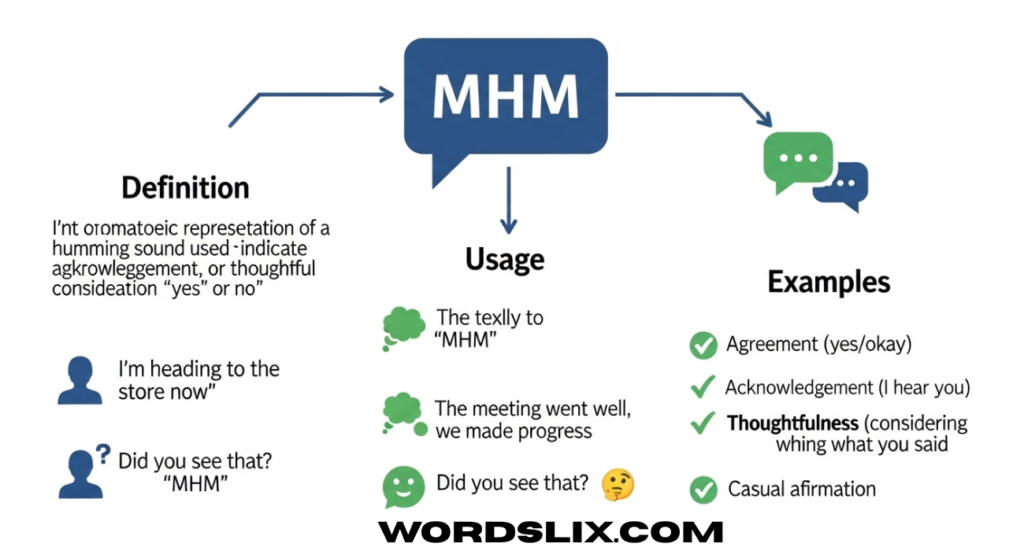
At its core, “mhm” functions as a slang abbreviation for informal agreement in text messaging. It often signals yes, I agree, or simply I’m listening, depending on the context of the conversation. Unlike a straightforward “yes,” mhm carries tone clarity that can be playful, neutral, or subtly expressive. Its brevity makes it ideal for fast digital communication, letting users respond without interrupting the flow of an online conversation.
For example, when a friend says, “Do you want to grab coffee later?” replying with “mhm” signals affirmation while maintaining a casual, friendly tone. Similarly, in social media comments or gaming chats, mhm can indicate subtle agreement or playful context without overwhelming the conversation. Its adaptability in interpersonal communication demonstrates why it has become a favorite tool for expressing nuance in responses and maintaining conversational style in both professional and informal settings.
Origins of “Mhm”
The expression “mhm” has deep roots in spoken language, long before text messaging existed. Linguists classify it as a paralinguistic feature, meaning it conveys meaning without forming a full word. Traditionally, people used it in verbal conversations to show acknowledgment, agreement, or listening. Over time, it migrated to written digital communication, maintaining its role as a brief signal of attention or subtle emotion.
With the rise of online conversation, digital expression, and social media culture, “mhm” became shorthand for informal chats. Its simplicity allows users to express casual agreement, subtle interest, or hesitation without typing full sentences. This evolution shows how slang adapts across mediums, with texting etiquette emphasizing clarity, tone, and audience understanding. Today, it seamlessly blends conversational rhythm, tone nuance, and quick responsiveness in everyday messaging.
Common Contexts for Using “Mhm” in Texting
People use “mhm” in many contexts. It can signal agreement in informal chats, replacing words like yes or I agree, while keeping responses casual. In other cases, it acts as acknowledgment, showing listening without interrupting the conversation. Depending on the tone and context, it can convey neutral responses, mild interest, or hesitation subtly in text messaging.
In playful context, “mhm” adds charm to flirting or teasing. On social media, it often appears as a digital expression of excitement or casual approval. For example, when someone posts a funny meme, replying with “mhm” signals positive tone and engagement without needing a long response. Across all these uses, mhm demonstrates how interpersonal communication adapts to fast-paced online conversations, allowing subtle cues and social signaling to thrive.
How “Mhm” Differs From “Mm-hmm” and Other Variations
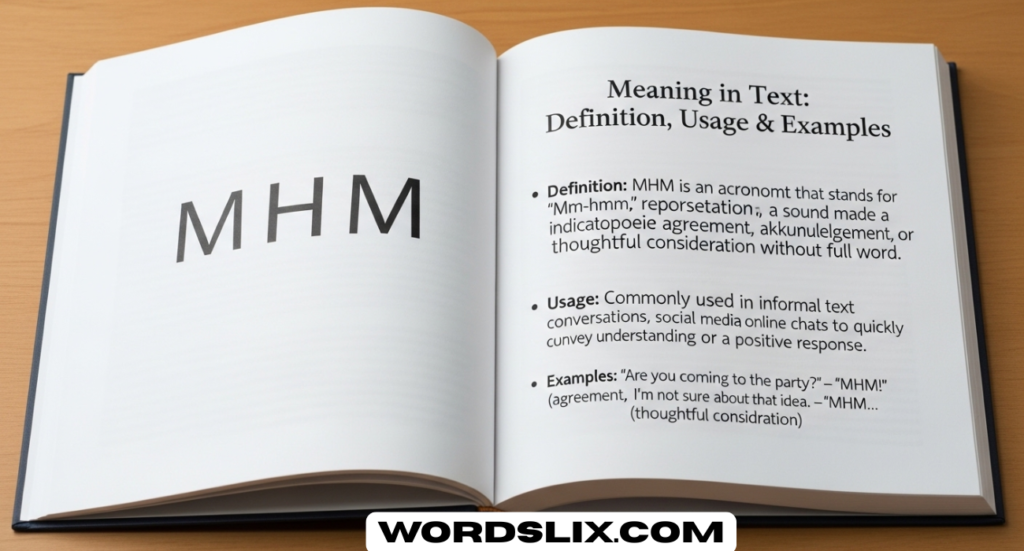
While “mhm” is widely recognized, it’s important to distinguish it from other similar expressions. “Mm-hmm” often conveys affirmation but can feel slightly more formal in text messaging, while “mm” may indicate hesitation or uncertainty. The short, punchy “uh-huh” signals acknowledgment and sometimes adds a playful tone depending on context.
Subtle differences in punctuation and length can change the nuance in responses. For instance, “mhm” feels casual, while “mm-hmm” might come across more deliberate. This distinction is crucial for tone clarity and avoiding misinterpretation in digital communication. Recognizing these differences improves texting etiquette and ensures your audience understands your intended social signaling in informal digital chats.
Psychological and Social Impact of “Mhm”
Beyond being a simple text, “mhm” has significant psychological weight. It signals active listening, acknowledgment, and emotional engagement in the absence of verbal or facial cues. In digital communication, where tone can be easily misunderstood, mhm serves as a subtle tool to convey your conversational style and responsiveness.
Socially, using “mhm” correctly can strengthen relationships in both informal chats and professional settings. It shows attentiveness, positive tone, and neutral tone where appropriate. Misusing it, however, can lead to misinterpretation, especially in professional emails or sensitive topics, highlighting the importance of understanding cultural differences and audience understanding when texting.
When Not to Use “Mhm”
Even though “mhm” is versatile, it doesn’t fit every situation. In professional emails, it may seem dismissive or too casual. During sensitive discussions, it can convey indifference or negative tone. In arguments, overusing it may suggest passivity rather than responsiveness.
Context matters. If clarity is crucial, pairing “mhm” with a longer sentence or emoji can prevent misinterpretation. Being mindful of texting etiquette, tone, and the recipient’s expectations ensures your digital expression is received as intended, preserving interpersonal communication without unintended consequences.
Texting Etiquette: Using “Mhm” the Right Way
Using “mhm” effectively requires tone clarity and context. Pairing it with emoji helps convey warmth and friendliness. It should match the energy of the conversation and never replace complete thoughts in professional emails or serious discussions. Understanding audience understanding and cultural differences enhances its proper use.
When used correctly, “mhm” reflects your conversational style, maintaining rhythm and subtlety. For instance, replying with “mhm 😏” in a casual text signals playful tone and agreement simultaneously. In contrast, overusing it in formal or sensitive contexts may create misinterpretation, emphasizing the role of texting etiquette in digital communication.
Fun Examples of “Mhm” in Pop Culture and Messaging
In pop culture, “mhm” appears in song lyrics, social media trends, and viral memes, mimicking a nod or rhythmic approval. Influencers often use it to show subtle engagement, while gamers may use it to acknowledge messages without breaking the flow of play. These examples demonstrate its role as a digital expression across platforms.
Social media users in the USA often combine “mhm” with emoji, creating tone-rich, concise responses that convey subtle interest or playful context. It has become a marker of casual speech and online etiquette, bridging the gap between written and spoken interpersonal communication, while maintaining a conversational style that resonates with younger audiences.
How to Interpret “Mhm” in Conversations
Interpreting “mhm” depends on context and tone. A positive tone suggests agreement, a neutral tone signals listening, while a negative tone may indicate disinterest or subtle annoyance. Reading the conversation carefully allows accurate interpretation and reduces misinterpretation.
For example, if someone says, “I didn’t like that movie,” replying with “mhm” could be neutral acknowledgment or mild disagreement. Understanding these nuances in responses ensures your messages reflect the right social signaling. Knowing when to add clarification or alternative expressions prevents confusion and enhances your conversational rhythm in texting.
Creative Alternatives to “Mhm”
Several alternatives to “mhm” convey similar meanings. Words like “yup,” “yeah,” “uh-huh,” “totally,” or “absolutely” express agreement or affirmation with slight variation in tone. Choosing the right one depends on context, level of enthusiasm, and the playful context of the conversation.
Using alternatives strategically enhances texting etiquette by avoiding repetition and ensuring clarity. For instance, “yup” feels casual, while “absolutely” signals stronger positive tone. These choices allow you to maintain conversational style, show responsiveness, and adapt digital expression to your audience’s expectations.
Cultural and Regional Differences in Using “Mhm”

In the USA, “mhm” is casual and commonly used among teens and young adults. In Europe, it appears less in formal chats, often replaced with “yes” or “ja.” In Asia, it’s popular among younger social media users, especially on platforms emphasizing informal digital chats.
Recognizing cultural differences ensures the message is interpreted correctly. In global communication, audience expectations and interpersonal communication norms shape the tone and nuance in responses. Adapting “mhm” according to these factors maintains clarity, friendliness, and playful context without miscommunication.
Expert Tips for Using “Mhm” Effectively
Experts recommend pairing “mhm” with context or follow-up sentences for clarity. Using emoji strategically adds warmth, and adjusting the response to match conversation energy improves texting etiquette. Avoid overusing it in formal or serious discussions, where traditional affirmation is preferred.
Understanding audience understanding, tone clarity, and conversational style ensures your use of “mhm” communicates the right meaning. Expert guidance emphasizes responsiveness, careful interpretation of social signaling, and enhancing digital communication through subtle yet effective expressions.
Common Mistakes With “Mhm”
Overusing “mhm” can appear lazy or disinterested, while using it in serious discussions may seem dismissive. Ignoring tone, context, or audience expectations can lead to misinterpretation. Pairing “mhm” with clarifying messages or emoji prevents misunderstanding.
Being aware of these mistakes ensures your digital expression communicates acknowledgment, agreement, or subtle interest correctly. Following proper texting etiquette maintains a smooth conversational rhythm, allowing your messages to reflect the intended nuance in responses and playful context without losing meaning.
Why “Mhm” Is So Popular in Modern Texting
“Mhm” has become a favorite in text messaging because it’s quick, easy, and expressive. In digital communication, people often prefer short responses that convey acknowledgment and agreement without typing long sentences. Its popularity also reflects changing habits in interpersonal communication, where casual speech and subtle nuance in responses matter more than formal wording.
Social media platforms and informal digital chats amplify this trend. From teens to young adults, using “mhm” signals listening, subtle interest, and playful tone. Unlike full sentences, it keeps conversational rhythm intact and allows social signaling through emoji or punctuation, showing emotion while maintaining brevity in online conversation.
How Emojis Change the Meaning of “Mhm”
Adding emoji to “mhm” can completely alter its interpretation. For example, “mhm 😏” may suggest flirtation, while “mhm 🙂” conveys polite acknowledgment. In digital communication, these small icons help convey tone that text alone might miss, making it easier to express subtle interest, playful context, or emotional nuance in text messaging.
Emojis also affect interpersonal communication on social media. They give tone clarity, reducing misinterpretation in informal chats. People use them to maintain conversational rhythm, signal agreement, or show active listening. Pairing “mhm” with the right emoji ensures your digital expression is both clear and engaging.
“Mhm” in Professional vs Casual Texting
Using “mhm” in casual messages works well for friends, family, or social media. It conveys agreement, acknowledgment, and playful tone without being wordy. However, in professional emails or workplace digital communication, overusing it can seem lazy or indifferent, potentially creating misinterpretation about your responsiveness or engagement in important discussions.
Understanding the difference is key for texting etiquette. In informal chats, “mhm” enhances conversational style and social signaling. In contrast, professional texts benefit from traditional affirmation phrases like “yes,” “I agree,” or “understood,” which maintain clarity and tone clarity while avoiding the casual perception that “mhm” may convey.
How Tone Affects the Interpretation of “Mhm”
The meaning of “mhm” often depends entirely on tone. A cheerful or upbeat tone signals positive affirmation, while a flat or slow response can indicate neutrality or even mild annoyance. In digital communication, where facial cues are missing, tone nuance is essential for preventing misinterpretation and maintaining conversational rhythm in text messaging.
Recognizing tone also affects interpersonal communication on social media. Subtle adjustments, like adding punctuation or emoji, can signal playful context, subtle interest, or careful listening. Understanding these nuances allows you to express acknowledgment, agreement, and engagement clearly while keeping your digital expression smooth and relatable.
The Role of “Mhm” in Flirting and Playful Texts
In informal chats, “mhm” can signal subtle interest or flirtation. When paired with emoji like 😉 or 😏, it conveys playful tone and agreement without saying too much. In text messaging, this makes it a powerful tool for expressing social signaling while keeping the conversation light, fun, and interactive in both online conversation and social media interactions.
Flirting with “mhm” relies on tone clarity and context. The same text can feel neutral in one chat and playful in another. Recognizing audience expectations and cultural norms ensures your digital expression communicates the right level of engagement while maintaining conversational style, subtlety, and nuance in responses.
Why Misinterpreting “Mhm” Happens
Misinterpretation often arises because “mhm” is short and context-dependent. Without visual cues, a response can seem neutral, disinterested, or even negative tone unintentionally. In online conversation, failing to match tone clarity and audience understanding can turn a simple acknowledgment into a miscommunication, especially in sensitive or professional contexts.
Other factors include cultural habits and chat norms. In informal digital chats, it’s expected, while in professional emails, it may seem lazy. Paying attention to conversational rhythm, adding clarification, or using alternative expressions like “yes” or “I agree” can prevent misinterpretation and ensure your digital expression communicates subtle interest effectively.
How “Mhm” Enhances Conversational Flow
Short responses like “mhm” maintain conversational rhythm in fast-moving text messaging. They allow participants to show acknowledgment, agreement, or listening without pausing the flow of dialogue. In digital communication, it works especially well in informal chats, keeping conversations casual, dynamic, and engaging while preserving subtle emotional cues and tone nuance.
Additionally, “mhm” supports interpersonal communication by signaling attentiveness and responsiveness. It functions as a shorthand that fits both social media exchanges and casual messaging. This efficiency allows users to maintain conversational style, playful context, and social signaling without typing full sentences, making communication smooth and natural.
How Texting Habits Shape “Mhm” Usage
Your texting habits often determine how you use “mhm.” Some rely on it for acknowledgment and agreement in almost every reply, while others reserve it for moments of subtle interest or playful tone. These patterns reflect larger trends in digital communication, including the desire for brevity, conversational style, and maintaining nuance in responses.
Cultural and personal habits also affect interpretation. Teens and young adults on social media may use “mhm” extensively, signaling positive tone or playful context, while older audiences may prefer full words like “yes” or “I agree.” Awareness of these differences ensures audience understanding and prevents misinterpretation in informal digital chats.
Case Study: “Mhm” in Social Media Trends
On platforms like Twitter and Instagram, “mhm” often appears in comments or replies to show acknowledgment and subtle interest. Influencers use it to signal playful tone or agreement, and memes sometimes incorporate it as a digital expression. Tracking these trends shows how texting etiquette, tone nuance, and social signaling shape modern online conversation.
Case studies show that pairing “mhm” with emoji increases engagement. Posts with “mhm 😊” often receive more replies because it conveys attentiveness without overwhelming the conversation. This demonstrates the importance of conversational style and digital communication strategies in reaching audiences effectively while maintaining clarity and nuance in responses.
The Future of “Mhm” in Digital Communication
As texting and online conversation evolve, “mhm” will likely remain a staple in digital communication. Its adaptability allows it to convey acknowledgment, agreement, and subtle interest efficiently. Future messaging apps may enhance it with interactive features, emojis, or AI-driven tone clarity, preserving its role in informal digital chats and social signaling.
Understanding its potential ensures better interpersonal communication. By analyzing patterns of use, cultural differences, and context, users can employ “mhm” effectively, enhancing conversational style, maintaining tone nuance, and improving responsiveness. Its simplicity combined with expressive potential makes it a powerful tool in modern digital expression.
FAQs
Is “mhm” the same as saying yes?
“Mhm” often means yes or I agree, but it can also signal listening or neutral acknowledgment depending on the context.
Can “mhm” be used in flirting?
Yes, when paired with emoji or a playful tone, “mhm” can show subtle interest or casual flirtation in texting.
Should I use “mhm” in professional emails?
It’s best to avoid it; in professional communication, “mhm” may seem too casual or dismissive compared to formal affirmation like “yes” or “understood.”
How do I know if “mhm” is positive or neutral?
Check the context, preceding messages, and any emoji used. Tone and conversation style reveal whether it signals agreement, listening, or neutrality.
Conclusion
Mhm Meaning in Text helps people communicate better in text messaging and online conversation. The word “mhm” shows agreement, listening, and acknowledgment without using many words. People use it in informal chats, social media, and digital communication to keep conversations smooth. It also adds tone, nuance, and sometimes a playful context to messages. Using it correctly makes texting easier and more natural.
Knowing Mhm Meaning in Text also teaches good texting etiquette. It helps avoid misinterpretation and keeps messages friendly and clear. Pairing “mhm” with emoji or context improves tone clarity and shows responsiveness. Understanding this small word improves interpersonal communication and helps people connect in digital expression confidently and politely.