
TMI Full Form in Chat – Meaning, Usage, and Examples for 2026
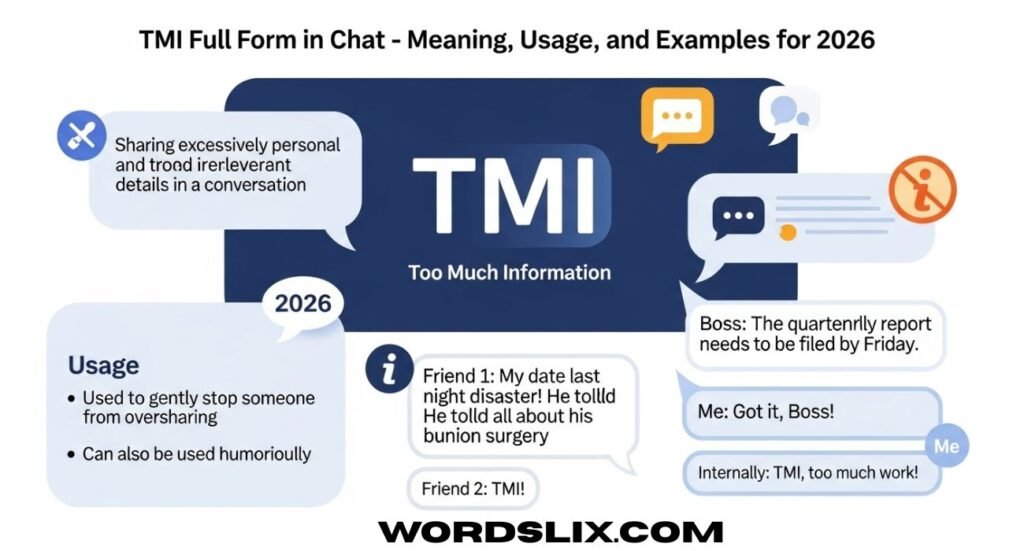
TMI full form in chat is Too Much Information. People use it when someone shares too many personal or private details. It helps others signal that the message has too much detail.
Have you ever read a message that felt too personal or awkward? That is when TMI comes in handy. It makes conversations easier and keeps chats fun. Many people use it every day online.
TMI full form in chat works in texting, messaging apps, and social media. It adds humor and shows respect for personal boundaries. Using it correctly helps make online conversations clear and friendly.
What Does TMI Mean in Slang?
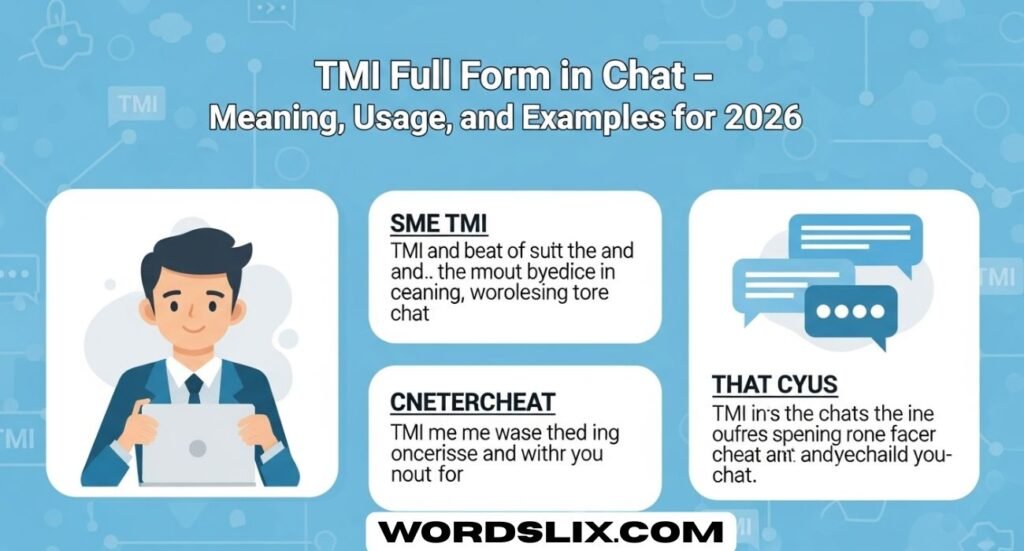
The TMI full form in chat is “Too Much Information.” It is a slang abbreviation used when someone shares details that feel too personal, awkward, or unnecessary. In messaging apps and social media posts, saying TMI signals politely that the other person is oversharing. People often use it with a playful tone, using emojis to soften the response, making the online conversation lighthearted.
For example, if a friend messages, “I just got a rash in a private area,” replying with TMI shows that the details were more than needed. In casual chats, TMI allows you to respond without embarrassment or confrontation, maintaining both humor and boundaries. It has become a common internet slang abbreviation, bridging everyday texting, messaging, and social media interactions in a way that feels natural and relatable.
Origins of TMI
The origins of TMI trace back to American workplace culture in the 1980s and 1990s. Initially, it was a gentle way to discourage colleagues from sharing too many personal details during meetings or casual office chats. By the early 2000s, TMI gained popularity online through emails, forums, and early messaging apps, reflecting a new need for digital etiquette in online communication.
As social media platforms like Instagram, Twitter, and TikTok became mainstream in the 2010s, TMI evolved into a widespread slang term recognized globally. Its cultural relevance grew as internet slang abbreviations shaped how people expressed humor, set social boundaries, and handled oversharing in both personal context and professional context. Today, it is a common tool for navigating fast-paced online interactions with wit and clarity.
Common Contexts Where TMI Is Used
The use of TMI spans across multiple contexts, from texting and messaging to casual conversations and social media posts. In messaging apps, it signals when someone has shared too much, while on social media, it often appears in comments on posts that are overly detailed. Its usage allows people to maintain social boundaries and inject humor without offending.
Even in casual conversations, TMI has become part of everyday speech, especially in face-to-face chats or video calls. It bridges online communication and real-life interactions, showing how internet slang abbreviations adapt to different platforms. The playful tone and recognition of oversharing make it versatile, suitable for digital etiquette in both lighthearted personal context and occasional professional context.
Read Also ;Rabe Meaning: What It Really Means and Why Everyone’s Saying It in 2026
Texting and Messaging
In texting and messaging, TMI is most often used when a friend or group chat member shares more than necessary. For example, a message describing a medical procedure in detail might prompt a reply like, “Whoa, TMI!” This use shows awareness of social boundaries while keeping the tone playful and lighthearted. Many people also use emojis such as 😅 or 😂 to emphasize humor or mild discomfort.
Messaging apps like WhatsApp, iMessage, and Facebook Messenger rely heavily on texting shorthand like TMI. It allows quick communication of discomfort or surprise at oversharing without pausing the flow of conversation. Users recognize that the abbreviation signals both polite restraint and relatable humor, blending naturally into casual conversations and online digital communication.
Social Media Posts
On social media posts, TMI often appears in comments under content where someone shares personal or detailed stories. Users respond with phrases like “TMI 😅” or “Too Much Information, buddy!” to express discomfort humorously. Instagram, TikTok, and Twitter thrive on this type of shorthand because it keeps online conversation light and engaging while acknowledging oversharing.
Social media influencers and meme creators frequently reference TMI in their content to connect with audiences. Viral memes often depict humorous situations of oversharing, making TMI a recognizable part of internet culture. The abbreviation’s mainstream recognition is a testament to its adaptability across digital platforms, bridging personal context, casual humor, and playful critique.
Casual Conversations
In casual conversations, TMI functions as a social cue signaling that a topic might be too detailed or intimate. Friends often use it during lunch chats, coffee breaks, or Zoom calls. It works both verbally and in written form, helping maintain social boundaries while keeping interactions friendly and humorous. Saying TMI allows people to navigate awkward topics without confrontation.
Its versatility comes from platform adaptation; TMI can be spoken aloud or typed in messaging apps, making it suitable across both personal context and professional context conversations. The playful tone, often accompanied by laughter or joking, enhances the online conversation experience while subtly educating participants about digital etiquette and avoiding oversharing.
Why TMI Became So Popular
TMI became popular due to its simplicity, clarity, and adaptability in fast-paced online interactions. It provides a short, recognizable way to signal oversharing without hurting feelings. Its playful tone allows people to inject humor and maintain social boundaries in casual chats, texting, or messaging apps. Using TMI also demonstrates an understanding of digital etiquette and internet culture, making communication smoother.
The abbreviation fits seamlessly across online platforms, whether in a social media post, a comment, or a workplace email. Its mainstream recognition in pop culture references, TV shows, and viral memes has reinforced its place in everyday language. People enjoy the mix of humor and subtle guidance TMI provides, making it a staple in both personal context and occasional professional context usage.
Examples of TMI in Sentences

“She just told me every step of her surgery—TMI!” captures a classic messaging app reaction. In social media posts, one might comment, “TMI 😅, nobody needed to know that!” or reply on Twitter with, “TMI lol” after a personal story. Even in workplace email, a polite note like, “Sharing your medical details is TMI for the office,” shows how the abbreviation adapts across personal context and professional context.
In casual conversations, TMI can appear humorously, as in, “You told me about your awkward date? TMI!” The playful tone helps maintain social boundaries while acknowledging oversharing. Across all examples, the abbreviation emphasizes digital etiquette, relatable humor, and the ability to handle fast-paced online interactions with ease and clarity.
TMI in Different Digital Platforms
| Platform | Example Chat/Text | Tone |
| Text Messaging | “TMI! I didn’t need that much detail.” | Casual, friendly |
| Comment under oversharing post: “TMI 😅” | Playful, humorous | |
| Replying to a long thread: “TMI lol” | Witty, informal | |
| TikTok | Video caption: “TMI moment 😂” | Entertaining, relatable |
| Workplace Email | “Sharing medical details is TMI for the office.” | Polite, professional |
This table shows how TMI full form in chat adapts across online platforms, from messaging apps to social media posts and professional communication. Tone, humor, and digital etiquette shift depending on audience and cultural relevance, demonstrating the abbreviation’s versatility.
TMI vs Oversharing: Understanding the Difference
TMI and oversharing are related but not identical. Oversharing describes the act of revealing too much personal information, whereas TMI is the reaction to it. For example, telling everyone your medical history is oversharing, while responding, “Whoa, TMI!” shows the reaction. Understanding this distinction is important for online communication, casual conversations, and professional context.
Using TMI appropriately ensures that social boundaries remain intact while preserving humor and a playful tone. Many people confuse the two, but in practice, TMI acts as a polite, concise way to address oversharing without embarrassing the sender. In digital communication, it helps maintain clarity across messaging apps, social media, and even workplace email.
How to Respond to TMI Gracefully
Responding to TMI gracefully requires digital etiquette, humor, and respect for social boundaries. One method is to use a playful response with an emoji, like, “TMI! My brain can’t handle that 😂.” Another is polite boundary-setting: “Thanks for sharing, but that’s a bit TMI for me.” Maintaining a playful tone ensures the conversation stays light and friendly.
Avoid shaming or criticizing the sender, as it may create discomfort in casual conversations or messaging apps. Using TMI as a reaction, rather than a judgment, demonstrates mastery of online communication, professional context, and personal context. A well-placed TMI shows awareness of oversharing, humor, and cultural relevance, keeping chats engaging and respectful.
Fun Facts About TMI
TMI is frequently referenced in pop culture references, TV shows, and viral memes, making it part of mainstream internet culture. Psychology experts note that the abbreviation reflects the stress of modern digital communication and the challenges of navigating fast-paced online interactions. Its recognition has spread internationally, even among non-native English speakers.
Social media influencers often highlight humorous situations involving TMI in Instagram or TikTok content. Memes about oversharing gain millions of views because they are relatable and funny. TMI bridges casual conversations, messaging apps, and social media posts, showing how slang, humor, and playful tone combine to create engaging online content with cultural relevance.
TMI in Professional vs Personal Contexts
In a professional context, TMI should be used sparingly. For instance, a message like, “Sharing medical details in the meeting is TMI,” maintains polite tone while establishing boundaries. On the other hand, in a personal context, TMI is casual, playful, and often accompanied by emojis. It works well in messaging apps or social media posts where humor and relatability are key.
Knowing the difference ensures proper use of TMI across platforms. In professional communication, TMI maintains digital etiquette and prevents discomfort. In casual chats, it reinforces humor and signals social boundaries in a friendly, lighthearted way. Mastery of this distinction enhances online communication skills and increases engagement with relatable humor.
Cultural Relevance of TMI
TMI is widely understood in North America and Europe, and younger users in Asia and the Middle East also recognize it through social media posts. Its global spread shows how internet slang abbreviations transcend language barriers. TMI has become a tool for balancing oversharing, humor, and social boundaries in a world dominated by digital communication.
Its cultural relevance extends to fast-paced online interactions, where oversharing is common. The abbreviation allows users to respond quickly, maintain tone, and show awareness of digital etiquette. It demonstrates the global influence of internet culture, social media influencers, and pop culture references, all while keeping online interactions playful and engaging.
Examples in Pop Culture and Media
TV shows, viral memes, and social media influencers often reference TMI to illustrate awkward or humorous situations. From sitcom dialogues to TikTok sketches, TMI highlights moments of oversharing in a relatable way. These examples reinforce the abbreviation’s mainstream recognition, making it a familiar term in both personal context and professional context conversations.
Memes about TMI often go viral because they capture universal experiences in messaging apps, social media posts, and casual conversations. Influencers use it in captions or videos to create relatable humor while teaching subtle lessons about social boundaries, tone, and digital etiquette. Pop culture references keep TMI alive as a playful tool in modern online communication.
Tips for Using TMI Like a Pro
Use emojis to enhance the playful tone, like 😅, 😂, or 😳. Pair TMI with casual phrases, for instance, “TMI, buddy!” This conveys humor while signaling oversharing. Avoid using it in sensitive contexts where the other person might feel judged. Recognizing the difference between playful TMI and actual oversharing ensures effective online communication.
Applying these tips across messaging apps, social media posts, or even professional communication maintains a balance between humor, polite tone, and social boundaries. Mastering TMI allows users to navigate fast-paced online interactions with clarity, engaging content, and cultural relevance, keeping conversations friendly, relatable, and playful.
Common Misconceptions About TMI
TMI is not inherently rude. Its impact depends on tone, context, and platform adaptation. Many assume TMI only applies to personal info, but it also signals oversharing in workplace email or professional communication. Another misconception is that it is formal, but it is primarily used in casual conversations, messaging apps, and social media posts.
Recognizing these misconceptions improves digital communication skills and enhances understanding of internet slang abbreviations. Using TMI correctly shows mastery of social boundaries, humor, and playful tone, making interactions engaging and smooth across online platforms, personal context, and professional context. Its widespread recognition ensures TMI remains a versatile tool for communication in 2026.
How TMI Enhances Online Humor
TMI often adds humor to messaging apps and social media posts. By signaling oversharing, it creates funny, relatable moments in casual conversations. People frequently pair it with emojis like 😂 or 😅, which enhances the playful tone. Using TMI cleverly can make a simple story engaging, keeping friends entertained while maintaining social boundaries and showing awareness of digital etiquette.
Humor with TMI also works across online platforms like Instagram, TikTok, and Twitter, where viral content often relies on relatable situations. This abbreviation turns awkward or overly personal stories into entertaining material. Social media influencers use it to connect with audiences, teaching online conversation tips and demonstrating the cultural relevance of TMI in fast-paced online interactions.
TMI and Emotional Boundaries
Using TMI helps people maintain emotional boundaries during texting or messaging. When someone shares too much personal information, responding with TMI politely sets limits while keeping the conversation lighthearted. It prevents discomfort and preserves trust in casual conversations. Oversharing can strain relationships, but TMI provides a playful, polite way to navigate these moments.
TMI also encourages awareness of how much detail others are comfortable with. In digital communication, it signals respect for emotional space. Whether in social media posts or messaging apps, knowing when to say TMI fosters healthier online interactions. The abbreviation strengthens social boundaries, allowing people to enjoy humor, playful tone, and relatable communication without crossing sensitive lines.
TMI in Video Calls and Virtual Meetings
In virtual spaces, TMI works as a subtle cue in video calls or online meetings. People often share stories that are too detailed or private, and a gentle “TMI” response keeps the professional context polite while conveying boundaries. Using humor softens the message, balancing digital etiquette and casual friendliness in messaging apps and video platforms.
Even in virtual calls for team collaboration, TMI helps manage oversharing without embarrassment. It can prevent distractions and maintain a positive tone. In online communication, this abbreviation bridges personal and professional spaces, demonstrating social boundaries, humor, and awareness of internet culture, making interactions more effective and less awkward.
TMI in Group Chats
Group chats often amplify oversharing, as multiple participants share personal anecdotes at once. TMI becomes a quick, playful way to signal discomfort or set limits. Whether in messaging apps or social media messaging, it maintains social boundaries without offending anyone. Using TMI keeps group dynamics friendly, humorous, and organized.
In large chats, TMI helps distinguish which stories are too personal for a wider audience. Responding with TMI creates a playful tone, allowing others to join the conversation without judgment. Online conversation tips suggest combining TMI with emojis and witty remarks for a lighthearted, relatable humor that resonates in fast-moving digital communication spaces.
Common Mistakes When Using TMI
A common mistake is using TMI too harshly, which can seem judgmental or rude in casual conversations. Overusing the abbreviation or pairing it with a negative tone can hurt feelings, even online. TMI should balance humor and social boundaries, keeping messaging apps and social media posts friendly and engaging.
Another mistake is using TMI in sensitive professional contexts. While it works in informal chats, applying it in serious meetings may appear unprofessional. Understanding the platform adaptation of TMI ensures clarity and polite communication. Proper use emphasizes humor, digital etiquette, and cultural relevance, maintaining a positive and engaging online presence.
TMI Alternatives and Variations
While TMI is widely recognized, alternatives exist for expressing oversharing in messaging apps or social media posts. Phrases like “Too much detail,” “That’s personal,” or simply “Whoa” can convey similar meaning. These alternatives allow variation in tone, from playful to polite, depending on the audience and context.
Variations also appear in emojis and captions on platforms like Instagram or TikTok, creating relatable humor without repeating TMI. Users can adapt phrasing based on online communication style, platform norms, or group dynamics. Using alternatives maintains clarity, social boundaries, and digital etiquette, enhancing engagement in both personal context and professional context interactions.
TMI and Social Media Etiquette
TMI plays a key role in social media etiquette, guiding users on what is appropriate to share publicly. In Instagram, TikTok, or Twitter comments, TMI signals oversharing without confrontation. This abbreviation allows for lighthearted feedback, helping people navigate fast-paced online interactions while maintaining a playful tone.
Online conversation tips suggest combining TMI with emojis, humorous captions, or witty responses to soften the message. This maintains cultural relevance and relatable humor in viral memes and posts. By understanding TMI in social media contexts, users can foster engaging content, respect social boundaries, and practice thoughtful digital communication.
TMI in Storytelling and Memes

TMI has become a popular tool in storytelling and meme creation, where oversharing leads to humor. Memes often exaggerate awkward situations, showing how TMI can create relatable humor in social media posts. Its inclusion adds a playful tone and resonates with audiences who encounter oversharing daily in messaging apps or casual conversations.
In storytelling, TMI also signals the tipping point where a story is too detailed. Social media influencers and meme creators use TMI in captions, video scripts, and threads to engage viewers. This keeps online communication lively, demonstrates internet culture, and balances humor with social boundaries, creating shareable and memorable content across platforms.
FAQs
What does TMI stand for in chat?
TMI stands for Too Much Information, used when someone shares personal or unnecessary details in messaging apps or social media conversations.
Is TMI considered rude?
Not always. TMI can be playful, humorous, or polite, depending on tone and context in online communication.
Can I use TMI in professional chats?
It’s rarely suitable in formal settings. Use it cautiously in workplace emails or meetings to maintain professional communication.
What are alternatives to TMI?
You can say “too much detail,” “oversharing,” or “that’s personal” to convey the same meaning politely in digital conversations.
Conclusion
Understanding the TMI full form in chat helps people communicate better online. When someone shares too many personal details, using TMI lets others respond politely while keeping conversations friendly. This abbreviation works well in messaging apps, social media, and casual conversations, showing respect for social boundaries. It also adds humor and keeps interactions light. People can use TMI with emojis or playful comments to make chats fun and clear. Learning TMI helps everyone avoid awkward moments and makes online communication smoother for friends, classmates, and colleagues.
Using the TMI full form in chat also teaches digital manners. It signals when details are too private while keeping the tone polite and friendly. TMI appears in social media posts, memes, and videos, making it part of modern internet culture. Knowing how to use it shows understanding of digital etiquette, professional context, and personal context. TMI makes chats safer, enjoyable, and easier for everyone online.