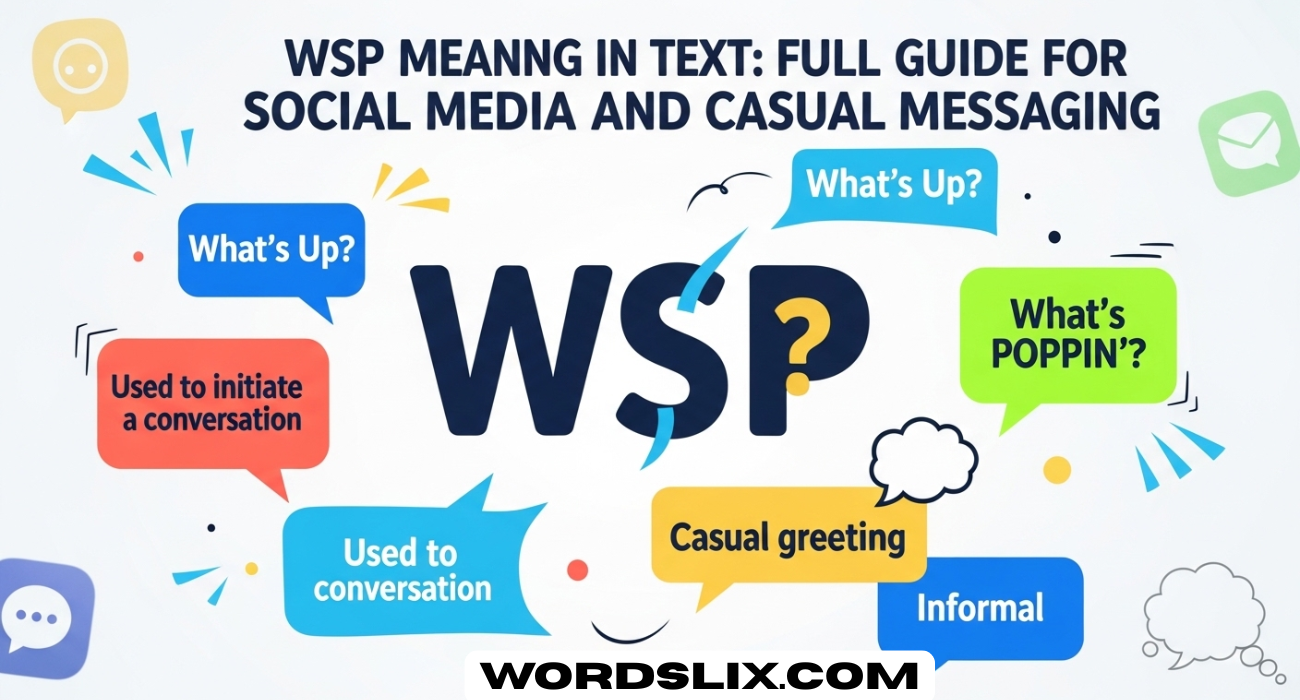
WSP Meaning in Text: Full Guide for Social Media and Casual Messaging
WSP Meaning in Text is a short way to say “What’s up?”. People use it to start a friendly conversation. It is common in texting and social media chats.
Many people see WSP in messages and wonder what it means. It looks simple, but it opens a fun and casual talk. Using it can make chatting faster and easier.
WSP Meaning in Text works well in Snapchat, Instagram, TikTok, Messenger, and group chats. Teens and young adults use it a lot. It helps keep messages friendly, quick, and fun.
What Does WSP Mean in Text?
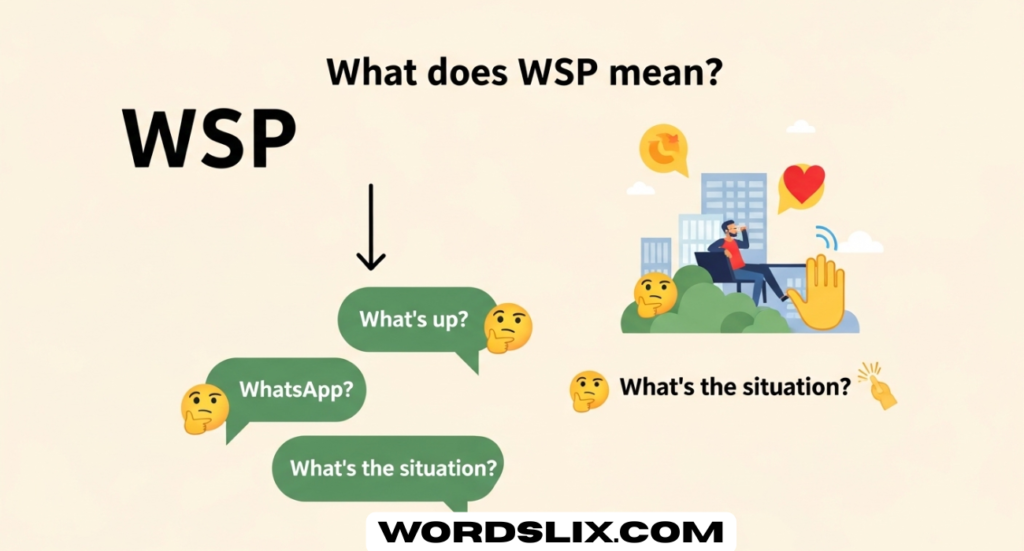
In texting, WSP simply means “What’s up?” It’s a casual greeting used to start a conversation or check on someone in a friendly context. Unlike formal greetings, WSP signals a relaxed, approachable tone, making it ideal for friends, young adults, and anyone active in online platforms. Its rise reflects modern texting culture in the USA, where brevity and speed are valued.
People use WSP across Snapchat, Instagram, TikTok, Messenger, and other social media channels. Its informal communication style allows users to convey friendliness without extra words. When paired with emoji or playful phrasing, WSP can carry humor, warmth, or flirtiness depending on the conversation starter. This makes it a versatile abbreviation for casual, everyday chats.
Read Also;MB Meaning in Text — The Complete 2026 Guide
Why People Use WSP Instead of “What’s Up?”
People prefer WSP over “What’s up?” because it is fast to type and fits modern messaging trends. In texting culture, speed and simplicity matter, and shorthand phrases like WSP keep messages flowing naturally. Teens, young adults, and social media enthusiasts use it to maintain a friendly, informal tone while texting. Its brevity makes it suitable for group chats, casual DMs, or quick check-ins.
Another reason is comfort. Using WSP feels more relaxed than the full phrase, creating a casual talk vibe in online communication. In gaming, social media, or private chats, it allows quick engagement without overthinking wording. Adding emoji enhances the friendly tone, making digital conversations more expressive and aligned with informal context expectations.
How to Pronounce WSP (Texting Tone)
Although WSP is typed, people often read it as “wassup,” “sup,” or “what’s up.” The tone varies depending on context and audience. For example, using “sup” in a group chat feels casual and approachable, while “wassup” can be playful or expressive. Emoji usage further shapes the meaning, ensuring your friendly greeting lands naturally.
Understanding pronunciation is also important for online messaging trends. Teens and young adults interpret WSP differently depending on digital wave, emoji, and sentence structure. Recognizing how others perceive your abbreviation allows smoother informal communication and ensures your conversation starter matches the intended tone of casual chats.
Common Meanings of WSP (All Possible Interpretations)
While WSP mostly stands for “What’s up?”, it has other rare meanings depending on context. These include WhatsApp, With Special Permission, and Web Service Provider. Knowing which meaning applies prevents confusion in professional contexts or formal messages.
| Meaning | Context | Usage Example |
| What’s up | Texting / Casual | “WSP bro? How’s it going?” |
| Messaging platform | “Send me on WSP” (rare) | |
| With Special Permission | Formal documents | “Access granted WSP” |
| Web Service Provider | Tech terminology | “Check with your WSP” |
In everyday chat, 99% of the time, WSP is a friendly greeting. Rare meanings appear in professional or technical communication, not in casual conversations with friends or in social media DMs.
Examples of “WSP” Used in Text Conversations
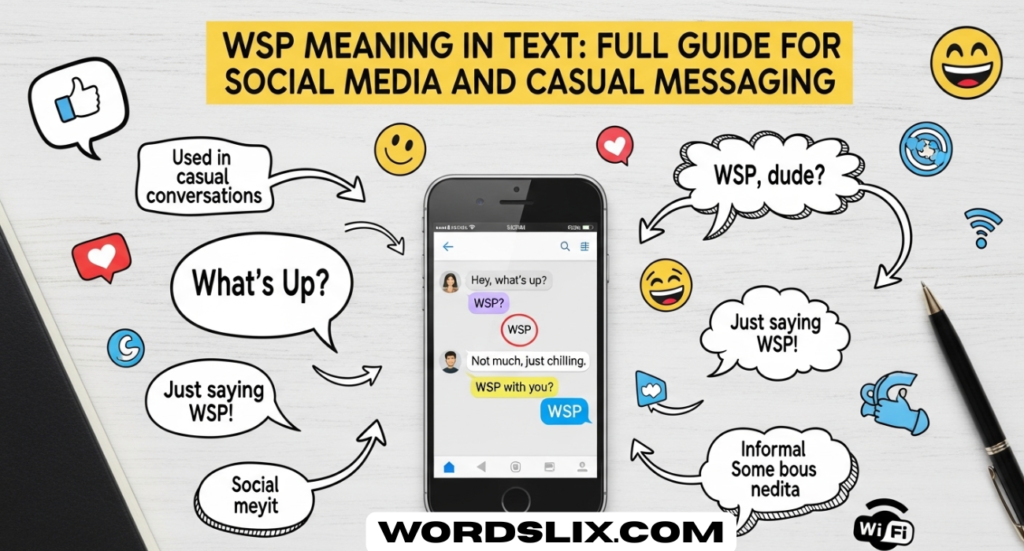
In casual texting, WSP usually opens the conversation. For instance, someone might text “WSP bro?” to ask about their day, or “WSP tonight?” when planning an event. It’s commonly used in social media chats, group conversations, and even in gaming sessions as a digital wave signaling attention and friendliness.
Adding emoji enhances the tone. A WSP 😎 shows playfulness, while WSP 😍 can hint at flirtiness. This abbreviation adapts naturally, conveying curiosity, friendliness, or excitement. Its simplicity makes it ideal for online messaging trends, quick check-ins, or maintaining casual talk across different social platforms.
When You Should Use WSP (Best Situations)
You should use WSP with friends, young adults, or anyone comfortable with informal communication. It works well in group chats, social media DMs, and even in gaming messages, acting as a smooth conversation starter. The abbreviation emphasizes approachability and friendliness, aligning with modern messaging culture.
In practice, texting “WSP fam” to a close group signals warmth and connection. Its shorthand form allows for quick interaction without disrupting the casual tone of digital communication. Adding a playful emoji reinforces friendliness and fits current online messaging trends.
When You Should NOT Use WSP
Avoid WSP in professional emails, work chats, or formal settings. Using it with clients, seniors, or in academic submissions can seem rude. In these cases, a polite greeting like “Hello, how are you?” or “Hope you’re doing well” is more appropriate. Knowing context helps maintain credibility in professional communication while reserving WSP for casual exchanges.
Even in social media, tone and emoji usage matter. Misusing WSP can confuse older users or those unfamiliar with slang, which affects the friendly tone of the message. Stick to informal contexts to preserve the casual talk vibe.
How to Reply to “WSP?” (Best Human-Like Replies)
Replying naturally is key to keeping the conversation flowing. Chill, friendly, flirty, busy, and funny replies all work depending on the situation. Matching tone and using emoji helps convey your message in a friendly, informal communication style.
Chill & Simple Replies
Relaxed responses like “Not much. You?” or “Just relaxing, wbu?” maintain casual talk without overcomplicating the conversation. These replies fit well with teens, young adults, and friends who value brevity and friendly digital messaging.
Friendly Replies
Engaging replies such as “Hey! I’m great. What about you?” or “Pretty good! What’s up with you?” encourage further conversation and maintain a friendly tone in social media messages. They balance energy and politeness in informal chats.
Flirty Replies
Adding playful emoji creates flirtiness. “Thinking about you 😘 what’s up?” or “Better now that you texted” turns WSP into a fun conversation starter, suitable for informal, playful exchanges.
Busy Replies
Quick, polite replies like “Caught up with work rn. WSP?” or “A bit busy, talk later?” keep digital conversations going without overcommitting. It shows respect while maintaining a friendly tone.
Funny Replies
Humorous responses like “Just surviving life one snack at a time.” or “WSP? My battery at 5%… send help.” express personality, entertain friends, and align with online messaging trends.
Why WSP Became So Popular (A Cultural Insight)
WSP gained popularity because texting culture prioritizes speed, simplicity, and casual talk. Teens and young adults use it to maintain connection without long messages. Emoji usage enhances tone, allowing the abbreviation to convey humor, excitement, or warmth instantly. Its rise reflects a broader digital culture where brevity and friendliness matter.
Another reason is universality. Unlike region-specific slang, WSP crosses social platforms like Snapchat, Instagram, TikTok, and Messenger, letting users communicate effortlessly. The abbreviation fits naturally into informal communication, creating a quick digital wave of friendliness, humor, and energy across online chats.
Difference Between WSP and Similar Slang Terms
WSP shares purpose with other abbreviations like SUP, WYD, WUU2, HMU, and YO, but its tone is unique. It’s neutral, friendly, and widely recognized.
| Slang | Meaning | Tone / Usage |
| WSP | What’s up | Friendly, casual |
| SUP | What’s up | Very short, casual |
| WYD | What you doing | Direct, curious |
| WUU2 | What you up to | Playful, UK-style |
| HMU | Hit me up | Invitation to chat |
| YO | Hey | Energetic greeting |
Knowing these distinctions helps you adapt tone, emoji usage, and phrasing for online messaging trends and casual conversations.
Is WSP Considered Rude?
WSP isn’t inherently rude. Tone depends on context, relationship, and emoji usage. Sending it to close friends or peers is casual and friendly, while using it in formal or professional settings can seem disrespectful. In informal communication, it’s a safe conversation starter that maintains a friendly tone.
Is WSP Flirty?
Yes, WSP can be flirty depending on timing, context, and emoji usage. Adding playful emojis like 😘😉🔥 conveys interest. For instance, “WSP cutie 😘?” can be interpreted as flirtatious, turning a simple abbreviation into a friendly, informal communication tool with romantic undertones.
WSP in Different Age Groups (How Usage Varies)
Teens (13–19)
Teens use WSP frequently on Snapchat, Instagram, and TikTok. It fits digital culture, allows fast replies, and complements emoji usage in casual conversations.
Young Adults (20–30)
Young adults use it casually in group chats and social media DMs, though some prefer WYD or Sup. Its informal tone suits casual online connections.
Adults (30+)
Adults understand WSP but may not use it often. They prefer full greetings but recognize its friendly, casual tone in chats.
Older Generations
Older adults are usually unfamiliar unless active in social platforms. Misinterpretation can occur without context or emoji usage.
WSP in Gaming Culture
Gamers use WSP to save time during fast-paced online gaming sessions. Like gg, brb, btw, idk, glhf, it allows quick conversation without interrupting gameplay. Sending WSP signals attention, readiness, or casual greeting to teammates while maintaining friendly tone.
WSP in Social Media Trends
WSP thrives across TikTok, Instagram, Snapchat, Twitter, and Reddit. Users place it in comments, captions, DM requests, or story replies. Its speed and friendly tone help creators engage audiences quickly. Adding emoji enhances informal communication and aligns with digital culture trends for casual talk.
Example Sentences You Can Use (Practical + Realistic)
WSP? Haven’t heard from you in ages 😍.
WSP this weekend? Want to hang out?
WSP guys! Ready for the project?
WSP with the plan later?
Yo, WSP rn?
WSP fam, ready for tonight?
These examples show how to use WSP naturally with friends, maintaining a friendly, informal tone.
Extended Conversation Example Using WSP
A: WSP today?
B: Nothing major. Just music and coffee 🎵☕
A: Nice! Any new songs?
B: Yup, you’ll love this playlist 😍
A: Send it!
This demonstrates how WSP works as a casual conversation starter and keeps digital communication flowing smoothly.
Variations and Creative Tweaks of WSP
WSP??? shows urgency or excitement. WSP! conveys energy. WSP rn? asks about current activity, while WSP tmr? checks plans for tomorrow. Adding bro, fam, queen, or king personalizes the greeting. These tweaks adjust tone, emoji usage, and meaning for friendly, informal communication.
Is WSP the Same as WhatsApp?
Sometimes WSP confuses people with WhatsApp, especially where the app is called WApp or WA. Context is key. In casual social platform chats, WSP almost always means “What’s up?”.
How to Use WSP Professionally (If You Must)
Use WSP with close colleagues in Slack DMs or Teams messages. For example, “Hey, WSP with the file update?” works among familiar coworkers. Avoid emails, formal chats, or external communication, as it can appear unprofessional. Context, tone, and audience dictate appropriateness in professional communication.
Does WSP Have a Full Form?
Technically, WSP = “What’s up”. It’s an abbreviation, not an acronym, derived from shortening the phrase. Rare meanings exist in technical or formal contexts, but in texting culture, it is universally recognized as a friendly greeting in informal conversations.
How WSP Enhances Online Friendships
Using WSP in texting strengthens friendship bonds by showing interest without being intrusive. Sending a simple WSP message signals that you care enough to start a conversation, while keeping it casual. Teens, young adults, and even adults enjoy quick, friendly exchanges that maintain a sense of connection in digital culture.
Emoji usage amplifies warmth. A WSP 😎 or WSP ❤️ can express humor, flirtiness, or excitement. In social media, these tiny details make informal communication feel personal. Whether in group chats, gaming, or social platforms, using WSP keeps online messaging engaging, natural, and friendly, reinforcing the casual talk culture across generations.
The Role of WSP in Teen Texting Culture
For teens, WSP is more than a greeting; it’s a cultural symbol in digital communication. Its short, simple structure fits fast texting culture, allowing young adults to send multiple messages quickly. Social media platforms like Snapchat and TikTok amplify its use, letting informal conversations flow naturally.
WSP also signals group inclusion. Teens use it in group chats to maintain social bonds. With emoji usage and tone variations, the abbreviation adds personality. A single WSP message can convey curiosity, friendliness, or playfulness, making it a critical tool in online messaging trends and everyday informal communication among friends.
WSP as a Conversation Starter in Social Media
WSP works as a conversation starter in social platforms like Instagram, Messenger, and TikTok. Sending WSP opens a dialogue without being pushy, fitting casual online messaging trends. It signals friendliness and invites the recipient to reply in a relaxed tone.
Pairing WSP with emoji enhances impact. A playful WSP 😜 creates humor, while WSP 😍 can be flirtier. By using abbreviations strategically, users maintain engagement and encourage responses in digital culture. Its simple form makes it ideal for informal communication and quick interactions.
Flirty Uses of WSP in Texting
WSP can become a subtle flirty greeting when combined with timing and playful emoji. Texting “WSP 😘?” or “WSP cutie?” conveys interest without being overwhelming. Teens and young adults often use this in informal conversations on social platforms like Instagram DMs or Snapchat chats.
Tone and context are critical. Sending WSP late at night or paired with humor increases flirtiness. Its casual nature allows lighthearted engagement without pressure, making it a popular choice for friendly, digital communication. Using WSP creatively strengthens bonds while keeping the conversation starter informal and playful.
Using WSP in Group Chats Effectively
WSP in group chats works as a quick greeting or check-in, signaling inclusivity. When you send a WSP message, it starts a conversation with multiple participants naturally, allowing everyone to reply in a friendly tone. This fits online messaging trends, especially among teens and young adults.
Emoji usage adds context in group conversations. A WSP 😎 can make the chat more lively, while WSP 😂 adds humor. Its brevity ensures informal communication remains smooth, avoiding long, disruptive messages. In modern digital culture, WSP keeps casual talk engaging across friends and peer groups.
How WSP Reflects Modern Digital Communication
The use of WSP reflects a broader shift in digital communication towards brevity and simplicity. Abbreviations save time while maintaining friendliness. In social media and online messaging, short phrases like WSP capture attention quickly, aligning with the fast pace of texting culture.
It also mirrors emotional nuance. By adding emoji or changing tone, WSP can be playful, flirty, or casual. This makes it ideal for informal context conversations. Across Snapchat, TikTok, Instagram, and Messenger, it shows how digital waves of communication can convey meaning efficiently and socially.
WSP in Gaming and Team Chats
Gamers use WSP to save time and stay connected during matches. In fast-paced gaming chats, WSP replaces long greetings, allowing players to focus on gameplay while maintaining friendly communication. It functions as a quick conversation starter in informal context.
Players often combine WSP with emoji, signaling readiness or fun. In team group chats, WSP 😎 or WSP 🎮 ensures clear, casual messaging. Its simplicity aligns with digital culture, allowing friends to stay in touch, check on each other, and maintain casual talk even in competitive environments.
Common Mistakes to Avoid When Using WSP
Using WSP in professional context or with unfamiliar adults can seem rude. Misinterpreting tone or sending without context may confuse recipients. Teens, young adults, and adults should use WSP selectively to maintain a friendly, informal communication vibe.
Overusing emoji or combining WSP with unrelated phrases can also dilute meaning. In social media and online messaging, clarity matters. Pairing WSP with relevant emoji usage and appropriate timing ensures messages convey warmth, curiosity, or playfulness without appearing careless or disrespectful.
The Impact of WSP on Texting Culture
WSP has influenced texting culture by demonstrating how short abbreviations can replace longer greetings. Its widespread use across social platforms like Snapchat, TikTok, Instagram, and Messenger reflects the growing demand for speed and efficiency in digital communication. Teens and young adults embrace it as a friendly, casual talk tool.
It also supports creativity. By adding emoji or tweaking phrasing, users shape tone and express emotion. WSP shows that informal communication doesn’t require long sentences to convey friendliness, humor, or flirtiness. It’s a small abbreviation with a big cultural footprint in online messaging trends.
Why WSP Stands Out Among Abbreviations
WSP stands out because it’s universally understood and versatile across informal context conversations. Unlike other abbreviations, it balances simplicity with friendliness, working in group chats, social media, and gaming environments. Its ability to adapt to tone, emoji usage, and audience sets it apart.
In addition, WSP bridges generations in digital communication. Teens, young adults, and adults recognize it instantly, while older users may require context. Its flexibility allows playful, flirty, or simple greetings, making it one of the most effective conversation starters in modern messaging culture.
FAQs
What does WSP mean in texting?
WSP stands for “What’s up?” and is used as a friendly, casual greeting in digital conversations.
Is WSP considered rude?
No, WSP is usually friendly, but tone and context matter. Avoid it in professional or formal messages.
Can WSP be flirty?
Yes, pairing WSP with playful emoji like 😘 or 😉 can make it flirty or playful in casual chats.
When should I use WSP?
Use WSP with friends, young adults, or in informal online messaging on Snapchat, Instagram, TikTok, or group chats.
Conclusion
WSP Meaning in Text is a simple way to say “What’s up?” in friendly messages. People use it on Snapchat, Instagram, TikTok, Messenger, and group chats. It helps start a conversation quickly and keeps the tone casual and fun. Teens, young adults, and friends enjoy using WSP because it saves time and shows interest in someone without being too formal. Adding emoji makes the message feel warmer and more playful.
Understanding WSP Meaning in Text helps anyone join digital chats naturally. It works in online messaging, social media, casual talk, and gaming conversations. Using it correctly keeps your communication friendly and clear. It is a small abbreviation, but it makes informal messages easier, faster, and more enjoyable for everyone.